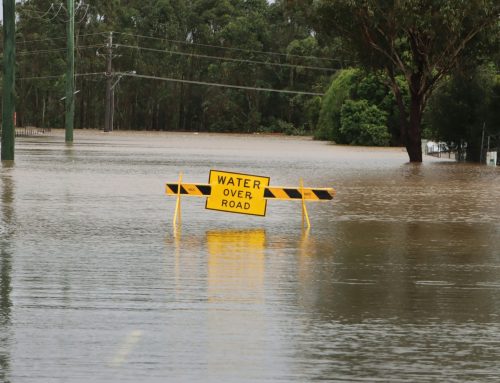

With nearly 30 billion-dollar extreme weather events in 2024 alone, disaster costs are spiraling out of control—and Congress is finally taking action. Steve Ellis sits down with TCS Director of Research Josh Sewell and Policy Analyst Tyler Work to examine the FEMA Act of 2025, bipartisan legislation that could modernize America’s approach to disaster preparedness and response. They explore what the bill gets right—from elevating FEMA back to cabinet-level status to expanding mitigation funding—and where critical gaps remain. The conversation covers transparency reforms, the need for smarter rebuilding standards, the importance of front-end investment over back-end bailouts, and why federal disaster programs must stop subsidizing development in high-risk zones. At stake: whether reform delivers real resilience or repeats costly mistakes.
Transcript
Announcer (00:02):
Welcome to Budget Watchdog All Federal, the podcast dedicated to making sense of the budget spending and tax issues facing the nation. Cut through the partisan rhetoric and talking points for the facts about what’s being talked about, bandied about, and pushed to Washington, brought to you by Taxpayers for Common Sense. And now the host of Budget Watchdog AF TCS President Steve Ellis.
Steve Ellis (00:40):
Welcome to all American taxpayers seeking common sense. You’ve made it to the right place for 30 years. TCS that’s Taxpayers for Common Sense, has served as an independent nonpartisan budget watchdog group based in Washington DC. We believe in fiscal policy for America that is based on facts. We believe in transparency and accountability because no matter where you are in the political spectrum, no one wants to see their tax dollars wasted. Today we’re examining bipartisan legislation that could finally modernize how America prepares and responds to disasters. With nearly $30 billion extreme weather events in 2024 alone and disaster costs spiraling out of control, Congress is considering reforms that could strengthen FEMA, reduce fiscal exposure and ensure disaster dollars, deliver real value to communities. But does the FEMA Act of 2025 go far enough? Are there additional reforms that we need and what critical gaps remain? Joining me to examine this critical need for female reform, our TCS Director of Research and Policy, Josh Sewell and TCS policy analyst, Tyler Work.
Tyler Work (01:43):
Hi Steve. Great to be here.
Josh Sewell (01:45):
Yeah, thanks for having us.
Steve Ellis (01:46):
Great to have you both here. Josh, let’s start with you looking at the big picture this September, the House Transportation Infrastructure Committee passed HR 4669, the Fixing Emergency Management for Americans Act, with broad bipartisan support. And when I say broad bipartisan support, it passed 57 to three in committee. What’s driving this push for reform?
Josh Sewell (02:12):
It’s really a matter of fiscal necessity, Steve. We’ve seen disaster costs absolutely spiral in recent years. So we had, as you mentioned, nearly 30 separate billion-dollar extreme weather events just in 2024. Emergency supplemental appropriations for disasters have now become the norm rather than the exception. Congress is finally recognizing that the status quo just isn’t sustainable for taxpayers or for the communities that need help when disaster strikes.
Steve Ellis (02:39):
So what are the main improvements to the existing policy landscape that’s in this legislation? What did the bill get right?
Josh Sewell (02:46):
So there are a lot of positive steps in the FEMA Act, and I’ll just highlight a couple of them for now. So first, it elevates FEMA back to cabinet level status, which reverses a two decade old mistake and recognizes the scale of today’s disaster challenge. Second, it creates a universal application for individual assistance, which should make it easier for survivors of disasters to access aid in both FEMA programs and through some other agencies. Third, and this is crucial from a taxpayer perspective, it expands assistance for mitigation and incentivizes states to make their own investments. That’s the kind of front end spending that actually saves money down the line.
Steve Ellis (03:24):
When you say a two decade old mistake, Budget Watchdog AF listeners, this is when they were casting about for agencies to stuff into the newly formed department, Homeland Security post 9/11, and FEMA was easy pickings and arguably kind of made sense, but we’ve learned differently since then. Okay. Tyler, you really dug into the bill for us. Tell us about some of the transparency provisions. It’s important for our work. Can you walk us through what that means for taxpayers?
Tyler Work (03:51):
Absolutely, Steve. So the bill would create dashboards, tracking grants under the individual assistance program and the public assistance program with a lot of helpful information, both for those seeking aid and for budget watchdog like us. For individual assistance, the dashboard would include the number of applicants, ranked reasons why applicants were denied, who was accepted, and a breakdown of how much funding is going to households below or above the national median income. And for public assistance, it would have detailed project-level data and progress reports on those grants. This is important because it helps ensure federal resources are being directed where they’re most needed and actually making an impact. Taxpayers deserve to know not just that money is being spent, but whether it’s actually reducing risk and protecting communities from future disasters.
Steve Ellis (04:44):
Tyler TCS action, our 501(c)(4) affiliates sent a letter to Congress on this legislation. In that letter, TCS Action praised these reforms, but also said the bill needs to be strengthened. What are the biggest gaps?
Tyler Work (04:58):
Well, Steve, you’re right when you say that the bill takes some serious positive steps, but there are critical areas where it falls short. Let’s talk about mitigation first, which Josh already commented on at the top of the podcast. The bill expands mitigation funding, but unless those dollars are tied to smarter planning and more resilient rebuilding, taxpayers will still be on the hook for repeat disasters. We need stricter requirements that federal funds don’t subsidize new development in high risk areas and that any federal support will include mitigation efforts at the community scale, like risk informed zoning laws and land use planning.
Steve Ellis (05:36):
That sounds like common sense, which we love. Don’t use federal dollars to encourage building and places we know are going to flood or burn. But I’m guessing the devils in the details, Tyler.
Tyler Work (05:47):
Exactly right. Look, every dollar spent on mitigation saves between $4 and $7 and post-disaster recovery costs. There’s decades of standard science backing that up. But we consistently do the opposite. We underspend on the front end and overspend on the backend. The FEMA Act takes steps in the right direction by requiring states to distribute pre-disaster hazard mitigation funds to local governments within a set timeframe. But there’s no timeline for FEMA to actually get those funds to the states in the first place.
Steve Ellis (06:19):
Is this another situation where we could have Congress appropriate the money for response and it just sits there for years?
Josh Sewell (06:26):
That’s the risk. So 10 years after Katrina hit, some of the money appropriated by Congress still hadn’t been spent, and taxpayers deserve better than that.
Steve Ellis (06:35):
Tyler, there’s also the question of how mitigation funds get distributed. What’s the issue there?
Tyler Work (06:40):
So Steve, the bill proposes a formula allocation for mitigation funding, which on one hand we support consistency, especially because states in recent times have become more and more uncertain whether they will get funds at all. Effective planning and budgeting for mitigation activities require states to know when and how much federal support they’re going to receive. But the proposed formula funding in the FEMA Act would allocate 40% of available funds equally among eligible states regardless of need. And that’s problematic from a taxpayer return on investment perspective, it could keep funding from projects with higher returns for taxpayers and communities. We need to make sure risk reduction dollars reach the places that would otherwise drive those repeat costs.
Steve Ellis (07:26):
Josh, let’s talk about the public assistance program that we discussed earlier. The bill modernizes it by transitioning from reimbursements to grants, but you’ve said stronger accountability is needed. What’s missing?
Josh Sewell (07:38):
Well, a few things. First, the bill makes some progress in creating standardized debris removal practices, which have been an issue in the past, but that is only the tip of the iceberg in disaster response contracting. Without independent audits and public disclosures of violations across contractors, taxpayers can’t be sure funds are being spent fairly and efficiently.
Steve Ellis (07:58):
And that’s important because we’ve seen bad actors exploit post-disaster recovery. I especially remember that after Katrina. So laying out the ground rules for recovery before a disaster takes place can lead to even better decision making and fewer mistakes. What else Josh?
Josh Sewell (08:15):
The bill, it creates a block grant alternative for smaller disasters. This allows a state to request a lump sum of the estimated damages in lieu of any assistance under the public assistance program. Now, block grants, they are a double-edged sword. They’re often sold as a way to more quickly and efficiently deliver aid, but we can’t let the block grant option become a way to actually sidestep all the great accountability and mitigation measures that are implemented elsewhere in this bill. Because communities don’t just need money after disaster. They need the expertise that comes with FEMA’s people power. I mean, FEMA is an agency whose full-time job is preparing for responding to and recovering from disasters. So whether it’s in a block grant or the public assistance grants, FEMA needs to require performance measures like updated building codes or defensible space standards in wildfire prone areas. These are all to ensure that federal funds help communities build resilience, not just cover the cleanup costs.
Steve Ellis (09:17):
Josh, there’s a lot to unpack there. Communities don’t have these disasters every day or every year. It would be wasteful for them to keep a lot of response expertise on the shelf for the occasional disaster that will come someday, but they don’t know when. And that’s where the federal and state expertise is needed. And the second part about performance measures, that gets to something that we’ve talked about on this show before. Moral Hazard. If you know the federal government will bail you out, you have less incentive to prepare properly in the first place.
Josh Sewell (09:48):
Exactly. Yeah. Federal resources are important, but they are not enough, which is why there needs to be means testing. Federal resources need to flow to where they’re most needed. The bill should not prohibit using income thresholds in determining eligibility for assistance waivers. Now, we should consider opportunities to instead implement reasonable means testing provisions to ensure that the taxpayer dollars are in fact going to those who truly need help like virtually every other federal assistance program does.
Steve Ellis (10:19):
And when you say virtually every other federal assistance program, you’re talking about across the federal government, not just in the disaster related space?
Josh Sewell (10:26):
Yeah, absolutely.
Steve Ellis (10:27):
So then Josh, the bill streamlines individual assistance by creating a universal application. That sounds good for disaster survivors, a little simplicity, but is it enough?
Josh Sewell (10:37):
It’s a step forward, but it stops short of actually fixing the fragmented system that forces people to navigate multiple federal programs. A universal FEMA application should result in a single determination letter that spans FEMA, SBA, HUD USDA and Labor programs right now. Survivors might have to apply to all these agencies separately. That’s duplicative and confusing. We should cut that red tape
Steve Ellis (11:01):
Budget Watchdog AF Faithful, just to be clear. SBA small business administration, HUD, department of Housing and Urban Development, USDA. Well, you know that one because Josh brings up agriculture in every show he appears. Okay. Back to regular scheduled programming. Tyler, what about transparency in these programs?
Tyler Work (11:20):
Well, as I mentioned earlier, the bill would create these great dashboards to track federal spending, but we think they could do more. For example, the bill requires the individual assistance dashboard to publish aggregate data on who is denied and why, which can be crucial for understanding why aid is going to certain places and why individuals seeking assistance are being denied and what roadblocks they’re coming up against, but there’s no such requirement for the public assistance dashboard. And we also believe both dashboards should include socioeconomic and geographic data on applicants and who’s being denied. Right now, it’s hard for taxpayers to know whether the system’s working fairly and public reporting will improve accountability and help ensure assistance reaches those most in need. Similarly, while disaster level dashboards are great, FEMA should also provide detailed cross agency, cross disaster spending reports by hazard type – wildfire, hurricane flooding, tornado, and other disasters – with breakdowns across spending on mitigation response and recovery. This is essential for evaluating where federal dollars are going if they’re actually reducing risk, and we’re gaps remain.
Steve Ellis (12:29):
And that hits on one of the big themes in TCS actions letter, the difference between tracking dollars versus tracking actual results. Can you explain the distinction to our listeners?
Tyler Work (12:39):
Sure, Steve. So right now, most reporting focuses on dollars obligated or dispersed. That tells us money went out the door, but it doesn’t tell us whether that money was used to reduce risk or actually protect communities from future disasters. So any new dashboards tracking federal disaster spending should include clear data on risks reduced and dollar saved, not just obligations and disbursements. We need outcome-based metrics.
Steve Ellis (13:06):
Right? Well, just spending cash can be a problem. As we discussed earlier about the delays in spending Katrina money, what we’re most interested in is that those dollars deliver results, not just go out the door. Josh, both you and Tyler also mentioned before that mitigation reduces risks and saves money. So let’s dig into that more. If states don’t have the money to handle disasters when they hit, how are they supposed to find money for expensive mitigation projects beforehand?
Josh Sewell (13:32):
Yeah, that’s the fiscal catch 22, Steve. But here’s the thing. Federal policy should incentivize that front end investment, not just bail everyone out on the back end. Now, the bill takes positive steps by encouraging non-federal investments in mitigation as a condition for decreased cost share requirements. We think Congress should go further and consider additional ways to support state and local mitigation efforts, could include workforce capacity building and technical assistance. So make it easier and more attractive for states to invest upfront in reducing their risk of loss.
Steve Ellis (14:07):
In one of the creative measures of the first Trump administration, they created the Building Resilient Infrastructure and Communities program, which actually let FEMA set aside up to 6% of post-disaster recovery spending for mitigation efforts that weren’t even necessarily tied to that disaster. So it could be another part of the country that’s getting some investment to try to mitigate future disasters. Okay. Speaking of workforce capacity building and technical assistance, Josh, I want to come back to something we discussed on previous episodes about this year’s disaster response challenges. We’ve seen significant operational problems with FEMA – staffing losses, delayed deployments, political interference, and disaster declarations. How does the FEMA Act address those issues?
Josh Sewell (14:52):
Well, some of the workforce provisions in the bill are useful, so studies and retention initiatives. But again, we think Congress should set measurable goals for deployable staff levels so FEMA can prove it has the workforce to meet concurrent disasters. The bill also includes important reforms around elevation to cabinet level status, as was mentioned, and this really should help insulate the agency from some political interference, but transparency is crucial. Determinations around cost share reductions, mitigation formula allocations, and assistance waivers, that all must be clearly explained and made publicly available in a timely manner to ensure equitable application and confidence in the program.
Tyler Work (15:35):
And Steve, if I can step in here real quick. One of the biggest things that the bipartisan nature of this bill does is it signals to the administration that there’s no appetite in Congress to entirely dismantle FEMA, as has been proposed at times. I mean, it’s called the FEMA Act after all.
Steve Ellis (15:52):
Great point. Tyler, there are two major disaster issues that aren’t really addressed in the FEMA Act, wildfire and the National Flood Insurance Program. Can you talk about why those matter for this conversation?
Tyler Work (16:04):
Absolutely. So both wildfire and the National Flood Insurance Program represent huge fiscal exposures for taxpayers, and they’re closely tied to federal disaster policy. On wildfire, we need community level planning and better coordination between FEMA and land management agencies like the Forest Service and the Department of the Interior. Without this coordination, FEMA dollars risk undercutting long-term resilience by funding short-term fixes. And on the National Flood Insurance Program, we’re talking about a program with chronic insolvency that repeatedly gets bailed out by taxpayers. The NFIP needs to shift to full risk pricing through the Risk Rating 2.0 initiative, while simultaneously adopting means tested premium assistance for low and moderate income households. Now, to be clear, these programs largely aren’t in the Transportation and Infrastructure Committees jurisdiction, so it’s understandable that they weren’t in the committee driven bill, but as the theme act moves to the floor, these are important issues to deal with. Disaster is such a critical area that it needs to be treated holistically.
Steve Ellis (17:13):
Here, here you’re singing our song, and that leads to a fundamental budget watchdog question. Federal disaster programs often hide the true cost of disasters through subsidies. Josh, how should we fix that while also addressing affordability?
Josh Sewell (17:28):
This is where clear thinking is essential, Steve. Federal disaster programs must not hide the true cost of disasters instead of artificially lowering rates for everyone. Federal programs should ensure that recipients know and pay for high risk behaviors. For the NFIP, that means shifting to full risk pricing through as mentioned Risk Rating 2.0. This is a long in the works issue. This is not something new, and this is crucial. We simultaneously need to adopt means tested premium assistance for those low and moderate income households. Don’t subsidize the risk, subsidize the people who truly need help affording protection while providing them tools to reduce that risk.
Steve Ellis (18:12):
So Josh, that’s an important distinction. The letter also mentions prohibiting subsidies for the riskiest new development. Why is that important?
Josh Sewell (18:19):
Because we keep rebuilding in the same vulnerable places, often multiple times, with more and more taxpayer dollars. The NFIP and other federal disaster programs just must not encourage development in the highest risk zones, particularly when thinking about flood zones or wildfire risk in the wildland urban interface. After the great flood of 1993, some frequently flooded Midwest towns were bought out and moved to higher ground. So when floodwaters returned in 1995, there were zero flood losses in those communities. Zero. That’s what smart preparation looks like, and that’s what federal policy should encourage.
Steve Ellis (18:59):
Yeah, Josh, we’ve talked about it on the pod before, places like where you’ve driven through Arnold, Missouri was one of those towns. Valmeyer Illinois was another one, where they basically eliminated the risk by moving those flood prone properties out of the floodplain.
Josh Sewell (19:14):
Yeah, and I can tell you that those places, some of those places still do flood. I’ve been through there, but the water doesn’t take a structure out if there’s no structure there.
Steve Ellis (19:22):
Hear, hear, Tyler, when we think about safer rebuilding, what should federal disaster programs do?
Tyler Work (19:28):
So we believe Federal Recovery Aid should only support rebuilding to current hazard resistance standards. And the FEMA Act takes important steps in this direction. And its proposed public assistance program, it incorporates the costs of mitigation measures and rebuilding to applicable buildings codes in that grant amount for public assistance. But we think policymakers should go further by explicitly requiring recipients to undertake mitigation measures in any funded project and to report on these mitigation activities in their progress reports. And then for the National Flood Insurance Program, specifically raising the amount the program pays when homeowners are required or choose to rebuild to stronger building codes would make it possible for more families to rebuild to safer standards, and that reduces future taxpayer liabilities.
Steve Ellis (20:21):
Absolutely. As you both and Budget Watchdog AF faithful know, NOAA predicted an above normal hurricane season, which many think didn’t happen because for the first time in a decade, no major hurricanes made landfall in the United States. But that would be a wrong conclusion to draw because it’s the North American hurricane season, not the US hurricane season, and we got lucky. Hurricane Melissa was a record breaking and devastating hurricane that demolished Jamaica, Cuba, and The Bahamas. And there were 13 named tropical storms, five hurricanes and four major hurricanes, which is about what NOAA predicted for this hurricane season. And we’ve seen devastating wildfires earlier this year. So we are not out of the woods in the future. This is not the new normal. Let me ask you both this. What happens if FEMA and disaster reform legislation doesn’t pass or doesn’t get strengthened with the reforms TCS is recommending?
Tyler Work (21:19):
Look, if we don’t make serious improvements to federal disaster response, we’re going to continue the same pattern that we’ve been stuck in for decades. Steve Underspending on preparation, overspending on recovery, and rebuilding in the same vulnerable places. Every disaster becomes more and more expensive for taxpayers and communities remain at risk.
Josh Sewell (21:40):
Yeah, I mean, the stakes really couldn’t be higher with mounting federal disaster costs and insurance liabilities rising year after year. The choices Congress makes on this bill, they’re going to determine whether this reform is remembered as a missed opportunity or as a turning point toward a more resilient, fiscally responsible system. We need swift action on the disaster reform, but we need it strengthened with the kind of requirements for resilient rebuilding, stronger state and local incentives, and outcome-based metrics that will actually reduce risk instead of simply repeating past mistakes.
Steve Ellis (22:16):
Yeah, the fundamental responsibility of government is to protect their citizens. But too often with these programs and disaster recovery, we’re actually subsidizing people to stay in risky areas and not be protected rather than helping them out of harm’s way. So Josh, what’s the timeline looking like for disaster legislation?
Josh Sewell (22:38):
So the bill did pass out of the house committee with strong bipartisan support, 57 to three, if I remember correctly. And that’s encouraging, but we haven’t seen much progress yet on getting to the floor, and we’re looking for reforms and amendments on the floor. So Congress needs to take up the bill and strengthen it with the reform measures we’ve discussed today. And the window of opportunity, frankly is now.
Steve Ellis (23:02):
Yeah, because once you get in the midst of disaster season, it becomes hard to tackle these issues. Congress gets distracted and we do another emergency supplemental, and we stand up other federal programs, and this all kind of goes by the wayside and we’ve lost the forward momentum that we’ve gotten. Tyler, if you could pick one thing from TCS’s recommendations that you think is the most critical, what would it be?
Tyler Work (23:25):
Well, Steve, not to sound like a broken record, but I’m going to go with the transparency and accountability provisions that we’ve discussed today, specifically those outcome-based metrics. We need to shift from measuring dollars obligated to measuring risks reduced and dollars saved. That fundamental change in how we evaluate and really think about disaster spending would drive better decisions across the board – in mitigation, in recovery, in how we think about where and how to rebuild. If we’re tracking real outcomes, the other reforms become easier to justify and implement, and in the end, we end up protecting more communities.
Steve Ellis (24:06):
Which is what we all want. Josh, bottom line for our listeners, what should they know about this bill and disaster reform legislation?
Josh Sewell (24:15):
The FEMA Act is a good start, but it’s just a start. It needs to be strengthened. So recovery dollars must be tied to smarter rebuilding and mitigation dollars tied to smarter land use, planning reforms, independent audits of disaster spending would be good. We need those outcome-based metrics Tyler mentioned that show whether taxpayer dollars are actually reducing risk. Can’t repeat it enough. And taxpayers need to stop subsidizing bad decisions and instead start investing in resilience. Lastly, say it all the time, transparency and accountability aren’t optional. They’re essential.
Steve Ellis (24:47):
Well said, both of you, Josh and Tyler. Thanks for joining me for this important conversation. Well, there you have at podcast listeners. The FEMA Act of 2025 represents a genuine opportunity for reform, but only if Congress seizes this moment to strengthen it with the accountability measures and outcome-based metrics that taxpayers deserve. This is the frequency market on your dial, subscribe and share and know this Taxpayers for Common Sense has your back. America. We read the bills, monitor the earmarks, and highlight those wasteful programs that poorly spend our money and shift long-term risk to taxpayers. We’ll be back with a new episode soon. I hope you’ll meet us right here to learn more.