
The President’s FY2027 Budget Request includes a 10% increase for the Department of Energy (DOE), from $49.1 billion appropriated in FY2026 (excluding $1.5 billion in transfers from previous appropriations) to a $53.9 billion request for FY2027 (excluding $4.7 billion in proposed transfers from previous appropriations). But don’t be fooled — this funding bump is almost entirely funneled into defense accounts. The National Nuclear Security Administration (NNSA) would see a $7.4 billion increase (+29%) whereas all other programs would see a $2.6 billion decrease (-11%).
While the Administration’s proposed reorganization makes an apples-to-apples comparison tricky, the overall winners and losers are clear:
- Winner – Coal, Oil & Gas, and Geothermal: The President’s Budget Request proposes to create a new Office of Baseload Power, with a $3.5 billion budget to “expand our domestic energy supply.” Coal, oil & gas, and geothermal power activities would get $1.94 billion of that budget. While other spending for these energy sources is spread across the DOE budget—and is difficult to aggregate—this nearly $2 billion fund appears to be a major increase. The Office of Fossil Energy and Carbon Management, for example, which oversees research and development related to fossil fuels, received $720 million last year.
- Winner – Artificial Intelligence: The President’s Budget request includes $1.97 billion for artificial intelligence (AI) and machine learning, an 122% increase from last year according to the department’s budget crosscut. Most of this funding would be directed to the new Office of Artificial Intelligence and Quantum ($1.2 billion), alongside the NNSA, Office of Science, and others.
- Winner – Nuclear Energy: While the Administration requests a $250 million cut for the Office of Nuclear Energy, this is more than offset by a $300 million line item for nuclear power activities in the proposed Office of Baseload Power. Notably, the budget request would double funding for two advanced reactor demonstration projects: X-energy and TerraPower.
- Winner – Critical Minerals: The budget requests $528 million for Critical Minerals and Materials, an 118% increase from last year according to the department’s budget crosscut. This includes $364 million for Advanced Mining and Mineral Production Technologies, one of the few CMEI line items to get a funding boost—$281 million, a more than 300% increase over last year.
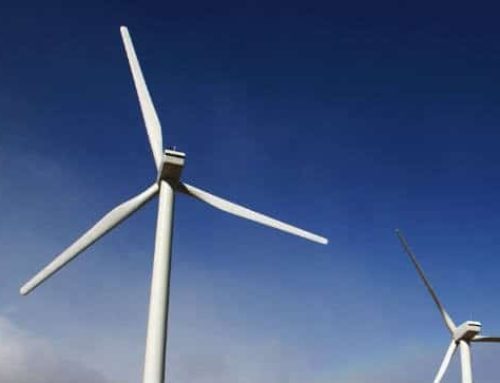
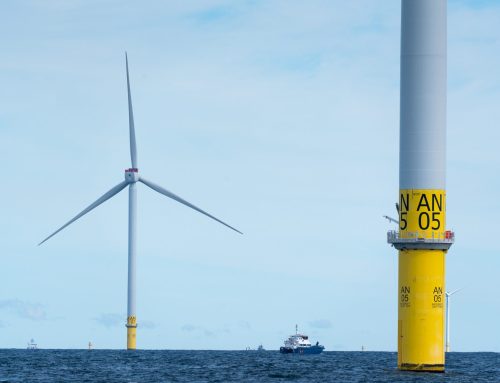
- Loser – Solar and Wind Energy: The Administration requests $0 for Solar Energy and Wind Energy under the Office of Critical Minerals and Energy Innovation (CMEI), formerly known as the Office of Energy Efficiency and Renewable Energy. Last year, Congress appropriated $220 million for Solar Energy and $110 million for Wind Energy.
- Loser – Energy Efficiency: The budget request would cut CMEI’s Energy Efficiency Program by 68%, down from $678 million to $215 million.
- Loser – State and Community Weatherization Program: The budget request proposes, once again, to eliminate the State and Community Weatherization Program. The program was appropriated $435 million in FY2026.
Photo Credits:
- US DOE, Public domain, via Wikimedia Commons