Every few years, the Government Accountability Office, Congress’ nonpartisan investigative arm, publishes another report on “evidence-based policymaking.” It isn’t exactly beach reading, and this year’s report is no exception. At first glance, it looks like another management review, full of discussions about strategic plans, evaluations, performance measures, and agency leadership. For more than thirty years, Congress has been trying to figure out how to measure whether government programs actually work.
For much of the twentieth century, federal budgeting focused on basic outputs. Agencies could tell Congress how much money they spent, how many grants they awarded, how many permits they issued, etc. But measuring an activity is not the same thing as measuring its success. Lawmakers from both parties recognized that budgets measured what government spent, but not whether those dollars solved the problems they were meant to address.
Congress responded with “Reinventing Government,” aka the Government Performance and Results Act of 1993, which required agencies to establish strategic goals, measure performance, and report on whether they were achieving the results they promised. As the Congressional Research Service explained, the goal was not simply to improve agency management. It was also to strengthen congressional oversight and improve policymaking by giving lawmakers better information about what government programs were accomplishing.
When lawmakers concluded that GPRA hadn’t gone far enough, they expanded the framework through 2010’s GPRA Modernization Act, adding government-wide priority goals, cross-agency collaboration, quarterly performance reviews, and greater transparency. In 2019, the Foundations for Evidence-Based Policymaking Act built another layer by requiring agencies to develop learning agendas, appoint Evaluation Officers and Chief Data Officers, and make evidence-building a regular part of management. Most recently, the Federal Agency Performance Act of 2024 strengthened annual strategic reviews and accountability.
In this context, the latest GAO report doesn’t describe a government that ignores performance. In fact, it finds agencies have made meaningful progress. Managers are using performance information more than they did in the past, and strategic planning has become routine.
In other words, the problem has changed. Thirty years ago, reformers worried that government wasn’t measuring performance. Today, the federal government produces strategic plans, evaluations, learning agendas, performance dashboards, after-action reviews, and countless other sources of evidence. The question is no longer whether that information exists. It’s how to turn all of it into better decisions.
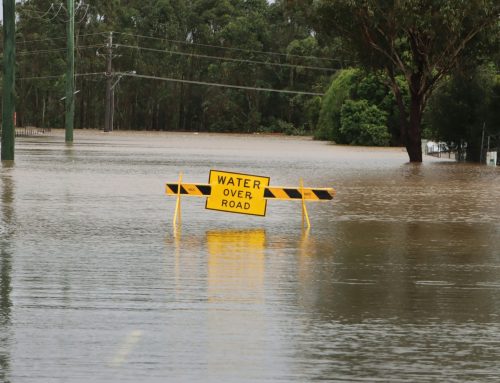
Disaster recovery is almost the perfect stress test for evidence-based government. Every major event produces significant media attention, Inspector General investigations, academic research, and lawmaker interest from local up to the federal government. If any area of government should improve over time, it should be disaster response. Yet, GAO describes a wildfire recovery system involving more than 30 federal agencies, at least 32 congressional committees, and roughly forty years of incremental legislation. Measuring what works becomes difficult when no one institution is responsible for the whole system. (Notably, unlike airlines, trains, pipelines, and marine shipping, where nearly every accident is subject to a National Transportation Safety Board investigation, there is no formal process or single agency responsible for such an after-the-fact evaluation with natural disasters. The benefits and likely cost savings of such a process are something we’ll have to hold for a future Weekly Wastebasket.)
That’s why, every year, GAO also identifies overlapping programs, fragmented responsibilities, and opportunities to improve government. Since 2011, implementing those recommendations has generated an estimated $725 billion in savings, while GAO estimates that another $100 billion or more could be realized if the remaining recommendations were implemented. The hard part is not figuring out where government can improve, but following through on that evidence.
The Congressional Research Service recognized this years ago. Writing about GPRA, CRS observed that the real test was never whether agencies could produce better performance information. The real question was whether that information would influence congressional budget deliberations. One observer warned that without a stronger connection between performance results and funding decisions, the Results Act would remain “largely a paper exercise.”
That may be where the next generation of reform should take us. The first generation focused on building a government that could measure itself. By most accounts, substantial progress has been made. Agencies now collect far more information about what they are doing and whether it is working than they did a generation ago. The harder task is ensuring that evidence consistently informs the choices Congress makes about funding, oversight, and reauthorization.
This latest GAO report is another reminder that government learning is not a destination. It is an ongoing process. Congress spent three decades building an evidence-based executive branch. The unfinished project is making sure that evidence becomes part of an equally evidence-informed legislature making decisions. Producing evidence and governing with evidence are not the same thing.