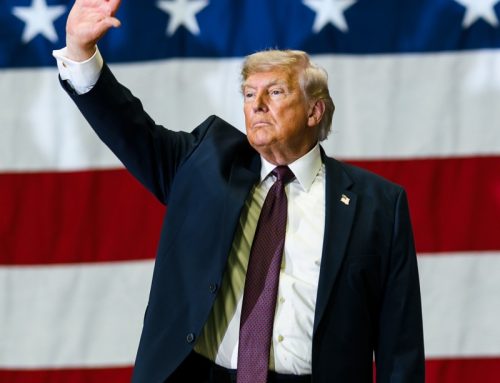

On November 30, 2018, President Donald Trump sat down with Canadian Prime Minister Justin Trudeau and Mexican President Enrique Peña Nieto in Buenos Aires to sign the United States-Mexico-Canada Agreement.
Trump did not attend begrudgingly. He called the USMCA “the largest, most significant, modern, and balanced trade agreement in history.” He said it would lock in American access to Canadian and Mexican markets, expand agricultural exports, support manufacturing jobs, and produce greater growth across North America. It was, he declared, a model that would change trade forever.
When he signed the implementing legislation in 2020, Trump went further. The agreement was a “colossal victory” for farmers, ranchers, energy workers, factory workers, and Americans in all 50 states. It would replace the uncertainty and unfairness of NAFTA with a reciprocal agreement that kept jobs, wealth, and growth in the United States.
That was then.
On September 8, 2026, Canada imposed tariffs on roughly $20 billion worth of American goods. The duties range from 15 to 50 percent and cover hundreds of products, including steel, dairy products, agricultural equipment, furniture, clothing, appliances, pulp and paper, and electronics. Canadian officials are preparing businesses and the public for a lasting change in the relationship.
Canada did not just wake up one morning and decide that American cheese needed to cost more. Its tariffs are a dollar-for-dollar response to tariffs the Trump administration imposed on Canadian goods last month, including products that otherwise qualify for duty-free treatment under the USMCA. To justify these tariffs, the administration dusted off the Smoot-Hawley Tariff Act of 1930, citing supposed Canadian discrimination against American goods.
This is just the latest in a series of shifting tariff policies since the administration took office. It started with sweeping emergency tariffs, turned to a temporary import surcharge after the Supreme Court rejected those, and followed up with specious unfair-trade investigations and expanded use of national-security as an excuse for tariffs. Most of our trading partners have now been swept into these shifting tariff regimes, feeding inflation, reducing incomes, and stifling economic opportunity.
Asked in July about the USMCA, Trump said he did not care about it. This was the same agreement he and his administration had called the largest, fairest, most balanced, and most modern trade agreement ever achieved. Apparently, “ever” lasted about six years.
Congress is part of this story too. It approved the implementing legislation by overwhelming bipartisan margins, 385–41 in the House and 89–10 in the Senate. Now some farm-state members are warning that the renewed trade war is hurting producers who depend on Canada as an export market. Their concern is understandable. But come on, none of this should come as a surprise. Retaliation is the predictable consequence of the tariff policies the administration was promising back on the campaign trail.
The same contradiction runs through much of the administration’s economic agenda. It promises to revive domestic manufacturing while imposing tariffs that drive up the cost of the materials and equipment manufacturers need. Agriculture offers a particularly familiar version of this cycle. In December 2025, USDA announced $12 billion in “bridge payments” for farmers, partly from the fallout of these trade wars. The administration taxes imports, foreign governments retaliate, and so the Treasury borrows money to protect producers caught in the middle. Somewhere in that loop is a theory of economic growth, but it is becoming increasingly difficult to understand.
Energy policy is no more even keeled. The administration promises energy dominance, abundant electricity, lower prices, a manufacturing revival, and enough power for a massive expansion of artificial intelligence and data centers. At the same time, its tariffs raise the price of steel, aluminum, copper, transformers, pipelines, storage tanks, and other basic components needed to produce and deliver energy. Meanwhile, the government backs some energy technologies, obstructs others, cancels projects, revives shuttered ones, and upends longstanding tax and regulatory rules across the entire energy landscape.
Policy change is inevitable and even welcome in a democracy where politicians are expected to respond to the will of voters. But this administration is not simply switching direction, it’s schizophrenic. Its policies are often working against one another. Increasingly, “policy” seems immaterial, with reversal itself appearing to be the point, whether or not the replacement produces better results. The September 8 tariffs are the latest consequence of an economic policy that cannot decide whether trade agreements are achievements or obstacles, whether tariffs are temporary leverage or permanent revenue, or whether the goal is simply returning to an issue and a tool that president favors.
The larger taxpayer cost is the chaos all of this creates. The USMCA was supposed to change the trade landscape forever. Its promise of stability did not survive the return of the president who created it. Congress has helped make both the agreement and its unraveling possible. But the constitution grants the power to “lay and collect Taxes, Duties, Imposts and Excises” in the hand of Congress, not the Executive. Congress can bring order to this intentional chaos, it just needs to commit to doing its duty.