
Oil and gas bonding is supposed to be simple: before a company drills on federal land, they put forth money to guarantee that when the well runs dry, they will plug the hole and clean up the site. If the operator walks away or goes bankrupt, the bond should be enough to cover the cleanup costs so taxpayers are not stuck with the tab.
Despite this simple concept, bonding rates have rarely been sufficient to properly address the costs associated with cleaning up a well. Too often taxpayer money has been used to cover the rest. The math hasn’t worked in decades. Before 2024, minimum bond rates were first set in the 1950s and 60s and had never been adjusted for inflation. The bond rates sat at $10,000 for wells on an individual lease, $25,000 for wells owned by an operator in one state, and $150,000 for all wells owned by an operator nationwide. The outdated bond amount is a fraction compared to the average $71,000 it costs to reclaim a single well, especially when a single lease can contain tens if not hundreds of wells.
In 2024, the Department of the Interior updated bonding requirements for the first time since they were set. The Onshore Oil and Gas Leasing Rule raised minimum bonds to reflect modern reclamation costs. The current bond rates are now $150,000 for an individual lease bond and $500,000 for statewide bonds. However, this progress is now on the chopping block. In June 2026, the Bureau of Land Management proposed rescinding the 2024 rule and reverting individual and statewide bond minimums back to their pre-2024 levels.
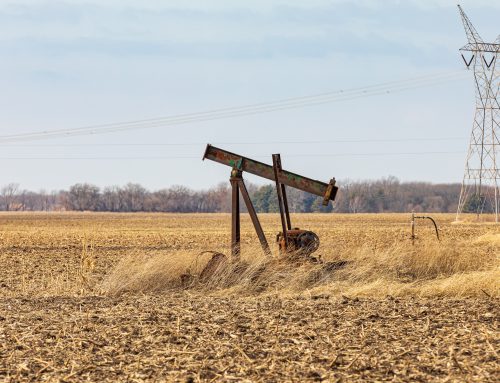
Abandoned wells pose environmental, safety, and public health risks and should be reclaimed promptly; and taxpayers should not pay for the messes that the oil and gas industry leaves behind. We need oil and gas bonding reform to protect taxpayers from the financial and environmental liabilities associated with abandoned wells.
Several proposals have been circulated that could help protect taxpayer bonding liabilities. One proposal in the Senate, the Stop Orphaned Wells Act, introduced by Senator Bennet (D-CO), would raise bonding minimums, strengthen management of inactive wells, and implement measures to hold the industry more accountable.
The bill would:
- Allow the Secretary of the Interior to set higher minimums for operators that pose heightened risk of abandonment or environmental harm and allow public petitions to establish increased minimums for specific categories of high-risk operations.
- Raise minimum bonding rates
- From $10,000 to $200,000 for an operator’s wells on an individual lease, with annual inflation adjustment
- From $25,000 to $650,000 for all wells owned by an operator in one state, with annual inflation adjustment
- Eliminate nationwide bonds
- Require a full liability bond covering estimated cleanup costs whenever 50 percent or more of an operator’s wells are idled wells.
- Require that operators increase or replace all bonds that do not meet the appropriate minimum financial assurances (within 1 to 3 years, depending on the lease type).
- Implement other measures like periodical bond reviews, stronger inactive well management, and greater oversight of lease transfers to protect taxpayers from future abandoned wells liabilities.
- Authorize $30,000,000 for each fiscal year from FY2028 to FY2032 for the Department of the Interior to administer oversight measures.
This proposal matches recent updates by states to better protect taxpayers from orphaned wells on state and private lands. Wyoming, Colorado, Utah, and New Mexico have all updated their state-level financial assurance requirements over the last decade to better reflect real reclamation costs and account for factors like production, well depth, and risk of abandonment.
This proposed legislation would hold the oil and gas industry more accountable and protect taxpayers from paying for the messes oil and gas companies leave behind. The bill would also protect taxpayers from any future liabilities that would arise if currently active or inactive wells are abandoned. Taxpayers shouldn’t be the backstop for an industry’s cleanup costs. Bond amounts should reflect what the cleanup actually costs. Taxpayers deserve oil and gas bonding reform that is permanent and provides much-needed financial relief.
- Photo by Tim Mossholder on Unsplash