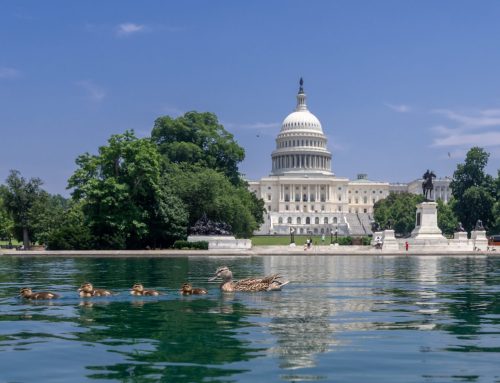

Two lists. A short one for the Congress on its way out, and a longer one for the 120th Congress on its way in.
Election Day was last Tuesday. Divided government is back, and the national debt is more than $40 trillion. For the lame duck, TCS’s advice is do no harm: fund the government by December 11, pass a reasonable defense bill, and don’t jam through a wish list on the way out the door.
Host Steve Ellis and TCS Director of Research and Policy Josh Sewell walk through the to-do list for the new Congress: keep lawmakers out of stock trading and prediction markets, make the three-day rule a real 72 hours, disclose the backdoor earmarks in the Pentagon budget, nearly $34 billion this year, and take back the power of the purse. Then Josh asks Steve to pick the fiscal fix that matters most.
Voters said they want solutions, not gridlock. We’ll be here to see whether Washington heard them.
Transcript
Announcer (00:02):
Welcome to Budget Watchdog All Federal, the podcast dedicated to making sense of the budget, spending, and tax issues facing the nation. Cut through the partisan rhetoric and talking points for the facts about what’s being talked about, bandied about, and pushed in Washington, brought to you by Taxpayers for Common Sense. And now the host of Budget Watchdog AF, TCS President Steve Ellis.
Steve Ellis (00:40):
Welcome to All American Taxpayers Seeking Common Sense. You’ve made it to the right place. For 30 years, TCS, that’s Taxpayers for Common Sense, has served as an independent, nonpartisan budget watchdog group based in Washington, DC. We believe in fiscal policy for America that is based on facts. We believe in transparency and accountability because no matter where you are on the political spectrum, no one wants to see their tax dollars wasted. It’s the second week of November 2026. Election Day was last Tuesday. Voters handed Democrats the House and the Senate. Come January, it’s a Democratic Congress and President Trump in the White House. Divided government is back. The pundits will spend the next two years telling you what the voters were saying. Here’s what we know: voters were frustrated with Washington. They want solutions, not gridlock. The federal government spent $7.5 trillion last year and is more than $40 trillion in debt.
(01:31):
Too many taxpayers feel Washington has the wrong priorities. Taxpayers want accountability, and last Tuesday, they acted. So today, two lists: a short one for the Congress that’s on the way out, and a longer one for the 120th Congress that’s on its way in. Josh Sewell has watched more lame ducks than a Chesapeake hunting guide. He’s also helped write TCS’s to-do list for every new Congress since he got here. Josh, welcome back to Budget Watchdog AF.
Josh Sewell (01:56):
Thanks, Steve. It’s good to be here.
Steve Ellis (01:58):
Before we get to the 120th Congress, the 119th still has some work to do, and voters just soured on this Congress. So let me say it plainly: for the next eight weeks, the guiding principle should be do no harm. Josh, what’s the minimum necessary?
Josh Sewell (02:15):
The minimum is keep the lights on. So the government is operating on a stopgap through, what is that, December 11th? So they have about five weeks to pass some bills and keep the government funded.
Steve Ellis (02:27):
We’re also five weeks into the fiscal year, Josh, so that means they’ve already blown 50 weeks not funding government. So is that reasonable?
Josh Sewell (02:35):
You know me, ever the optimist, Steve. But yeah, they aren’t likely to spend a lot of time finding compromise on the spending bills. So at least figure out a basic CR, kick the issue into next Congress, because, I mean, government shutdowns, they’re disruptive, they’re wasteful, and as we’ve spoken to on this podcast before, they achieve absolutely nothing good.
Steve Ellis (02:56):
Josh, the temptation in a lame duck runs the other way. Members with nothing to lose, leadership with a closing window, and a budget tool, reconciliation, that can move a bill through the Senate with just 51 votes. Josh, what would a lame-duck wish list look like, and what’s at risk for taxpayers?
Josh Sewell (03:13):
So it would look like a partisan grab bag. So I think the sky’s the limit for a wish list, at least for what people are proposing. So I’ve heard more tax breaks, confirming every judge imaginable, the remnants of the farm bill that is hanging out there. But the biggest one would be increasing defense spending.
Steve Ellis (03:32):
Right. The president’s $1.5 trillion spending request still has not been finalized. As a reminder, the president’s budget request assumed a base discretionary request of $1.15 trillion, and an additional $350 billion would come from a third reconciliation package. How feasible is any of that? And I want to just flag that that would be a 48 percent increase in the Pentagon’s budget over one year’s time, and that’s on top of an 18 percent increase that happened between fiscal year 2025 and fiscal year 2026.
Josh Sewell (04:09):
Yeah, Steve, you sound like him, but I’m no Gabe Murphy. I can’t recite those numbers like you do, but I can venture to say that $1.5 trillion, that just seems a no-go. I mean, even that $1.15 trillion base level request, that would be a $250 billion increase, just that alone from last year, like you said. And honestly, it’s just hard to see that flying through, at least in this lame duck.
Steve Ellis (04:33):
All right, enough about the 119th. Now the 120th Congress. TCS has done this with every new Congress for more than 30 years: hit the ground running. Item one on our list: restore trust that lawmakers are governing for the people. Right out of the gate, rules that restrict policymakers across the government from stock trading and from playing the prediction markets. Josh, why is that item number one?
Josh Sewell (04:57):
Well, when it comes to fixing Washington or hitting the ground running, there are a lot of candidates for that number one priority. But I really think that the ban on stock trading and playing in prediction markets, it’s because that gets to the root of one of the reasons people are so upset with Washington. Can you get any more of an insider for inside trading than the guy or gal who’s literally writing the laws that affect the stock prices?
Steve Ellis (05:23):
And getting briefings behind the scenes and all sorts of other things? No, not really. And it’s not just the laws, too, but also, Josh, the power to hold hearings, to get classified briefings. With stock trading and prediction markets, there is at best an opportunity to take advantage of their power, and at worst, actual corruption or making decisions for one’s self-interest, not the country, not the Constitution that they swore an oath to.
Josh Sewell (05:47):
Absolutely. And to me, it’s the most obvious area where lawmakers are working for themselves and not the public. And it’s not just me, clearly. There’s a lot of people who think that. So instead of day trading, lawmakers need to focus on their day job, and the one that they actually applied for, and for quite a number, just reapplied for. They just reapplied for this job, so they should do that.
Steve Ellis (06:08):
Got it. So next, transparency. Lawmakers are supposed to get three days to read the bill before it comes to the floor. That rule gets skirted all the time. We say make it a real 72 hours. Josh, how does a three-day rule turn into three hours, and what does a real one look like?
Josh Sewell (06:27):
Well, it makes it to Washington, because it depends what your definition of a day is. So is it a day that exists on a calendar? So you introduce something at 11:59 p.m. on a Tuesday, then you vote on it at 12:01 a.m. on Thursday? Well, that’s Tuesday, Wednesday, Thursday. Looks like three to me. And that’s how we have operated here in DC at times under this three-day rule. But the spirit of the 72-hour rule is to, frankly, give lawmakers, and let’s be honest, their staff and people like us, enough time to digest these spending bills before voting on them.
Steve Ellis (07:01):
A day is a day. Seventy-two hours is actually 72 hours. Seems like it should be simple.
Josh Sewell (07:06):
It should be.
Steve Ellis (07:08):
And Josh, earmarks. Our list says strengthen earmark transparency, including requiring lawmakers to disclose Pentagon program increases that work like backdoor earmarks. Gabe and the team counted nearly $34 billion of them in this year’s Pentagon budget, just in procurement and research, development, testing and evaluation alone. Josh, what’s the fix?
Josh Sewell (07:31):
Transparency. Disclosure, disclosure, more disclosure, at least as a first step. The committees should, every committee, but in this case, the Appropriations Committee, the Armed Services Committees, they should require lawmakers to attach their names to each of these increases, provide justification, and declare that they and their family members don’t have a vested interest. You know, these are earmarks, so let’s treat them as such. We do this for the other things that are earmarked. Let’s have the same disclosure, so we at least get a grip on the problem and save us a little bit of time.
Steve Ellis (08:05):
Next on the list: reclaim ceded legislative powers. The administration used emergency authorities Congress wrote decades ago, some cases nearly a hundred years ago, to run a tariff agenda. Raising revenue is Congress’s job. It’s right there in Article I of the Constitution. Josh, what does reclaiming that power actually look like?
Josh Sewell (08:25):
Well, actually, I have to even go simpler and say just getting back to the basics. I’d actually make sure they set a budget topline first. Hold your hearings, deliberate, pass individual bills, and come to an agreement on spending with your colleagues in the other chamber. That’s a first step to fixing Congress.
Steve Ellis (08:41):
And an important one: the power of the purse is a fundamental part of the Constitution. There are other areas too, right?
Josh Sewell (08:47):
Yeah, and you listed some of them a second ago. And strengthening the War Powers Act is something we can do, getting ahold of tariffs and taking that back from this president and future ones. And then, frankly, just eliminating the Secretary of Ag’s Charter Act authority, my personal favorite. These are all ways that Congress can reassert itself. But honestly, each one of those things needs its own podcast, and I think we’ll have to do that in the new Congress. But I really think that all of these opportunities to strengthen Congress are built out of Congress doing its most basic responsibility: set a budget and hold tight to those Treasury purse strings. And in that vein, Steve, our list also says, “Get the nation’s fiscal house in order,” and then it packs three things into one line: reform budget procedures so reconciliation doesn’t explode deficits, raise and possibly eliminate the debt ceiling, and stand up a bipartisan, bicameral fiscal commission.
(09:41):
We’ve said for years the debt limit should go. So why is it on a to-do list at all? And which of those three matters most, in your opinion?
Steve Ellis (09:50):
Well, the debt limit is a relic from, basically, World War I, where Congress decided that they couldn’t just approve individual increases each time the president wanted to spend more money, and so they just essentially set a ceiling, and then they would have to adjust it. The problem is that used to be kind of rank and file, but now there’s been brinksmanship where we’ve come close to defaulting on the debt. And remember, this is all funding that has already been approved, that’s already been expended. So we’re not making a decision. It’s not increasing the debt to increase the debt ceiling. It’s just allowing more debt to accumulate. And then budget reconciliation, when Congress created that in the ’70s, it was the tool to reduce deficits, but it’s been more recently used in ways that explode the deficits. And so really, you could still have your tax provisions, your debt limit increase or spending, but it should be paid for in the reconciliation process, and it’s been abused in each of the last three Congresses.
(10:54):
And then lastly, the fiscal commission. This is something that had bipartisan support in the House, and it makes a lot of sense, because let’s face it, there are really hard decisions coming up, and politically unpalatable decisions in many cases. And so you want to have this all come together so that things like Social Security, where it’s going to be insolvent as soon as 2031, you need to actually tackle some of these issues, put them together, and have real solutions that Congress then has to vote up or down.
Josh Sewell (11:26):
So pick amongst your kids, Steve. Which one matters the most?
Steve Ellis (11:30):
Well, I guess I would say the fiscal commission, and only because it could actually deal with budget reconciliation and maybe create rules that wouldn’t allow it to be increased deficits. And then also it can deal with some of these other issues, so like the debt ceiling and things like that, and potentially one of the recommendations can be eliminate the debt ceiling.
Josh Sewell (11:55):
Yeah. New Congress, new members, maybe a new momentum for actually tackling these things. Sounds good to me.
Steve Ellis (12:00):
So Josh, it’s not all criticism. We just discussed this bipartisan fiscal commission bill. Republicans and Democrats, House and Senate, and its report window opens the week after this election. Josh, what would it do, and is this lame duck its moment?
Josh Sewell (12:19):
Yeah, so the bipartisan fiscal commission would actually streamline a few things and make it easier for Congress to have the debate about how to, frankly, get our budgetary house in order. And so there’s a lot of mechanics to it, but essentially what you’re getting is both sides of the aisle, both chambers, would come together and start, without as much in the public eye, necessarily, without a lot of cameras on them, start to come up with some solutions to start really in the next Congress, or whenever this was done, actually, to really just start making that momentum towards solving some of these issues. And so this is one of the things we’ve pushed for a long time. We think the entirety of Congress can do a budget commission, because there’s only 535 of them compared to the 350 million of us. But we are creatures of our history, and so we’ve seen it not work so far.
(13:09):
So this would just really have a more formal process of getting a smaller number of folks really, truly focused on these big issues, and then to just really lay out for their colleagues the opportunity costs and the opportunities for reform. And I think this is a Congress that’s going to try to push some things, and this is one of the easier things that they should be able to do.
Steve Ellis (13:30):
So here’s another positive one that surprised some listeners coming from a budget watchdog: invest in Congress. Staff pay, technology, and members haven’t had a pay raise since 2009. Josh, make the taxpayer case for spending money on Congress.
Josh Sewell (13:47):
You need to invest in yourself. We need co-equal branches of government. That’s what our Constitution is based on, and I think we see some challenges and some problems when they aren’t equal. So Congress, they cannot be co-equal if it ties its own hands. You need to have resources to investigate and do effective oversight. Also, I want a good talent pool. There are some really good folks that work up on the Hill, both elected and the people who work for them and their staff. But 20 years, that’s a long time to not have a pay raise. And so public service should be public service and not a vow of poverty. And especially, my personal opinion, when it comes to the staff that are doing the real work, the hard work, we want people to be able to stay, get invested in our country, and really move forward. People aren’t going to get rich.
(14:36):
We’re not asking people to get rich doing this, but you shouldn’t have to be either a vow of poverty or bankrolled by somebody else or some outside old money or whatever it could be. And again, it gets back to that day trading issue. It’s not just the members of Congress, it’s their own staffers who have to feather their own nests at times, or attempt to, at least.
Steve Ellis (14:58):
Yeah, I think that really the ability to attract and retain top talent is so critical. These are the people who are literally affecting every aspect of taxpayers’ lives, and so you want to have not just green, very junior people there. You want to have people who are experienced, that this is actually even a career. And the same thing goes with the elected officials. I mean, you shouldn’t have to be a millionaire to actually serve in Congress. So these are important areas that, while maybe not politically popular, really do make a difference. All right, Josh, also, we talked about strengthening checks and balances. The inspectors general and Congress’s own watchdog, the Government Accountability Office, both have taken hits. Josh, why does a budget watchdog care so much about the other watchdogs?
Josh Sewell (15:47):
I mean, the more eyes, the better. That’s part of it. So those IGs, as we call them, they can be great because they are embedded in the agency. They are their own little auditors and their own oversight within the agency. And what that means is, say, the USDA, that Office of Inspector General, it only looks at the USDA and its programs. So they have a narrower focus, so you can get a good understanding of the programs and, frankly, the complexities in that agency. And now, a group like the GAO, which is a legislative branch agency, so it’s good because they work for Congress, and they have a long leash. And what I mean by that is that they can go deep into a topic. They can just go deep into a topic and make a very thorough evaluation. And IGs are independent.
(16:37):
However, the GAO is very independent, and so they aren’t a member of the executive branch, and they are, frankly, likely to be more critical of an agency’s performance. And I just think history has shown the GAO and the inspector generals are some of the best entities out there to find not just corruption and illegality, but actually inefficiencies and where things can be done better. So we’re a great oversight watchdog group, but the more of us running this pack, the better.
Steve Ellis (17:06):
And Josh, divided government doesn’t have to mean nothing gets done. As a matter of fact, it could be an area where the sides could work together. Where’s the bipartisan ground that you see? Our list has FEMA reform, extending wildfire funding fix, guardrails on artificial intelligence, and that fiscal commission. Josh, which of those is actually ready to move?
Josh Sewell (17:26):
Well, you may have convinced me on the fiscal commission, but I was going to say, and I’m still going to stick with my original answer, which is FEMA. FEMA reform, I thought it was going to be done. There is a bill. There’s bipartisan support for that bill. I mean, it actually passed out of the House Transportation Committee with almost no opposition. And so there’s an opportunity in the Senate, even in this lame duck, that you could potentially get this bill across the finish line. But at the very least, there’s been a lot of work, and a lot of those members are coming back. And so I think FEMA reform would, frankly, take the least amount of negotiation, and it’s one of the most pressing, because we’ve had a relatively quiet disaster year in some respects, but there have been some pretty horrific disasters. So we all know the fiscal, physical, and social costs of disaster.
(18:14):
And that’s where, I mean, if we’ve got to start with something, that should be one of the easiest ones.
Steve Ellis (18:18):
Yeah, 59 to 3 is how it passed out of the Transportation and Infrastructure Committee, and that’s a pretty bipartisan vote. All right, let me play the skeptic, though, Josh. Every two years, groups like ours put out a list like this: new Congress, big ambitions, then the calendar and the politics take over. Why should taxpayers believe this one is different?
Josh Sewell (18:38):
Well, because it has to be. I mean, I think people are clearly tired of Washington, right? I mean, this is a wave election, you know, and it looks partisan, but it’s also not in some respects. I think people are dissatisfied with everything right now. And so the voters have spoken. People who sat on their laurels are no longer going to be here. And there isn’t a single poll out there that shows that voters and potential voters are satisfied with a lot of their alternatives. So there’s a real opportunity here for anybody who wants to be ambitious, who wants to take charge and do something different. There’s a market signal for that amongst voters. And I think things have just gotten too tight, too stressful, that we don’t really have an alternative, do we? No, I think it’s time to do something different, and people are open to that.
(19:29):
So that’s why, like always, I’m even more optimistic than usual.
Steve Ellis (19:33):
All right, Josh, let’s get you out of here on this. Two lists, one calendar. Between now and January 3rd, what should taxpayers watch for?
Josh Sewell (19:41):
Well, probably what we usually ask: watch for shenanigans, watch for Congress to do things that we don’t want them to do, but mostly just make sure that Congress keeps the lights on, moves forward, and closes the door on this Congress, and welcomes the next one, because we’ve got a lot of work to do and a lot of motivation to do it.
Steve Ellis (19:58):
Josh Sewell, thank you again for being on Budget Watchdog AF.
Josh Sewell (20:01):
Yeah, Steve, always happy to do this.
Steve Ellis (20:03):
And there you have it, Budget Watchdog AF Faithful. Two lists. The Congress that’s leaving has a short one: fund the government, pass a reasonable defense bill, don’t use the budget rules to jam through a wish list on the way out the door. Do no harm. The Congress that’s coming in has a longer one: restore trust, show your work, take back the power of the purse, get the fiscal house in order, and give Congress the tools to do its job. Voters said they want solutions, not gridlock. We’ll be here to see whether Washington heard them. This is the frequency. Mark it on your dial, subscribe and share, and know this: Taxpayers for Common Sense has your back, America. We read the bills, we monitor the earmarks, and we highlight the wasteful programs that poorly spend your money and shift long-term risk on the taxpayers. We’ll be back with a new episode soon.
(20:48):
I hope you’ll meet us right here to learn more.