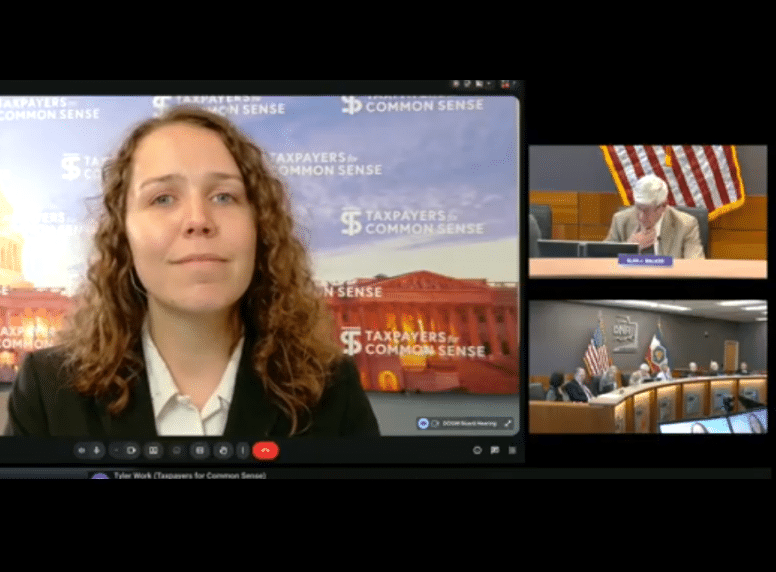

After 43 days, the longest government shutdown in U.S. history has ended. But at what cost? Steve Ellis and Josh Sewell break down the $60 billion price tag taxpayers absorbed for absolutely nothing. Beyond the waste, the Trump administration used the shutdown to expand executive control over federal spending, bypassing Congress to reallocate funds and lay off thousands of workers. The compromise bill may have reversed those moves, but it revealed a dangerous willingness to ignore constitutional spending authority. With another shutdown deadline looming on January 30th and Congress punting on actual appropriations bills, the fiscal dysfunction continues. No victories here—just billions wasted and constitutional concerns that should alarm every taxpayer.
Transcript
Announcer:
Welcome to Budget Watchdog All Federal, the podcast dedicated to making sense of the budget spending and tax issues facing the nation. Cut through the partisan rhetoric and talking points for the facts about what’s being talked about, bandied about and pushed to Washington, brought to you by Taxpayers for Common Sense. And now the host of Budget Watchdog AF TCS President Steve Ellis.
Steve Ellis (00:40):
Welcome to All American Taxpayers Seeking Common Sense. You’ve made it to the right place for 30 years. TCS that’s taxpayers for common sense, has served as an independent nonpartisan budget watchdog group based in Washington dc We believe in fiscal policy for America that is based on facts. We believe in transparency and accountability because no matter where you are in the political spectrum, no one wants to see their tax dollars wasted. It’s November 14th, 2025 and after 43 days, the longest government shutdown in US history has finally ended. President Trump signed the funding bill late Wednesday night and federal workers have headed back to their offices. But podcast listeners, this isn’t a victory lap moment. This is a postmortem on a fiscal catastrophe that cost taxpayers billions while delivering absolutely nothing. Joining me today to break down just what happened and what it means for your tax dollars is our very own director of research and policy. Josh Sewell. Welcome back, Josh.
Josh Sewell (01:37):
Hey, thanks Steve. And I wish we were talking under better circumstances, but here we are.
Steve Ellis (01:42):
Yes, here we are. So Josh, 43 days. That’s not just a government shutdown, that’s a government meltdown. When we recorded episode 99 back in September, we were six days away from the shutdown. Now we’re coming out the other side. What did the shutdown actually cost taxpayers?
Josh Sewell (02:00):
Well, Steve, we know from past shutdowns that these things are expensive. So the 2013 shutdown cost an estimated $24 billion, which was about one and a half billion dollars per day. But this particular shutdown that we just ended lasted for 43 days. So if you do the math, we’re potentially looking at over 60 billion in direct and indirect costs to taxpayers. And honestly, that’s a conservative estimate. This one, it’s longer, it’s more disruptive and it affected more of the government than previous shutdowns.
Steve Ellis (02:34):
And just to be clear to our podcast listeners that $60 billion doesn’t mean we saved $60 billion by not operating the government. That’s the hit to the economy that came from not actually paying workers, not actually having people go to work. That’s money that’ll never be gained again.
Josh Sewell (02:51):
Yeah, it’s missed economic activity for the most part. And think about it, federal workers are guaranteed back pay by law. So they are getting paid for the time they couldn’t work. So we have lost economic activity and we’re still paying for things. And so the bill signed Wednesday night ensures that I think it was 650,000 furloughed workers and also another 600,000 federal workers who had to work but weren’t paid. They’re all receiving their paychecks starting this Saturday. So we paid for work that didn’t happen, and we lost all those services that those workers would’ve provided if we had allowed them to work. But it’s pure waste when it comes to it.
Steve Ellis (03:28):
So we’re paying people not to work and then we’re paying them again to catch up on the backlog when they return. So it’s a double hit The taxpayers.
Josh Sewell (03:36):
Yeah, and that’s what makes this frankly annoying. It’s not just payroll costs. You also have, as we mentioned, this depressed economic activity across the entire country. And so we saw this, especially in such a long shutdown flight delays started coming and snarling up airports across the country because the air traffic controllers and also the TSA agents were working without paying, started calling in sick more often than they normally would. Saw families that rely on the SNAP benefits, this food assistance used to be known as food stamps. They didn’t know if they’d get their November payments. And that’s in about 42 million people depending on that. And so also national parks are partially closed or if you ever went to one, you saw they were operating under skeleton crews. I saw things like farm loans were not going out because the offices were shuttered, some were reopened, some were not. It is kind of haphazard of what happened there so that the ripple effects just, it goes way beyond just the immediate federal workforce and starts spiraling throughout the economy.
Steve Ellis (04:33):
Speaking of those ripple effects, Josh, let’s talk about what happened during the shutdown because this wasn’t just a typical lapse of appropriations. The Trump administration used the shutdown to expand executive power over federal spending. So what were they doing?
Josh Sewell (04:48):
So this is where things got really concerning from a budget watchdog perspective. So the administration, one of the things they did in the shutdown is they moved to layoff over 4,000 federal workers during the shutdown. And they’re promising to do more, but they initiated layoffs for 4,000 federal workers. They also repurposed leftover funding in one instance to ensure that the military and law enforcement got paid. Now, that sounds reasonable on its face, but it’s actually an instance of the executive branch deciding how to spend money that Congress appropriated because they took it from an account for one purpose and moved it to a completely different purpose. And they did that multiple times to pay for different folks. And so they also very concerningly, they cut programs in states and cities, but often only in those led by Democrats and so claiming that they didn’t have the money to spend on these provisions, they just happened to only cut the spending in blue states or in districts that they didn’t like. Essentially the administration uses shutdown as an opportunity to just reshape federal spending to their own liking without congressional authorization or direction.
Steve Ellis (05:52):
And it’s a real question whether those pots of funds that were rated like the r and d funds research and development funds at the Pentagon are going to get restored and how that exactly operates. But then just to be clear, so our Budget Watchdog AF Faithful know the compromise Bill that finally ended this shutdown reverses those 500 firings the reductions in force, correct?
Josh Sewell (06:15):
Yeah, that’s right. It is actually the bill last I saw there, about 4,000 or so people were laid off and the bill text says, any reduction of force initiated starting on October 1st has no force or effect, which means it like it never happened. And so it reverses those layoffs, but it also in the language prevents future layoffs through at least the end of January through however long the continued resolution lasts. But here’s the thing, Steve, the administration already demonstrated that they’re willing to use a shutdown to bypass Congress on spending decisions. So the administration has shown their hand. And that’s a president that should concern every taxpayer regardless of party affiliation
Steve Ellis (07:00):
Because it’s fundamentally about who controls spending. The constitution gives that power to Congress in Article one, not the president.
Josh Sewell (07:08):
Exactly. And we talked about this in episode 99. I think it was the pocket rescission strategy and how this particular administration was testing the boundaries of executive authority. Every administration tests the boundary, but this one really tests boundaries in this area. Well, during this, again, 43 days that the government was completely shut down, the administration didn’t just test the boundaries. They bulldozed right through all of that precedent that has guided these things in the past.
Steve Ellis (07:34):
Okay, Josh, so let’s talk about how we got to the end of this mess. The house has been out of session since September 19th. Speaker Johnson kept them out for nearly eight weeks trying to pressure the Senate. Then they suddenly come back, vote 2 22 to 2 0 9 to reopen government, and it’s done. What changed?
Josh Sewell (07:53):
Well, I think politics and political calculations. So this happens in shutdowns. Both sides thought they could win the shutdown fight, at least initially. So Republicans thought they could force Democrats to cave. Democrats thought the public would blame Republicans so they had the upper hand. But frankly, after 43 days of real consequences and some of them increasing consequences in the real economy, something had to give. So you saw what seven Senate Democrats and one independent Mr. King from Maine who coxes with Democrats, they broke ranks and negotiated with Senate Republicans over the weekend to get a final deal. And eventually that deal passed the Senate on Monday night. And once that happened, the house had to scramble to come back. And on Wednesday, late in the day, they voted to accept that compromise.
Steve Ellis (08:38):
And Democrats are furious about that, aren’t they? Because those senators agreed to reopen the government without securing extension of the Affordable Care Act a CA or Obamacare subsidies, which was the whole reason the Democrats were holding out in the first place.
Josh Sewell (08:52):
And Democrats stated that they wanted to extend these enhanced A, a subsidies that do expire at the end of this year. And these subsidies significantly lower the cost of healthcare coverage for many people who obtain that health insurance through the a CA marketplaces. And Republicans have consistently said that that’s a separate policy fight for another time. And Senator majority leader John Thune from South Dakota promised fine, we’ll have a vote on the issue by mid-December before we leave town for the Christmas holidays. But there’s no guarantee that that will pass, even if it did. House Speaker Johnson has made it pretty clear that he’s not interested in extending those subsidies without major reforms. So it may not even come to a vote in the house.
Steve Ellis (09:36):
And this has revealed another truism about shutdowns, and that is the party that is seeking change, whether it’s President Trump and his border wall back in his first administration or the Democrats seeking these additional a CA subsidies in this shutdown fight, are the ones that lose. Now, they may not get blamed entirely, but the people who are holding out to try to get something don’t seem to be able to get that thing in a shutdown.
Josh Sewell (10:04):
Yeah, it’s pretty clear from a policy perspective. And the only thing that you may or may not get is a political win, but that’s kind of in the eye of the beholder. Whether that pays off down the line is we’ll have to see for folks.
Steve Ellis (10:15):
So Josh, just to be clear, the Democrats who broke ranks essentially reopened the government on Republican’s terms and hope for the best on the healthcare subsidies.
Josh Sewell (10:23):
Yeah, I think that’s pretty much how you can look at it. And because of that, the Democratic base sure is livid about it. House Minority Leader Jeffries, he actually filed a discharge petition seeking to force a vote on a three-year extension of these subsidies, discharge petitions. We all may be familiar with those now. They need 218 signatures right now to succeed in a nearly full Congress. And so Republicans control the house two 19 to two 14. So it’s an uphill battle and not likely to be successful.
Steve Ellis (10:52):
So Josh, there’s a little provision or maybe not so little provision in this bill that’s been getting some attention. It allows at least eight senators to sue the government over subpoenas related to the January 6th investigation. What’s that about?
Josh Sewell (11:06):
Yeah, this is one of those things that slipped into a must pass bill that, let’s be honest, probably wouldn’t survive on its own out in the light of day. So the provision, it allows senators to sue federal law enforcement to, for seizing or issuing subpoenas for the senator’s data without notifying the senator’s office or the Senator first. So essentially they could potentially get up to $500,000 in damages for each violation. This is clearly a response to the special counsel investigation into activity surrounding January 6th. You remember where federal investigators obtained phone data and texting data from eight different senators to try to figure out exactly what was happening on January 6th during the riot, the attack on the capitol.
Steve Ellis (11:54):
And it’s important to note that this is a retroactive provision that goes back to 2022. It’s not prospective on new cases. And this provision doesn’t apply to house members, just senators,
Josh Sewell (12:07):
Correct? Yeah, exactly. So it is both. It is prospective as well. And so that is why Senator Schumer. So the way this happened is it appears that the majority leader, Mr. Thune inserted this language with the approval of the minority leader, Senator Schumer. And the argument is that going forward, it can protect senators unquote from a rogue justice department. But the retroactive part is back to January 1st, 2022. So we know that there are several senators who do directly benefit from this if they want to use it. Now, there are several house members who were also named in various FBI documents investigating January 6th, and they had, their data was obtained, but they can’t sue under this provision. It’s ridiculous. In some respects it’s a ridiculous provision, but also the fact that only senators can but not house members, it’s a little weird. And the kicker honestly is like House Republicans, they’re furious about this being in the bill. Some of them specifically Representative Chip Roy from Texas, freedom Cox member, he said that it was beside his comprehension, how it got included called it self-serving, self-dealing, used a couple of other choice words, but in the end, they all voted for it anyway. Every Republican voted for it. And actually I think a handful of Democrats as well, because frankly amending the bill at this stage would’ve delayed reopening the government and sent it back to the Senate. And you would’ve had to have another couple of days’ worth of fight at least.
Steve Ellis (13:37):
So rather than strip out a controversial measure that even members of their own party called self-serving, they just passed it to avoid more delays.
Josh Sewell (13:45):
Yeah, another profile and courage I guess. But yeah, and honestly, speaker Johnson, he said he’d fast track separate legislation to strip it out after this week, but again, that’s a separate vote like the Obamacare subsidies, that may or may not happen. It’s the kind of thing that just for me, I think it just reinforces the public’s worst assumptions about how Congress operates.
Steve Ellis (14:06):
So let’s talk about what happens next. The bill funds the government through January 30th. So we’re not out of the woods here. We could be right back in the same situation in two and a half months for much of government
Josh Sewell (14:18):
Deja vu all over again. So this is just a continuing resolution through the end of January. It’s January 30th for nine of the 12 bills that fund the government. We only passed three for a full year, so the other nine are just hanging there. And we’ve got the exact same fight coming up again in about, I guess 10 weeks after a little small respite here for the holidays
Steve Ellis (14:40):
And budget watchdog faithful. So that would be the Department of Agriculture, the FDA, the military construction projects. So not the whole Pentagon, but just the military construction projects, veterans Affairs and legislative branch operations. Those are the three bills that actually got a full year funding. And Josh, correct me if I’m wrong, but I think I heard that House Freedom Caucus chairman, Andy Harris, said that any bills not agreed to by January 30th should be funded through another continuing resolution until after the 2026 midterm elections. So we could be looking at another continuing resolution for the entire year for much of government.
Josh Sewell (15:23):
Yeah, exactly. And I think most Democrats and members on both parties on the appropriations committees, they’re opposed to that full year continuing resolution and even beyond the next full year. Because if you go beyond the 2026 midterms, you’re actually going into fiscal year 2027, not even the end of this fiscal year if that’s really what you want to do. And you don’t want to do that because it gives a lot more leeway to the administration to make decisions on spending. And so after what we just saw during this shutdown, I think that’s a legitimate concern. If you don’t pass appropriations bills with specific legislative language and direction and oversight provisions, you’re basically giving the executive branch a blank check to move money around however they want.
Steve Ellis (16:07):
So for taxpayers, what’s the bottom line here, Josh? The government’s back open, federal workers are getting paid, but what did we actually accomplish in the shutdown?
Josh Sewell (16:16):
Well, I think substantively from a policy perspective, nothing, Steve, absolutely nothing. Zeros itch, however you want to say it. So 43 days wandering the desert and potentially 60 billion of depressed economic activity. And we ended up right back where we started, except now we get to do it again in January. We didn’t pass any new appropriations bills like those three bills that make this package had already passed the Senate. And besides those nefarious changes in some respects, didn’t get much of a change. They didn’t resolve the A, a subsidy fight and the overall problem of our underlying budget and the massive deficits, it’s still there probably going to get a little bigger. And so instead, lawmakers just kicked every single can down the road for two months.
Steve Ellis (17:06):
And in the meantime, there’s a mountain of work waiting for the federal workers when they get back to their desks.
Josh Sewell (17:12):
I mean, even if you go on a vacation, you have a backlog. I mean, can you imagine 43 days not being able to work? So it’s a massive backlog at some of these agencies. And so just think about all the things that did not happen. So you have all kinds of permits that didn’t get processed. You get benefits applications for various programs that didn’t get reviewed. There’s a lot of inspections that don’t happen, and there were actually tons of calls. Think about the IRS because they weren’t there or the Social Security Administration people, people needing taxpayers needing support that didn’t get their calls answered or their emails returned, that work didn’t disappear. It’s all just piled up and it has to be done now. And those workers are going to be playing catch up for weeks if not months. And while they also have to possibly prepare for another shutdown before they can even get that pile of stuff off their desks.
Steve Ellis (17:57):
And what about the broader impacts? You mentioned earlier the flight delays and SNAP benefits. Where do things stand now?
Josh Sewell (18:04):
Well, it’s a little snarled. So the FAA had required a reduction in flights. I think people saw that. I think it was at 40 airports, some of the busiest airports were seeing a reduction in the number of flights that were allowed out of safety because there weren’t enough air traffic controllers. And so the problem that really was kind of a problem before the shutdown, there’s been an underinvestment and a lack of air traffic controllers and it’s going to be even more of an issue moving forward. And so besides that, I think the White House National Economic Council Director said that he has high confidence that the aviation system will be almost back to normal by Thanksgiving. But let’s be honest, that’s pretty soon to get back to normal. And as far as snap goes, I think I saw that it was at least 16 states had paid the November benefits in full after a judge had ruled the government must fully from the program using these contingency funds that had been set aside that the administration said we don’t want to use, even though they were set aside for an emergency.
(19:05):
But many other states were waiting in that legal limbo. And so millions were without food assistance. The secretary did announce that all the states should have their funding within 24 hours of the bill, so sometime on Friday or Saturday. But how quickly that happens really depends on how those 50 states and the other and DC really implement the programs and the national parks. Well, most of them stayed open, at least with skeleton crew during the shutdown. So you could get in ’em. You may not be able to get much assistance from somebody, but you could get into those parks, but now they can start charging interest fees again and start doing some damage assessments. Actually, something we saw in past shutdowns is that for some reason people do vandalism or just don’t follow some of the rules at the national parks. And so I think there’s already been reports of graffiti at the Arches National Park in Utah, which makes no sense. And someone toppled a stonewall at Gettysburg, but also the Smithsonian museums here in DC and the National Zoo, they’ve been closed since, and so they’ll be open in the next few days so people can visit those again.
Steve Ellis (20:09):
Josh, we talked in episode 99 about how shutdowns are corrosive to government efficiency and public trust. And you mentioned that a little bit earlier as well, just about the slipping stuff into the bills after 43 days. What’s the long-term damage here?
Josh Sewell (20:23):
Well, I think it’s significant. It’s not, I mean, the more we talk, the more cynical I seem to become on just this conversation. It’s the same thing. And for people looking at the shutdown, you’ve got talented people in the federal workforce, I mean, who are asking themselves why put up with this? Not everybody can go 43 days without a paycheck, and every shutdown makes it harder to recruit and retain qualified people. And I think for the public, this just reinforces this narrative that government doesn’t work and it becomes a self-fulfilling prophecy. If people don’t believe government can function, they’re less likely to support the resources and reforms needed to make it function better. And it’s a negative feedback loop.
Steve Ellis (21:02):
And you had also, for the federal workforce had this threat of the riff, the firings hanging over their head and then talking about how the furloughed workers may not be getting paid, even though the law says that. And if you just think about it, that’s almost if they didn’t get paid after not working for 46 days, because by law they could not work, that would be about a 12% cut in their annual salary. And so yeah, I think it’s going to make it harder for the federal government to attract and retain top level talent that we all need our civil servants to be. And when the next crisis hits another pandemic, another financial crisis, another major disaster. We need a functional government that can respond quickly and effectively.
Josh Sewell (21:47):
Yeah, we do. And we’ve seen the government move fast when it needs to, like you mentioned, I mean COVID response, the financial crisis response, we have annual, annually we have disaster response all across the country. The government can move fast, but if we can’t even pass a basic funding bill without a 43 day shutdown, I don’t think taxpayers can have confidence that we’ll be able to handle the next major emergency. It’s really dispiriting.
Steve Ellis (22:15):
President Trump speaking from the White House Wednesday night, said, this is no way to run a country. I hope we can all agree that the government should never be shut down again. I happen to agree with the president, but Josh, he also blamed the shutdown entirely on Democrats and told voters not to forget it come 26, 20 26 midterms. That doesn’t sound like somebody who’s interested in preventing future shutdowns. That sounds like someone planning to use shutdown threats as political leverage and to score political points.
Josh Sewell (22:45):
And I think that’s the problem, right? Both parties thought they could win this fight politically, and the president’s comments suggest that Republicans still think they won. And I think many Democrats still think they can use the discharge petitions and public pressure to get what they want. They were already talking about on the next spending fight that they need those Obamacare, those a CA subsidies extended, but nobody’s really talking about the fundamental reforms needed to prevent this from happening. Again, nobody, very few people, if anybody’s talking about how we got to a place where they didn’t pass a single appropriations bill of those 12 through regular order and before the fiscal year started, and actually let’s remember, they couldn’t even agree they being the House and Senate on a top line spending number, they couldn’t at the beginning of this year start out their budget process agreeing to a basic budget framework. There’s some major problems in Washington
Steve Ellis (23:41):
Budget was faithful that we’ve supported legislation that came from Senator Lankford from Oklahoma and from house budget committee chairman, Jody Arrington, that would essentially create a series of ongoing continuing resolution. So government does not shut down and that they continue to negotiate. I mean, it’s really legislative malpractice to have the house basically pass a bill, throw up its hands and leave town mid-September, so not even the end of the fiscal year, and then not come back and stay in their districts hiding behind their desks rather than actually coming here and doing legislative business, which the Senate was doing at the same time that the government was shut down, they were passed major legislation like the National Defense Authorization Act.
(24:28):
They passed nominees. They did things that were what they’re supposed to be doing. Granted, this government was still shut down, but they were at least legislating the house. It was crickets. So you were talking about that they didn’t pass a single appropriations bill. And let’s talk about regular order. It’s worth reminding our listeners that this shutdown happened because Congress failed to pass, as you said, any of the 12 fiscal year 2026 appropriations bills before the beginning of the fiscal year on October 1st and fiscal year 2025 was a full government continuing resolution based on FY 24 spending bills. So that CR itself was a product of congressional dysfunction. And now we’ve passed another CR through January 30th. This is no way to run a budget or a country.
Josh Sewell (25:17):
Yeah, it’s budget dysfunction on top of budget dysfunction. And actually, let’s think about this. If you end up doing that full year CR that Mr. Harris has proposed, if we don’t have this resolved by January 30th, that’s another full year CR punting all the way back to the 24 levels. And so it’s absolutely ridiculous. And I think the real kicker is that continuing resolutions are actually, they’re really actually more expensive than passing appropriations bills. And that’s because the agencies, they lose the flexibility to respond to new priorities or to eliminate wasteful programs. When you do a cr, you are going to perpetuate these inefficiencies from the prior year’s budget or in the case now 2-year-old, two years old budgeting. So things that were a priority and were enacted in the Biden administration under a CR would be continued because you can’t fundamentally change the spending in those bills. And you also, frankly, you just create this level of uncertainty for federal agencies who are trying to plan and execute their missions, their missions in what could be a very different environment economically and politically than when those bills were passed originally two years ago. So it’s bad budgeting. It’s bad governance, and it’s bad for us taxpayers.
Steve Ellis (26:36):
Imagine that Republicans control the House, the Senate, and the White House, and yet their budget is basically what President Biden signed into law for fiscal year 2024. It makes no sense to seed that authority that you have to actually make your mark on government. So Josh, some things function to the bill, maybe not the right things. You mentioned about senators being able to sue the government catching a ride. And Josh, that’s not all that was tacked into there. There was an incredibly expensive provision too. I’ll set the stage as budget watchdog. AF listeners know the oba, the one big beautiful bill act that Josh has been referring to has been scored to add roughly three and a half trillion dollars to deficits over the next decade. Under normal circumstances that would show up on the statutory PayGo pay as you go scorecard and trigger a round of across the board cuts. At the end of the year, Medicare provider payments would take up to a 4% hit and non-exempt mandatory accounts would be trimmed to account for the bills excess.
Josh Sewell (27:45):
But that scenario just disappeared the moment Congress reopened the government. So the continuing resolution, there’s a provision of it that resets the PEGO scorecard to zero once this session ends. And that just wipes out the obit debt and it stops that potential sequestration from being ordered. And so that means, like you said, no Medicare cut, no haircut to the other mandatory programs including farm bill programs and no PEGO reduction in state leasing payments, which is something we saw that’s a mechanism that would’ve forced those offsets. It’s been turned off, but the deficits and that added debt, it still remains.
Steve Ellis (28:22):
Okay, Josh, so what’s the path forward? We’ve got 10 weeks until the next deadline. What should taxpayers be watching for?
Josh Sewell (28:29):
I think first I had watched SEA If Congress actually tries to pass the remaining nine props bills before January 30th, there’s a lot of work in a short time, especially with the holidays coming up. I mean, the Senate has hotlined its package of five bills to try to see if they can get those through. I’m not very optimistic. Second, I’d watch those a CA subsidy. I mean Senate Republicans promised to vote. See if it happens, even if it happens again, there’s no guarantee of success if you’re a fan of those subsidies coming back. And if that does fall apart, you can see Democrats dig in and come again here in January. Might have to fight again. But then the third thing I look for is really watch the administration and see what they do with federal spending between now and especially January 30th. If the administration continues to test the boundaries of their authority, that’s going to be an even bigger fight come the new year.
Steve Ellis (29:22):
So Josh mentioned the hotline in there, just so those of you listening at home, that’s where the Senate on both Republican and the Democrats, they send out a message to their whole conference or caucus and try to find out, flesh out or flesh out any of the kind of problems or issues someone would, a senator would have with the legislation. So that’s what the hotline is of that five bill package. And clearly there’s going to be some senators that are going to have some issues or some heartburn budget, watchdog AF faithful. We’ve just lived through the longest government shutdown in American history, 43 days, potentially $60 billion or even more wasted zero accomplishments, and we’re heading right back toward another shutdown deadline in January. This is fiscal malpractice. This is government failure, and every single taxpayer is paying the price. Thanks to Josh Sewell for breaking down this mess and helping us understand what just happened and what’s coming next. Hey, always happy to shine a light on government waste and dysfunction, Steve, even when it’s a little depressing. There you have a podcast listeners, the shutdowns over, but the dysfunction continues. This is the frequency market on your dial, subscribe and share and know this taxpayers for common sense has your back America. We read the bills, monitor the earmarks, and highlight those wasteful programs that poorly spend our money and shift long-term risk to taxpayers. We’ll be back with a new episode soon. I hope you’ll meet us right here to learn more.