
The Supreme Court has now answered a question that had been hanging over the federal budget for more than a year. In a 6–3 decision, the Court ruled that the President did not have authority under the International Emergency Economic Powers Act to impose sweeping 2025 tariffs. With that, a major chunk of the administration’s trade agenda toolkit disappears. At least temporarily.
At its core, the case was about who controls the power to tax imports. The administration relied on IEEPA’s authority to “regulate … importation or exportation” during a declared emergency to justify a 10 percent across-the-board tariff and a series of targeted duties. Lower courts were skeptical.
Writing for the majority, Chief Justice Roberts concluded that IEEPA does not authorize the president to impose tariffs at all. When Congress delegates tariff authority, it does so explicitly and within limits. Treating a half-century old sanctions statute as a blank check for trade taxes would amount to a “transformative expansion” of executive power. The Court declined to stretch the statute that far.
Good. Executive power is expansive enough. The decision reinforces Article I’s assignment of taxing power to Congress. It also continues the Court’s broader trend of requiring clear congressional authorization when the executive branch asserts authority with sweeping economic consequences.
The practical impact is immediate. All tariffs imposed under IEEPA are vacated. Tariffs imposed under other statutes, including Section 232 national security measures and Section 301 trade remedies, remain in place. And the president has pledged to revive the vacated tariffs using other authorities such as Section 122 of the Trade Act of 1974 and even Section 338 of the Smoot-Hawley Act (yes, that one). The president still has tools. Just not this one.
Then there is the fiscal fallout. IEEPA-based tariffs generated an estimated $120 billion+ last year. Those receipts showed up in Treasury’s monthly statements as a surge in customs duties. For a time, they helped narrow overall deficits. But that revenue rested on contested authority. Now the Court has made clear that the authority was never there.
Because the tariffs were unlawful, importers may be entitled to refunds. Some portion of the revenue already collected could flow back out the door. Future collections tied to that authority will not materialize.
We have viewed this dispute through both a constitutional and fiscal lens. It was never just about statutory interpretation. It was about whether a president can impose what amounts to a large tax increase without an up-or-down vote in Congress. Customs receipts jumped sharply under the new tariffs, even as debt continued to climb and interest costs surged past $1 trillion annually. Temporary revenue does not solve structural deficits.
Now Congress owns the problem again.
Lawmakers will have to decide whether to replace the lost revenue, adjust spending, or add to the debt. They will also have to decide how much trade authority they are willing to hand over going forward. That is as it should be. The Constitution divides power among three co-equal branches precisely to prevent major fiscal policy from resting on unilateral action.
This episode is messy. Revenue assumptions built on emergency authority are evaporating. Refund claims may take years to sort out. Businesses face uncertainty. But the alternative—a durable tax power exercised without Congress—would have been worse.
The Court has done its part. Now it is Congress’s turn.
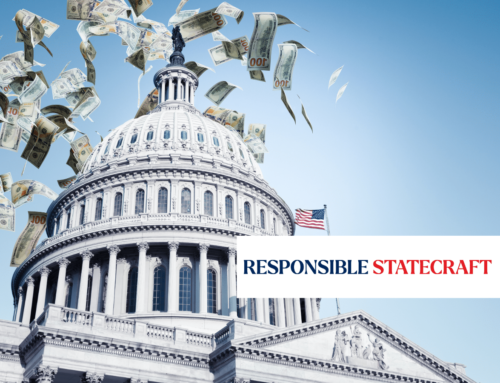
- Adobe Stock