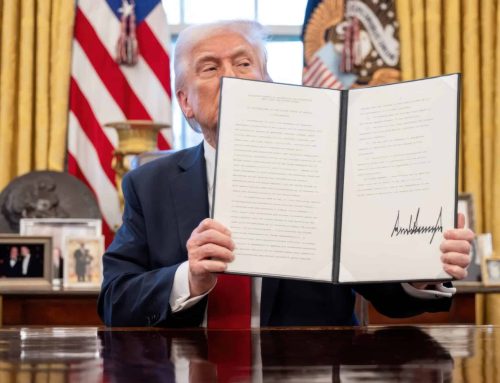
The President’s Fiscal Year 2027 Budget Request is here, sort of. Two months after the statutory deadline, the administration has provided the summary and some of the supporting documents that typically come with the annual request. While incomplete, this budget request provides what every budget request does: a glimpse into the administration’s spending priorities. Now it’s up to Congress to digest the budget, probe the administration, and decide if they endorse this vision for our tax dollars. Sadly, this vision is blurred by unrealistic economic expectations, fantasy cuts, and a Pentagon spending spree. We’re not fans.
Presidential budget requests are usually quite the affair. Through dozens of documents, thousands of pages, spreadsheets, and agency press events, administrations attempt to put their stamp on the federal budget process. This budget request is not quite that. Released on a Friday, seldom the newsiest of days, it wasn’t much of a show. Some budget talking points came out a little before 10am. A 92-page summary came a little after. Then came the Appendix, analytical perspectives, and some of the supplemental materials. For most detailed agency-specific documents, you had to wait until earlier this week, when Congress was out of town, and the Pentagon, which made up half the annual discretionary budget last year, isn’t planning to release its tombs of justification books until April 21. For an administration that likes the limelight, it was a quiet affair. But the budget request still has a lot to say.
Once again, it’s a budget riddled with fantasies and Built on Optimism. The budget assumes real GDP will jump to 3.5 percent in 2026 and then hover around 3 percent for the long-term. The Congressional Budget Office, the Federal Reserve, and private-sector forecasters all expect growth much closer to 2 percent. Same thing holds for unemployment. The admin says it’ll be 3.7 percent; lower than other forecasters. Interest rates down to 3.3 percent? Outside forecasters say the long-run trend is more like 4. Over a decade, that difference compounds, leading to vastly different economies. It’s a classic budget exercise. Change the assumptions to match the numbers you want.
Rosy assumptions and massaging of numbers aren’t unique to the Trump Administration, but the continuation and expansion of these tactics coincides with an increasingly perilous fiscal outlook. Federal debt is at a record $39 trillion. Annual deficits, while not a record, are projected to increase toward record territory as fiscal commitments to Social Security, Medicare, and Medicaid run head on into lower revenue from recent tax cuts. Federal debt that exceeds the annual production of the economy coupled with known, expensive, and critical spending promises that will further add to that debt, should lead to a budget grounded in reality.
Instead, this budget outperforms previous budget requests in dismissing political realities around budgeting, especially around spending and savings. There are some big proposed cuts; USDA down 19 percent, Department of Labor down 25 percent, the State Department losing 30 percent. But every top line of spending is comprised of specific programs. Programs that Congress is loathe to cut. Sure, you can propose cutting marketing assistance grants for farmers or USDA research. But not only did Congress fund these in the 2026 omnibus signed by the President in January, the mini farm bill pending in the House increases authorized spending levels for these activities. Finding “savings” in programs with little, or zero, chance of actually being cut, is not actual savings.
But it is on brand messaging. And messaging is central to budget requests. “Green New Scam” is mentioned twenty-one times even though it is not a program, a budget function, or an accounting category. Dozens of K-12 grants are consolidated into Make Education Great Again (MEGA) grants. And the documents routinely tout accomplishments from adoption of a bill that doesn’t exist – the “Working Families Tax Cut Act.” That’s the name the administration and GOP establishment have spent months trying to stick on P.L. 119-21, the One Big Beautiful Bill Act. OBBBA doesn’t poll well, so it’s time to rename not rethink.
Some of the messaging is in fact a clear message of priorities. The Department of War, as they’ve taken to calling it, is seeking a massive 45 percent spending boost. The request seeks $350 billion of that increase through budget reconciliation, an inherently partisan process that jettisons much of the oversight that regular appropriations must face. With this request, the administration appears to be asking taxpayers to pay for the Iran War twice—once in an Iran War supplemental, details on that still not public, and again in the annual budget, which seeks a 150 percent boost in munitions spending overall, but a 387 percent boost for the types of munitions used during the war.
It’s up to Congress to decide our nation’s fiscal fate. The presidential budget request is just that, a request. Congress has the constitutional right and responsibility to appropriate funds. They can follow the president’s lead and endorse a federal budget built on fantasy and geared toward partisanship, or they can responsibly tackle the nation’s fiscal challenges. Not surprisingly, as a nonpartisan budget watchdog, we prefer the latter.
- Photo by Marek Studzinski on Unsplash