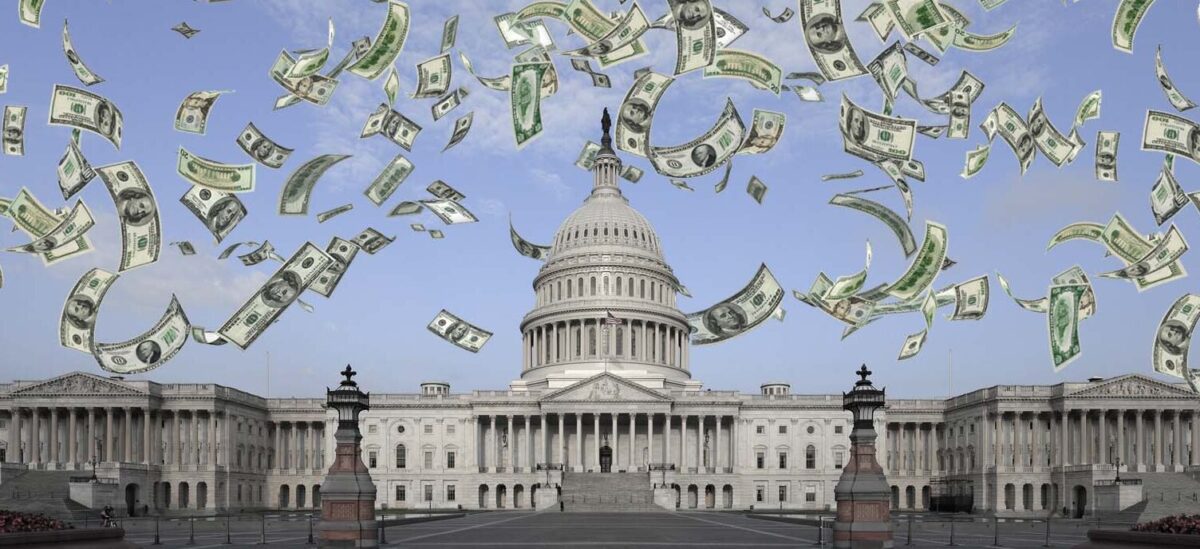

At first glance, the budget reads like a document of consequence. The numbers are large, the percentages larger. Entire cabinet departments appear to be on the chopping block—double-digit reductions that, if real, would mark one of the most aggressive efforts to shrink the federal government in decades.
But they are not real. Not in any meaningful sense. Cuts of this magnitude do not get enacted. They just don’t. Sigh.
You don’t have to speculate—you can look at what just happened. Last year’s budget request proposed significant cuts across agencies, but what ultimately became law through appropriations looks very different. Instead of sweeping reductions, Congress largely maintained funding levels within the constraints of the Fiscal Responsibility Act caps.
Congress writes the checks. And when faced with cuts of this scale, it routinely pares them back or (mostly) ignores them altogether. There is no precedent for across-the-board reductions of this magnitude actually making it through the appropriations process intact. That does not mean spending cuts are unnecessary. There are certainly programs that could be trimmed, reformed, or eliminated. But serious budgeting requires more than large percentages and round numbers. It requires specificity. It requires choices. It requires doing the math.
Take the Department of Agriculture. The budget claims a $4.9 billion reduction—about 19 percent. That’s a massive cut, one that would require clear, detailed policy changes to achieve. But when you look for those details, only about $1.5 billion in actual cuts are identified. The remaining billions exist only as an assertion. So…we’re just winging it?
And Agriculture isn’t alone. Across agencies, the pattern repeats: large topline reductions with far less clarity underneath. A 30 percent cut to State would imply sweeping changes to diplomatic operations, foreign assistance, and embassy staffing—yet the specifics are thin. A 25 percent reduction at Labor suggests major program eliminations or restructuring—but again, the roadmap is missing.
The same goes for Interior and HUD, both facing cuts in the low teens. Those aren’t trimming-around-the-edges numbers—they would require fundamental changes to land management, housing assistance, and community development programs. But the budget offers little detail on what would actually be reduced, delayed, or eliminated to achieve those savings.
You cannot achieve savings you cannot articulate. A credible budget connects dollars to decisions—this program ends, that subsidy is reduced, this activity is scaled back. The result here is a budget that merely gestures toward fiscal discipline without actually practicing it. It signals restraint without demonstrating it. And in doing so, it obscures the real work that would be required to bring spending down in any meaningful way.
Even as the budget proposes sweeping—if vague—cuts to domestic agencies, it clearly prioritizes increases elsewhere. Pentagon spending jumps by 44 percent. Nuclear weapons programs grow by more than 12 percent. The Justice Department rises by 13 percent, and Transportation funding increases as well. Unlike the proposed cuts, these increases are concrete. They reflect defined priorities and come with a clear path to enactment.
Let’s face it, cutting federal spending is hard. It requires trade-offs and difficult choices about what government should and should not do. This budget sidesteps it.
Instead, it pairs detailed, politically supported increases with cuts that are too large to be credible and too vague to be implemented. The result is not a serious plan to reduce spending, but a document that creates the appearance of restraint while avoiding the substance.