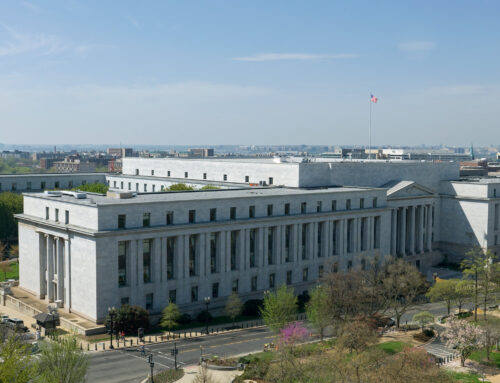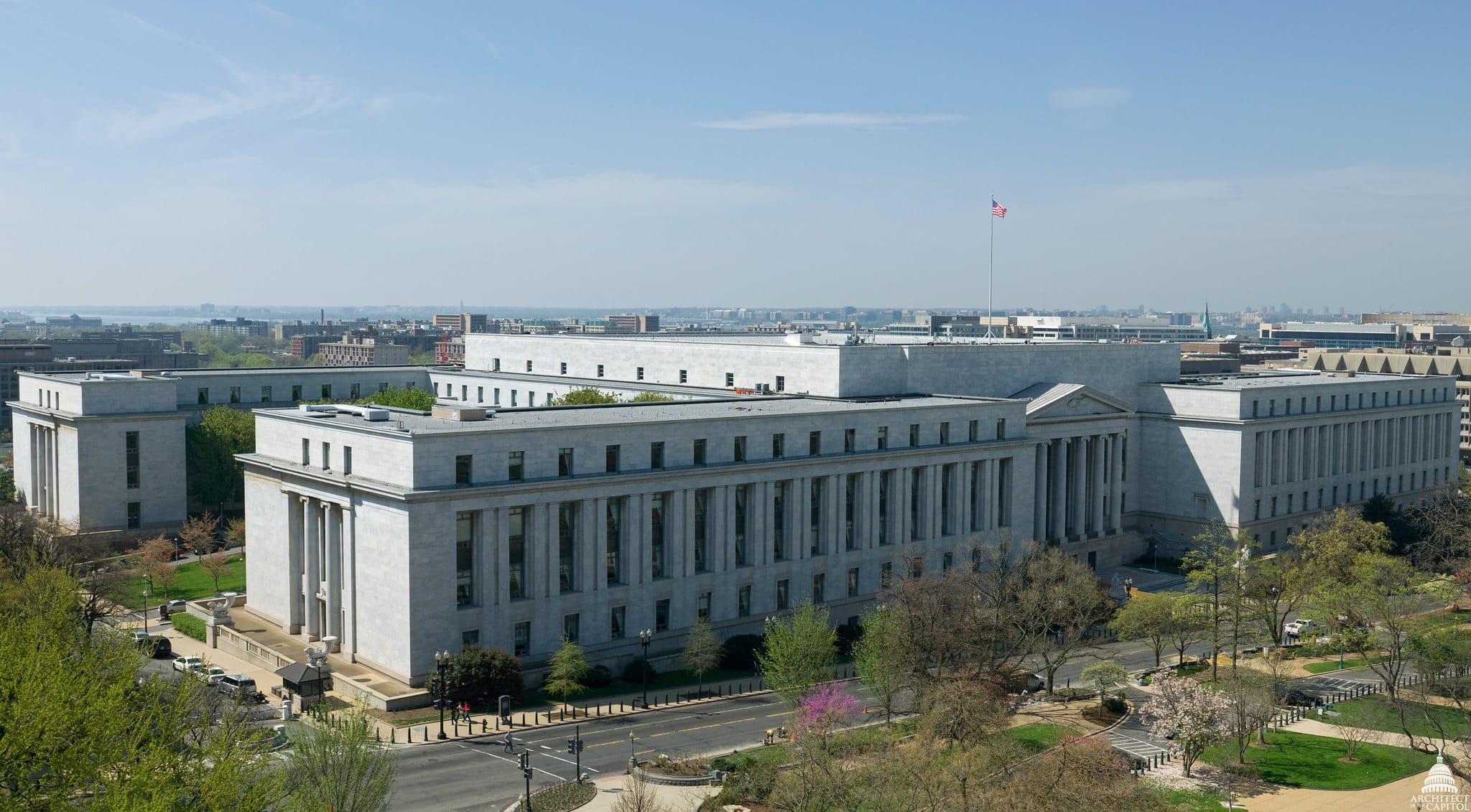

Taxpayers for Common Sense doesn’t just watch Congress — sometimes it sits at the witness table. Last week TCS President Steve Ellis testified before the House Financial Services Subcommittee on Housing and Insurance on flood insurance, repetitive loss properties, and mitigation. With reauthorization of the National Flood Insurance Program on the horizon, we take you inside the earing room to hear the case he made to lawmakers: the NFIP is $40 billion in the hole, we know which properties keep flooding, we know mitigation works, and the only thing missing is the will to act.
Transcript
Announcer:
Welcome to Budget Watchdog All Federal, the podcast dedicated to making sense of the budget spending and tax issues facing the nation. Cut through the partisan rhetoric and talking points for the facts about what’s being talked about, bandied about and pushed to Washington, brought to you by taxpayers for common sense. And now the host of Budget Watchdog AF TCS President Steve Ellis.
Steve Ellis:
Welcome to all American taxpayers seeking common sense. You’ve made it to the right place. For 30 years, TCS, that’s Taxpayers for Common Sense, is served as an independent nonpartisan budget watchdog group based in Washington, DC. We believe in fiscal policy for America that is based on facts. We believe in transparency and accountability because no matter where you are in the political spectrum, no one wants to see their tax dollars wasted. It’s March 2026 and Budget Watchdog AF Faithful. Last week I did something I’ve done dozens of times. I went to Capitol Hill not to watch a hearing, but to testify at one. The House Financial Services Subcommittee on Housing and Insurance held a hearing on flood insurance, repetitive loss properties, and mitigation. And the chairman asked me to sit at the witness table and make the taxpayer’s case. So even though there’s a lot of other things going on in the budget world between the ongoing war in the Middle East, a shutdown at DHS and an imminent president’s budget request for fiscal year 2027 plus a war supplemental spending bill, I thought it would be informative to share the experience with you.
So that’s what we’re doing today. No guest, just me, you, and the audio from the hearing room. I want to walk you through what I told Congress, why it matters, and what happened when members started asking questions.
Rep Mike Flood:
The subcommittee on housing and insurance will come to order. Without objection, the chair is authorized to declare a recess of the committee at any time.
Steve Ellis:
Let’s start with the basic fiscal reality. The National Flood Insurance Program, the NFIP, is $22.5 billion in debt to the US Treasury. And that number doesn’t include the $16 billion Congress already forgave in 2017. Added up and taxpayers have absorbed roughly $40 billion in costs from the program. A program that, by the way, is still losing money and absent reforms will continue to cost taxpayers.
Rep Mike Flood:
Mr. Ellis, you are now recognized for five minutes.
Steve Ellis:
Thank you. Here’s what I told the subcommittee. Good afternoon, Chairman Flood, ranking member Presley, and members of the subcommittee. Thank you for the opportunity to testify. I’m Steve Ellis, president of Taxpayers for Common Sense, a national nonpartisan budget watchdog. I’ve worked on flood insurance and disaster policy for more than three decades, and I’ve testified before Congress on the National Flood Insurance Program multiple times since joining TCS in 1999. Unfortunately, what I’m here to say today is not new. The problems we’re discussing, multiple lost properties, under investment and mitigation, misaligned incentives, failure to learn from the past have all been understood for decades. Taxpayers have been paying the price. What has been missing is action. Let me start with a simple point on flood insurance. The best way to reduce rates is to reduce risk. Risk is both widespread and growing. Nearly 18 million residential properties nationwide face substantial flood risk.
Steve Ellis:
As of February of last year, the NFIP was 22 and a half billion dollars in debt to the treasury and is expected to continue losing money. That doesn’t include $16 billion in debt that was forgiven in 2017. In total, taxpayers have born roughly $40 billion in costs. We’ve known for years that multiple lost properties, especially severe repetitive loss properties account for a significant share of claims. And importantly, we know where they are. One study found that each year between 2012 and 2021, about 1200 severe repetitive loss properties and nearly 5,000 repetitive loss properties were newly identified. It’s on government too. Buyouts are slow or incomplete leaving homeowners feeling trapped. There is little planning for inevitable floods and mitigation and buyouts are done a property at a time instead of entire neighborhoods. This is a failure to act on what we already know and to help people get out of harm’s way.
Steve Ellis:
Because the evidence is clear, mitigation works. Every dollar invested in mitigation saves multiple dollars in future disaster costs. Put simply, it’s cheaper to prevent damage than to rebuild after it. We have proven tools, strategic buyouts done at scale, elevation and floodproofing, relocation, community-wide mitigation, including green infrastructure, but we are not using these tools consistently. The brick program created in 2018 to strengthen pre-disaster mitigation was a step in the right direction, but it has been stalled until recently. And that is a classic case of being a penny-wise and a pound foolish because taxpayers will pay one way or another. The question is whether we invest upfront in mitigation or continue paying far more after disasters. Regarding pricing, risk rating 2.0 is an improvement because it better reflects actual property level risk. Price is one of the most important ways to communicate risk and influence behavior. Artificially suppressing rates encourages development and redevelopment in high risk areas, shifts costs onto taxpayers and misleads homeowners about the dangers they face.
Steve Ellis:
The answer is to provide targeted means tested assistance outside the rate structure, improve transparency on around rates, expand participation, especially through a stronger private market. When homeowners are learning about bundling flood insurance with home and auto from a gecko or flow or mayhem or an EMU, more people will be protected. Mapping must be updated using the best available technology. It is too often failed in risk communication. Homeowners believe that they are, if they are not in the special flood hazard area, they don’t need flood insurance until they sadly find out that they do. We also need to learn from failure. When there’s a relatively small aviation accident, the NTSB investigates and issues recommendations. But after major disasters, despite billions of dollars in federal spending, we don’t have a comparable process. A National Disaster Safety Board or similar independent process could provide fact-based analysis and recommendations of what went wrong and how it can be fixed or what went right and can be applied elsewhere.
Steve Ellis:
Finally, reauthorization. Instead of another short-term extension or lapse, the upcoming NFIP reauthorization is an opportunity to fix longstanding structural problems and provide stability. The problems we’re discussing today are not new. We know where the highest risk properties are, that mitigation works, that risk-based pricing is essential, that current policies lead to rebuilding over risk reduction. The question is not what to do. The question is whether we will do it. If we want to lower flood insurance rates, we must lower flood risk. That means investing in mitigation, aligning incentives, improving pricing, expanding coverage, and learning from failure. Thank you for the opportunity to testify. I look forward to your questions.
Rep Mike Flood:
Thank you, Mr. Ellis.
Steve Ellis:
So like I said up top, $40 billion. That’s what this program has cost taxpayers when you add it all up and the meter is still running. The program borrowed another $2 billion from Treasury just last year. And what makes this especially frustrating from a budget watchdog perspective is that we are not dealing with an unknown problem. We know which properties flood repeatedly. We know what mitigation costs. We know what doing nothing costs, and we know it’s far more. The failure here isn’t a lack of information, it’s a lack of action. And a big part of why action doesn’t happen is that the federal government has been playing the role of an open-ended backstop, covering costs that state and local governments, and frankly, some property owners should be taking more responsibility for. That’s what I got into with chairman of the full financial services committee, French Hill, a Republican from Arkansas.
Steve Ellis:
So here’s a pattern that budget watchers see across disaster programs, not just flood insurance. Local governments make land use decisions that increase flood risk. They approve development of floodplains. They don’t require mitigation. They don’t mandate that homeowners carry flood insurance even when federal money is footing the rebuild. And then when the water rises, Washington gets the bill. Chairman French Hill of Arkansas put it pretty bluntly, and I agreed with him. Here’s that exchange.
Rep French Hill:
This is, again, a major issue with this committee, which is the federal taxpayers are subsidizing state and local counties and city mayors who are interested in economic development and property taxes, and they’re approving people to build houses up in one way ravines with no fire suppression in Los Angeles County, or they’re building in floodplains that they shouldn’t be building them, or maybe not at the density at which they’re building and under the conditions. Is that a fair description of what’s happening in America today?
Steve Ellis:
Certainly, Mr. Chairman, and I can add to that. I also think about Houston where you had Ike come through, and then just years later, you had Hurricane Harvey and some of the same properties flooding, and these are areas where we should have learned from that disaster. And it gets back to my comment about having a National Transportation Safety Board for disasters.
Rep French Hill:
Yeah. So after Katrina, I was involved with a group that built houses in Lacombe, Louisiana, which is an unincorporated area on the shores of Lake Pontchartrain, probably in terms of sea level minus six inches, I would guess, something like that. And none of the people that we helped rebuild their houses had a mortgage because these are houses they inherited from somebody in their family. And this is a flood prone area and they live in a flood prone area. But of all the houses that we repaired, only one was raised with mitigation dollars. And my question is, should the state and local governments require flood insurance for people, even if they don’t have a mortgage interest? The state and local governments need to take responsibility here. This can’t be Uncle Sugar. And by the way, we didn’t have flood insurance before Camille in 1968. So you were on your own.
Rep French Hill:
This is a modern 50-year-old issue here trying to help Americans have access to flood insurance, which I get. I get the premise of it, but where is the state and local responsibility here? They create more risk to the portfolio. They don’t mandate mitigation and they don’t require people who we are going to rebuild their house, federal taxpayers, from having flood insurance, even though they don’t have a federal banking connection.
Steve Ellis:
Mr. Chairman, I’m all for attaching strengths to federal assistance. You can either decide not to take it or you can take it and you can actually be responsible to taxpayers. And that’s certainly how we’ve looked at disaster spending, which is other committees jurisdiction, but nevertheless, they’re very intertwined issues. And so certainly there has to be some local and state responsibility as we approach this and that Uncle Sam shouldn’t be Uncle Sugar, shouldn’t be Uncle Sucker, should be actually providing assistance in a strategic way and encouraging communities to provide the- I appreciate
Rep French Hill:
That. Thank you, Mr. Joseph. I just want to conclude, Mr. Chairman, by saying that if we had that sort of discipline, you would attract more private insurance into this market yield back.
Steve Ellis:
The point I was making, and what Mr. Hill and I were aligned on is that federal disaster assistance needs to come with conditions. Communities that plan ahead, that invest in mitigation before the flood comes, that take the necessary steps to reduce their risk, that having a plan of what they’re going to do when the inevitable disaster strikes, those communities should get more help. Communities that don’t plan, that approve construction and known flood zones, that keep their hand out every disaster cycle without changing anything. Those communities should get less, and they should have to choose between changing their behavior and losing the federal backstop. That’s not punitive. That’s how responsible fiscal policy works, and it’s a principle TCS has applied across disaster spending for years. Now, the other side of this equation is the mitigation investment itself, because here’s the thing, the return on mitigation spending is well documented.
Steve Ellis:
Every dollar you put in upfront saves multiple dollars in disaster costs down the road, so why aren’t we doing more of it? That question came up late in the hearing, and the answer involves budget real politic and something called budget scoring, which is where things get a little inside baseball, but stay with me.
Steve Ellis:
So the budget real politic. Mitigation spending is on budget. It competes with other priorities in the federal budget. Emergency disaster spending, on the other hand, is classified as emergency spending. It’s off budget. Essentially, while it adds to the deficit, it is regarded by lawmakers as free money. On the budget scoring side, the Congressional Budget Office scores legislation using the rules Congress gave them to estimate what the legislation would cost over 10 years. In theory, that’s a neutral apples to apples process. In practice, it creates a systematic bias against pre-disaster mitigation. So the system treats a dollar spent preventing a disaster differently than a dollar spent cleaning one up, and that makes it harder legislatively to do the smart thing. Congressman Mike Lawler, a Republican from New York, asked me about the first dynamic, and then Congressman Sam Liccardo, a Democrat from California, picked up the thread with question about the CBO scoring rules, highlighting BRIC, the Building Resilient Infrastructure and Communities Program.
Steve Ellis:
If you’ve been following along this year, you know BRIC had a rough stretch. The Trump administration halted spending on it and tried to wand it down. 20 states went to court and it looks like the money is finally starting to move again. Here’s how the conversation
Rep Mike Lawler:
Went. A 2019 study by the National Institute of Building Sciences found that every $1 invested in hazard mitigation saves up to $6 in avoided disaster losses, including reduced property damage, lower recovery costs, and pure disruptions to local economies. Mr. Ellis, given that mitigation yields such a high return, what prevents federal programs from prioritizing pre-disaster mitigation over post-disaster spending?
Steve Ellis:
Well, it’s been previously mentioned, and one is that there’s been less money, less resources, and some of it is because of the budget rules. That’s money that’s on budget, whereas a disaster is emergency funding, and so there’s more money. Thankfully, the BRIC program actually allowed some of the post-disaster funding to be shifted to mitigation, which is why it was so concerning that it was stalled for a few years here, but so that’s one area where I think we could do much more. And the other thing, just on your comment about delays on buyouts, it’s something that where we think that the disaster funding, we should have some strings attached to that, that communities that do more to make themselves less vulnerable in the future should be able to get more assistance. And that would be like you already planned. We know these places have flooded. We know they’re going to flood again.
When they flood again, we’re buying them out right now, cash on the barrel.
Rep Mike Flood:
The gentleman from California, Mr. Liccardo, is now recognized for five minutes.
Steve Ellis:
Congressman Liccardo followed up with questions about brick as well.
Rep. Sam Liccardo:
I’d like to focus on mitigating the risks though for a moment. Mr. Ellis, I appreciate your work as president of the taxpayers for common sense. I know not many Americans would disagree with that title, something we should all want. And your emphasis on preventative investment, I’ve heard it from you and from several other witnesses. As you noted in your written testimony, only about one out of every four of the highest risk properties for flooding is seeing any mitigation to reduce risk. And there are many ways to do that, certainly elevation, relocation, buyouts, investment green infrastructure, et cetera. What we know about mitigation is, well, I’m sure there’ve been a lot of different studies. Noah’s report that I saw cited $13 save for every dollar invested mitigation. I know there’s lots of ways of measuring that, like any cost benefit assessment, but I think you indicated there’s some problems with budget scoring rules that CBO uses.
Could you describe for a moment why we are not taking in account the value of mitigation fully and what we need to do to better score proposals?
Steve Ellis:
Yes, Congressman. State that the congressional budget office is a vital tool and we are very respectful of them, but we do have some issues sometimes with their scoring and some of their methodology. I know you need to have rules, but this is a case where one is they don’t always know … There’s a talk about $1 is $6 saved or $1 is $13 saved, but it all depends on the mitigation that you’re actually doing. And so it depends on the circumstances, whether it’s more costly for labor or for supplies, but in the end, they’re not counting some of the values and the savings that you’re going to get from investing in mitigation. And that’s the limitation on this legislation moving forward or any legislation moving forward that has that because of the cost barrier.
Rep. Sam Liccardo:
So certainly I would agree about the imperative to consider how we can reform, how we assess our investments at a federal level. We do have some programs for investment. One of them was, and theoretically is the Building Resilient Infrastructure and Communities Program, BRIC, which we know has gone through a pretty tumultuous existence over the last 14 months or so. It’s the largest competitively awarded pre-disaster mitigation funding source. Almost $5 billion available had been made in its existence, but of course nothing since 2024 because the Trump administration halted all spending and attempted to eliminate the program. Then of course, 20 states went to court, got an injunction to halt the Trump administration’s elimination of the program. Then they went to court again to try to get the administration that is FEMA to actually follow the prior court order. It appears now they’re finally doing that. My understanding is that there are a little over $5 billion set aside in the disaster relief fund for BRIC.
Do you think it would be a good idea for taxpayers that they actually invested those dollars in mitigation of risk?
Steve Ellis:
Absolutely, Congressman. I mean, it’s very ironic that the BRIC program was created in the first Trump administration. It’s their own creation, and it really is a great tool where you’re taking some of the post-response dollars and you’re pre-sponding to future disasters. And so that’s an investment in the nation’s future, that’s an investment in taxpayers and having reduced future losses. And so no, it’s an important area and it’s something that I’m glad to hear that the money is finally moving. BRIC was created in 2018. The first Trump administration, as I noted in the hearing, the concept was straightforward. Take a portion of the money up to 6% that Congress approves to spend after disasters and redirect it to preventing them. Not just where the disaster happened, but where it is needed anywhere in the country. That’s not complicated. It recognizes some of the budgetary challenges from politics and scoring rules.
Steve Ellis:
It’s simple and just common sense, which you may have noticed is kind of our thing. One other thing, Congressman Liccardo asked Taxpayers for Common sense to review and work with them on a piece of disaster related legislation that they were cooking up. That’s how you get things done in the Capitol. I’ll leave it here, Budget Watchdog AF Faithful. The NFIP is coming up for reauthorization again after years of short-term extensions and lapses. This is not just a procedural moment. It is an opportunity to fix structural problems that have been kicking around for decades. We know which properties flood repeatedly. We know what mitigation costs. We know the return on that investment. We know the alternative is paying far more over and over for the same properties and the same floodplains. We know the best way to reduce rates is to reduce risk, not by providing subsidies to deal with affordability issues.
Steve Ellis:
The question, as I said in the hearing room, is not what to do. The question is whether we will do it. This is the frequency. Market on your dial, subscribe and share and know this. Taxpayers for Common Sense has your back America. We read the bills, monitor the earmarks, and highlight those wasteful programs that poorly spent our money and shift long-term risk to taxpayers. We’ll be back with a new episode soon. I hope you’ll meet us right here to learn more.