
Gas prices are above $4 a gallon. Crude oil is past $100 a barrel. And Washington is doing what Washington does — pointing to federal leasing as the fix. But is it?
TCS President Steve Ellis sits down with TCS Vice President Autumn Hanna to break down exactly how global oil markets work, why a domestic leasing policy can’t move a global price, and what the numbers actually say about royalty rates and pump prices.
The math is precise, and the conclusion is clear: raising the royalty rate on new federal leases — from 12.5% to 16.67% — would have a maximum impact on pump prices of 6/100ths of a cent per gallon. That’s less than a rounding error. Meanwhile, the US is already producing oil at record levels — 13.6 million barrels a day in 2025 — and Americans are still paying over $4 at the pump.
The frustration is real. The straight answers are here.
Transcript
Announcer:
Welcome to Budget Watchdog All Federal, the podcast dedicated to making sense of the budget spending and tax issues facing the nation. Cut through the partisan rhetoric and talking points for the facts about what’s being talked about, bandied about and pushed to Washington, brought to you by taxpayers for common sense. And now the host of Budget Watchdog AF TCS President Steve Ellis.
Steve Ellis (00:40):
Welcome to all American taxpayers seeking common sense. You’ve made it to the right place. For 30 years, TCS, that’s Taxpayers for Common Sense, has served as an independent nonpartisan budget watchdog group based in Washington, DC. We believe in fiscal policy for America that’s based on facts. We believe in transparency and accountability because no matter where you are in the political spectrum, no one wants to see their tax dollars wasted. It’s April 2026, and I’m going to guess that you’ve probably filled up your tank recently because if you have, you already know what we’re talking about today. Gas prices are hurting. We’re looking at a national average around, we’re estimating $4.12 a gallon. Crude oil has blown past $110 a barrel. Ongoing tensions with Iran, the threat to the straight dev hormones, it’s rattling global markets, and it’s rattling wallets. And predictably, Washington is responding the way Washington responds.
(01:33):
There are calls to drill on more federal land, cut royalty rates, open everything up. The message from a lot of corners is this is a federal leasing problem and we can fix it. Here’s the thing, TCS just dug into that claim and the answer is not what you’re hearing. TCS Vice President Autumn Hanna is here to walk us through our new issue brief, understanding gas prices, devaluing America’s resources won’t lower prices at the pump. Autumn, welcome back.
Autumn Hanna (02:00):
Thanks, Steve. And look, anyone who’s been to the gas station lately gets why there’s urgency here. The question is whether that urgency is being pointed in the right direction.
Steve Ellis (02:09):
Exactly. So let’s start at the beginning because I think a lot of our listeners, our budget watchdog AF Faithful, genuinely want to understand this. When they’re standing at the pump watching the numbers spin, what is actually determining that price? How does this work?
Autumn Hanna (02:24):
So the first thing people need to know is that crude oil is the biggest piece of what you’re paying at the pump. About 51 cents of every dollar goes towards that crude oil price. The rest covers refining, getting the fuel to your station and taxes. And here’s the thing, crude oil isn’t priced in the US. It’s priced on the global market.
Steve Ellis (02:43):
It was the first global commodity.
Autumn Hanna (02:45):
Right. You can think of it like the stock market. The price is set by buyers and sellers all over the world, reacting to events happening everywhere. What moves out price things like how much OPEC decides to produce, conflicts in major oil producing regions. And whether the global economy is really booming or slowing down, even the strength of the US dollar plays a role because every oil transaction in the world is settled in dollars.
Steve Ellis (03:07):
So I guess closing the straight of removes either by the US or Iran is going to have an impact.
Autumn Hanna (03:12):
That’s right, Steve. So when someone in Washington says they can fix your gas prices by fast tracking federal leasing at discounted rates, they’re talking about a domestic policy knob on this global system. It just doesn’t connect.
Steve Ellis (03:24):
And when you look back at history, the times prices have really spiked or created, what does that tell us about what actually moves the needle on oil prices?
Autumn Hanna (03:34):
History really makes this concrete. If you look at a chart of crude oil prices over the last 15 years, the pattern is unmistakable. Every major spike or crash lines up with the big global event, not a domestic policy decision. The fracking boom in the 2010s flooded the world with American oil and prices dropped and COVID hit. The whole world stopped moving, demand fell off a cliff and crude prices actually went below zero at one point in 2020. You were essentially paying someone to take oil off your hands. Prices bounced back as the economy recovered.
Steve Ellis (04:03):
Zero. Wow.
Autumn Hanna (04:05):
Then in 2022, Russia invaded Ukraine disrupted supply and were back above $100 a barrel. And today with the war in Iran and the threat that closes straight for moose, which is one of the most critical shipping lanes for global oil, has pushed crude past $110. Every single one of those moments was a massive global shock. None of them traced back to anything that the federal government did or didn’t do with leases or public lands.
Steve Ellis (04:26):
Okay. So the price is global, but the United States is producing a lot of oil right now. Doesn’t that give us some ability to influence what happens?
Autumn Hanna (04:35):
It’s a fair question. And yes, what we produce matters on the global picture, but here’s the reality check. We are already producing more oil than we ever have. In 2025, the US average 13.6 million barrels of oil per day. That’s a new record for us surpassing even our pre-pandemic peak. Natural gas is on track for records too, and we’re not just producing it. We’re shipping it all over the world. The US exports about 6.3 million barrels a day of refined petroleum products. So we’re already the world’s top oil and gas producer and a massive exporter, and yet Americans are still paying more than $4 at the pump. Why? Because the global shock supply hits everyone. The price resets for the whole world and we’re part of that world. Producing more doesn’t insulate us. It contributes to that global supply, yes, but it doesn’t give us a separate cheaper price.
Steve Ellis (05:20):
So Autumn, here’s where it gets interesting because what you’re describing is a country already producing and exporting at record levels, and yet the policy conversation keeps circling back to federal lands, drilling more, cutting royalty rates. Can you explain what a royalty rate is and why it’s become such a focal point?
Autumn Hanna (05:40):
Sure. So when a company drills for oil and gas that belongs to the American public, they sell it for profit, but we’re the resource owners. And as that resource owner, we are rightfully and legally do a share of that profit. So they pay a percentage of what that oil and gas is worth back to the public. That percentage is called the royalty rate. That money gets split between the states and the federal government. Half of that goes to the state where the drilling is happening. So states like Wyoming or New Mexico get a cut that goes towards things like schools and roads. The current federal royalty rate is 12.5%. It’s actually pretty low. It’s lower than a lot of stage charge for their own lands. TCS has long argued that we should get a fairer return for these resources we own. And now you hear again with gas prices high, some policymakers say if you raise the royalty rate even a little, it’ll make gas more expensive for regular people.
(06:26):
You’ll hear that claim a lot and it sounds intuitive. More cost to companies, the more they pass it to consumers, right? When we actually do the math, the numbers tell a very different story.
Steve Ellis (06:34):
Okay, Autumn, so let’s put that claim to the test. What does the math actually show? Because we actually care about numbers and facts here at BudgetWatch.af.
Autumn Hanna (06:43):
Okay. So let’s just walk through it because it’s actually pretty simple when you hear it laid out. We start with, let’s say, $4.12, which is the average price we’ve seen for gas in the last few weeks. Crude oil is 51% of that, as I said earlier, so about $2.10 of what you’re paying is tied to the crude price. Now, federal lands produce about 10% of US oil, so the piece of your gallon that comes from federal land is about 21 cents. But it gets even smaller than that. The vast majority of oil production on federal land comes from leases that were signed decades ago. In some cases, 50 years or more. So only about 6% of royalty payments come from leases issued in the last 10 years. So if you raise the royalty rate on new leases like happened a couple years ago, only part of that small 6% slice would be affected.
(07:25):
When you run that through the math, increasing the rate from 12.5 to 16.67, as we saw a few years ago with the royalty rate increase, the maximum impact on the price of a gallon of gas is 600ths of one cent. So that’s assuming oil companies pass every single penny of that increase directly to at the pump rather than absorbing any of it. Given the profits these companies are posting right now, that’s a generous assumption. And we’re not talking about a rounding error, we’re talking about less than a rounding error.
Steve Ellis (07:52):
So you were saying they pass every single penny. It’s really every 600th of a penny onto the consumer. That’s the number. Has outside research backed us up on that?
Autumn Hanna (08:04):
It has. The Congressional Budget Office, which Congress’s own nonpartisan number cruncher found that reducing federal leasing would have a negligible effect on oil and gas production over 10 years. And then the GAO, the government accountability office, the investigative arm of Congress, you probably hear about a lot on this podcast, looked at what actually happened in states where they’d already raised royalty rates. They showed that Colorado has raised its rate in 2016. By later that same year, state officials reported zero slowdown in company interest and new leases. They said they weren’t even sure the royalty rate factored meaningfully into a company’s decision at all whether to lease. Texas charges a royalty weight of 25% on state lands, and they’ve done that for over 30 years. That’s double the federal rate, and it has had no noticeable impact on production. And why? It’s because these companies don’t decide where to drill based on royalty rates.
(08:54):
They decide based on whether there’s a potential for oil at a location, how much it costs to get it out of the ground, and what the market price is.
Steve Ellis (09:02):
So if cutting royalties on federal land won’t lower prices at the pump autumn, what does it actually do? Who benefits?
Autumn Hanna (09:09):
That’s really the bottom line question, isn’t it? If the consumer is not benefiting from a lower royalty rate and the math is clear they don’t, then who does? It’s the oil companies. Full stop.
Steve Ellis (09:19):
Preach.
Autumn Hanna (09:20):
These are the resources the American public owns. When we charge less than a fair royalty rate, we’re not saving drivers any money. We’re handing a discount to companies that are already making enormous profits off that $110 crude.
Steve Ellis (09:33):
Right. It’s not like the oil companies are hurting from the crisis. They’re raking in serious annual profits.
Autumn Hanna (09:40):
And Steve, there’s real costs that flow from not charging a fair market royalty. The national debt is at an all- time high. Forgoing royalty revenue and publicly owned resource just makes that worse. States lose the share of royalty revenue that funds their roads and schools, and taxpayers often end up on the hook for well cleanup costs when companies eventually walk away from depleted sites. So you’ve got a situation where gas prices are high, oil companies are doing very well, and the policy response being proposed is to give those same companies an even sweeter deal on the resource that belongs to all of us. That’s a bad trade for taxpayers any way you slice it.
Steve Ellis (10:16):
And there’s a timing issue here that I think is worth making explicit. Even if you believed more federal leasing at rock bottom rates was the answer, would it actually help with what we’re experiencing right now?
Autumn Hanna (10:29):
No. And I think this is one of the most important points to drive home because drilling for oil is not like turning on a faucet. From the moment a new lease is signed, you’re looking at years of geological surveys, permitting, drilling, building out infrastructure and to actually move that oil somewhere. A lease sign today does not produce a single barrel of oil this year or probably next year either. It has no connection whatsoever to the supply shock happening right now. Right now in April 2026, it cannot help the person filling up their tank today and anyone suggesting otherwise really isn’t being straight with the American public about how this industry really works.
Steve Ellis (11:06):
All right, Autumn. Last question. And I want to put this in terms that the person who just paid that $4.12 a gallon at the pump can take away from this conversation. What do taxpayers actually need to understand about this moment?
Autumn Hanna (11:20):
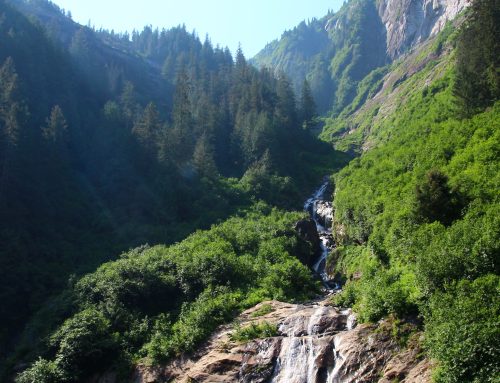
I’d say this. The frustration is real. We’re all paying a lot more at the pump. Over $4 a gallon is real money and we are really feeling it, but the person at the pump deserves a straight answer, not these political talking points. And the straight answer is this, the price spike is being driven by a global supply shock, a conflict with Iran, a threat to one of the world’s most critical oil shipping lanes. The federal government has very limited tools to change that in the short term, and any politician that’s telling you otherwise just isn’t being honest. The policy is being offered as relief like cutting royalties, opening up more federal land, even places like the Sensitive Artsy Refuge, and selling that as a way to lower gas prices just isn’t real, not by any meaningful amount. We showed you the math today. We talked about it and we’ve got more details on our website.
(12:08):
So what taxpayers need to know is that short changing and devaluing our resources just gets us less revenue, less revenue to pay down the national debt, less money for states to fund vital priorities like schools and roads, and more cleanup liability down the road when we just recklessly develop and rush to get out more public lands for lease. This isn’t good policy and it isn’t going to help us get cheaper gas prices.
Steve Ellis (12:33):
Let’s call it what is, Autumn, it is really just political opportunism. Here’s a crisis. Let’s take advantage for something that we already want.
Autumn Hanna (12:40):
That’s right, Steve. And here’s the real kicker. Oil prices are high right now, which means our publicly owned resources are more valuable right now, more valuable than they’ve been in years. This is exactly the wrong moment to give them away on the cheap. Taxpayers deserve a fair return on what we own. We should be getting more of that revenue, and now it’s just making oil and gas companies richer. We deserve leaders who are honest about that, leaders who can help us deliver and really do what’s right for taxpayers.
Steve Ellis (13:06):
Autumn, thank you. Always good to have the facts in front of us, even when they’re not the facts people want to hear.
Autumn Hanna (13:12):
Great to be here, Steve. Thanks.
Steve Ellis (13:14):
Well, there you have it, podcast listeners. This is the frequency. Mark it on your dial, subscribe and share and know this: Taxpayers for Common Sense has your back, America. We read the bills, monitor the earmarks, and highlight those wasteful programs that poorly spend our money and shift long-term risk to taxpayers. We’ll be back with a new episode soon. I hope you’ll meet us right here to learn more.