
On Sunday, the Armed Services Committees released compromise text of the National Defense Authorization Act (NDAA), the Pentagon’s annual policy bill. With a vote scheduled in the House this week, lawmakers will have limited time to ingest the 44-page table of contents, let alone the full 3,086-page document.
Those that do review it with an eye for national security strategy, government accountability, and fiscal restraint will find problems greater than the sum of their parts.
Topline Fever
They had a fever, and the only solution… was more money for the Pentagon.
After a bit of back and forth on the right size of the budget authority in the bill, and despite hearing from us and other good governance groups in opposition to a topline increase, leadership settled on an $8 billion increase above the president’s more than $1 trillion national security budget request.
Sen. Mitch McConnell (R-KY), who penned an op-ed in the Wall Street Journal last week calling for more military spending, argued that the U.S. spends less on its military as a percentage of GDP than it has in the past. That’s true. But military needs aren’t dictated by the size of the economy. It turns out, the best way to measure trends in military spending is by looking at actual spending. Through that lens, which some might call reality, Pentagon spending has grown by about 50 percent since the turn of this century, adjusted for inflation.
Throwing more money at the problem isn’t a strategy. It’s what happens when you don’t have one. Unfortunately, a needlessly higher topline is far from the only problem with the compromise NDAA.
Industry Right to Repair
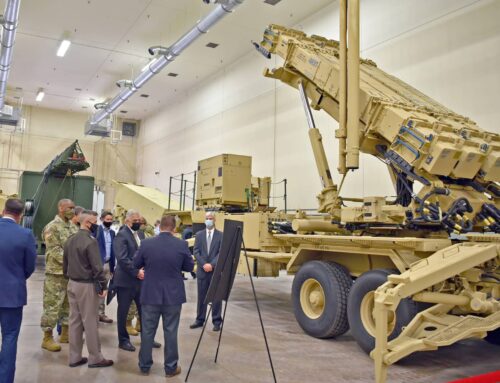
Rather than including language in the House and Senate drafts that would have guaranteed servicemembers reasonable access to the tools and data necessary to repair their equipment, leadership jettisoned this bipartisan, bicameral language in favor of a provision that ensures servicemembers and taxpayers will continue to be plagued by contract provisions that leave repairs in the hands of contractors, leading to higher costs and dangerous delays.
Sec. 805, Addressing Insufficiencies in Technical Data, requires the Secretary of Defense to review requirements for covered data, and to identify any insufficiencies in that coverage. If the Secretary identifies insufficient coverage (which any honest assessment would), the language requires the Secretary to “seek to address such insufficiency with the relevant contractor…” In other words, ask industry if they’re willing to share more data.
This is nothing short of complete capitulation to the military industry. This approach forgoes language that could have reduced repair delays, protected servicemembers, and saved taxpayers perhaps tens of billions of dollars per year, in favor of language that treats each instance of insufficient data on a case-by-case basis, and that relies on the good will of industry to offer the military reasonable access to repair tools and data, rather than requiring it. It’s dangerous, fiscally irresponsible, and morally bankrupt.
Acquisition Blindness
Leadership in both chambers focused this year’s NDAA on the goal of implementing what they’ve called acquisition reform. In practice, it’s more like acquisition blindness. Through provisions that increase dollar thresholds for reporting requirements around certified cost and pricing data, and provisions that expand the use of commercial designations (which are subject to fewer requirements), the compromise NDAA will effectively blind Pentagon contracting officers to the true cost of a wide range of products and services, forcing them to blindly assume that industry is offering services at a fair price rather than ensuring their access to hard data to assess what constitutes fair pricing.
Other provisions increase the Pentagon’s multi-year procurement authority, repeal existing guardrails to prevent overpriced contracts, and limit requirements for commercial subcontracts. One provision, Sec. 803, even envisions the government covering the cost of interest payments for military contractors, despite the Pentagon itself previously warning that covering interest payments for industry “creates the real risk of ‘moral hazard’ as it pertains to interest,” because it would incentivize industry to take on more debt than it otherwise would.
The result of these and other provisions included in the name of acquisition reform will be an acquisition process that lacks appropriate oversight, invites excessive spending, and welcomes overpriced contracts.
Positive Provisions Overshadowed
Have you ever had a good dream overtaken by a nightmare? The NDAA has. The bill does include some positive provisions, but they pale in comparison to the harm the bill as a whole would codify.
A number of sections require reports to Congress regarding the plan for Golden Dome, which at this point is still pretty murky. Sec. 1654 prohibits a privatized or subscription-based model for missile defense intercept capabilities, which would leave industry in control of key systems (and their long-term price) envisioned for Golden Dome.
Sec. 1659 also limits the availability of funds for the Missile Defense Agency (MDA) to 90 percent of appropriated funds until it secures an updated independent assessment of space-based missile defense capabilities. The MDA has failed to secure such an assessment, despite language in the FY 2024 NDAA requiring the Secretary of Defense to seek to enter such an arrangement within 90 days of enactment. Still, the prospect of the MDA spending up to 90 percent of their appropriated funds prior to sharing such an assessment with Congress is not exactly our idea of tough oversight.
Another positive provision, Sec. 3116, strengthens congressional notification requirements surrounding cost overruns for certain nuclear weapons programs.
Vote NO
The Pentagon budget needs a cut to enforce fiscal and strategic discipline. Instead, this NDAA offers fiscal and strategic overreach and industry handouts dressed up as acquisition reform. Lawmakers should vote no and revamp the bill to include a topline spending cut and stronger protections for taxpayers and warfighters.
- Photo by Colin Lloyd on Unsplash