
The Honorable Roger Wicker
Chairman
Senate Committee on Armed Services
425 Russell Senate Office Building
Washington, DC 20510
Senator Jack Reed
Ranking Member
Senate Committee on Armed Services
728 Hart Senate Office Building
Washington, DC 20510
The Honorable Mike Rogers
Chairman
House Committee on Armed Services
2469 Rayburn House Office Building
Washington, DC 20515
Representative Adam Smith
Ranking Member
House Committee on Armed Services
2264 Rayburn House Office Building
Washington, DC 20515
Dear Chairman Wicker, Ranking Member Reed, Chairman Rogers, and Ranking Member Smith:
We are writing to voice our strong support for the inclusion of military “right-to-repair” provisions in the fiscal year 2027 National Defense Authorization Act (FY 2027 NDAA). Lawmakers voted to include such provisions in both the House and Senate versions of last year’s NDAA, but they were ultimately removed from the compromise bill drafted by the conference committee, despite the Trump administration signaling support for right to repair. We are calling for these provisions — which are supported by lawmakers, voters, and military leadership alike — to finally be enacted as part of any FY 2027 NDAA.
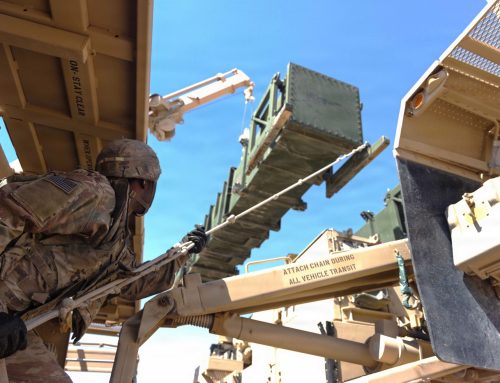
As you are all aware, current law allows for contracts that often force the military’s highly capable service members to rely on contracting personnel to repair equipment, even though this practice increases costs and can cause major delays. Instead, the Pentagon should save taxpayer dollars, protect military personnel, and strengthen national security by enabling service members to conduct their own repairs on the equipment they need to safely complete their missions.
Currently, contractors can and do impose significant restrictions on what equipment military personnel are allowed to repair themselves. Weapons and equipment manufacturers limit self-repair for the military in a variety of ways, from requiring approved contractors to fly in to repair or maintain equipment, to threatening to void warranties, to establishing more general access restrictions on the technical data needed for repairs.
Pentagon contractors can garner longer-term profits when they monopolize maintenance and repairs on defense weapons systems; operation and maintenance can account for as much as 70% of any program’s total cost. The Government Accountability Office (GAO) has even reported that Pentagon contractors will sometimes purposely bid low to reap the long-term profits that come from sustainment costs.
Right to Repair Benefits Taxpayers, Service Members, and National Security
Existing repair restrictions put an unnecessary burden on taxpayers and subject our troops to unacceptable risks. We currently pay contractors tens of billions of dollars annually to maintain military vehicles and equipment. Removing artificial restrictions on repairing and maintaining this equipment could reduce wasteful spending by the Department of Defense (DOD) and generate meaningful taxpayer savings.
Removing unnecessary repair limitations would also improve military readiness. For example, the $2 trillion F-35 program faces delays and costly maintenance problems in part because of the right-to-repair issue. Vital flight time has been missed partially because contract repair services are too expensive.
Furthermore, relying on contractors for critical repairs during a conflict or time-sensitive mission is simply dangerous. Service members need to be able to repair their own equipment in the field for their safety and for the sake of their mission — defending the United States. Contract provisions that prevent this pose an unacceptable risk to our service members and national security.
Instead of squandering resources by allowing these contractor repair monopolies to continue, Congress should ensure the DOD chooses the more cost-effective option of allowing service members to repair their own equipment.
Right to Repair Is Backed by Voters, Military Leaders, and Administration Officials
There is a clear appetite among wide swaths of the public, military leadership, and the executive branch for finding a solution to this problem. A 2026 poll found that American voters support allowing service members to repair their own equipment by an overwhelming margin. According to the survey, 78.9% of voters support such a policy, including 84.1% of Republicans, 78.2% of Democrats, and 76.2% of Independents.
Overwhelming support from voters is matched by overwhelming support from the highest levels of our military, including all three service secretaries. While testifying before a hearing of the Senate Armed Services Committee in May 2026, Army Secretary Daniel Driscoll strongly endorsed passing right to repair in this year’s NDAA, adding that inclusion of these provisions is “one of the most important things, and I don’t say this to be over the top.” During the same hearing, Secretary Driscoll explained that existing restrictions in the military’s ability to repair its own equipment “could be the decisive point between us being successful somewhere 6,000 miles away in the Indo-Pacific or failing our mission.” In June 2025, then-Navy Secretary John Phelan stated that he was a “huge supporter of the right to repair.” In May 2025, Air Force Secretary Troy Meink said right to repair was a strategic priority for the Air Force both “from a cost perspective” and “from a readiness perspective.”
Other high-ranking military officials have shared similar sentiments. Joint Chiefs of Staff Chair General Dan Caine said right to repair “would decrease reliance on external contractors, lower service fees, and allow for more efficient maintenance practices, ultimately leading to long-term cost savings.” Marine Corps General Christopher Mahoney said the Marines should be able to “clearly identify and prioritize the need for organic repair capabilities” from the onset of the contracting process. He said right to repair is “a critical investment in our long-term readiness and operational effectiveness.”
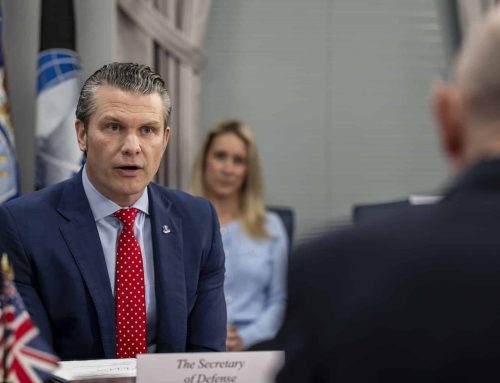
In 2025, Defense Secretary Pete Hegseth himself expressed support for right to repair, directing the Army to ensure right-to-repair provisions are included in new and existing contracts.
Right to Repair Would Strengthen and Diversify the Defense Industrial Base
A legislative mandate for right to repair would foster greater innovation in the defense industrial base by allowing small and mid-sized contractors to make new and important contributions to our national security. By requiring DOD to procure technical data and other repair materials up front, right-to-repair reforms would remove artificial, anticompetitive barriers that force the military to rely on original equipment manufacturers for sustainment operations. A new crop of technically capable maintainers would have opportunities to support mission readiness across DOD, leading to lower costs and higher quality services through competition.
Diversification of the industrial base in this manner would make our homeland more secure and improve the resilience of our warfighting capabilities. By decreasing the military’s reliance on a handful of large defense contractors, right-to-repair reforms would allow for a more flexible supply chain during an increasingly unpredictable time of geopolitical volatility. Furthermore, removing artificial repair restrictions would allow DOD to award a wider variety of maintenance contracts to a wider variety of contractors, which has the potential to substantially reduce system down time.
A Legislative Mandate Is the Only Comprehensive Solution
High-ranking officials from each of the different services told Congress they support right-to-repair reforms as a way to ensure that taxpayer savings, service member safety, and military readiness are prioritized in all new defense contracts. Unfortunately, the Chairman’s Mark that was unveiled in the House last week does not include any language that would meaningfully resolve these issues and, in some respects, represents a step backward from the status quo.
We strongly believe that including right-to-repair language in the FY 2027 NDAA will improve national security, and we encourage all members of Congress to support the passage of these provisions. In addition, we urge Congress to oppose any provisions that would make it easier for contracting companies to further monopolize military equipment repair. Finally, should right-to-repair provisions be approved by the House or Senate as part of their FY 2027 NDAA packages, we strongly urge you to make sure substantively similar provisions are included in the compromise legislation that is drafted in conference.
Thank you for your attention to this issue. We hope Congress will take this opportunity to empower our service members and save taxpayer dollars by supporting the inclusion of military right-to-repair language in the FY 2027 NDAA.