
Halloween is almost here, and it truly is a terrifying time in Washington. The federal budget is full of haunts and horrors, so we thought it would be a good time to reflect on some of the many tricks and few treats that matter most to taxpayers.
Trick: The National Debt
If there’s one monster that just won’t stop growing, it’s the national debt. And unlike the creatures lurking under your bed, this one is very real.
The national debt, which only recently passed $40 trillion back in August, passed a bone-chilling $40.5 trillion this week. The scariest part of this for taxpayers is the interest payments to service that debt. Net interest on the national debt reached approximately $1.14 trillion in Fiscal Year 2026. At this pace the most expensive program run by the federal government won’t be Social Security or Medicare, it will be paying interest on the national debt.
This fiscal Frankenstein wasn’t created overnight. Lawmakers from both parties have spent decades increasing spending and giving out tax breaks while ignoring the long-term consequences. But recent increases have accelerated and now the monster is loose, and taxpayers are left footing an ever-growing bill.
Treat: Fiscal Commission Momentum
Not everything brewing in Washington’s cauldron is bad.
This year there has been renewed bipartisan momentum to address the nation’s horrifying national debt and deficit. The Fiscal Commission Act, proposed in the House last year and the Senate this year, would create a bipartisan commission across both chambers tasked with lowering the debt to GDP ratio and ensuring programs like Social Security are solvent. The House Budget Committee has recently held hearings on the act, putting pressure on congressional leadership to bring the bill to the floor.
The post-midterm lame duck period will be a critical time to see if the fiscal commission momentum can turn into a real treat for taxpayers, or if Washington’s budgetary terrors will continue into the untold future.
Trick: The Pentagon’s Top Line Request
This year’s Pentagon budget request is truly the stuff of nightmares.
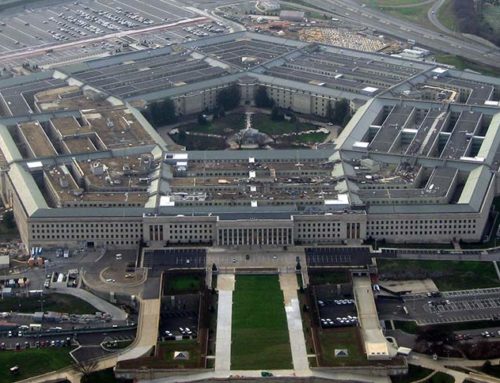
For FY2027, the Pentagon requested an unprecedented $1.5 trillion. The request includes approximately $1.15 trillion in discretionary funding, a roughly $250 billion increase over last year, along with another $350 billion through budget reconciliation. And that’s before accounting for the administration’s supplemental funding request for the Iran War.
The $350 billion in reconciliation funding is the real trick. Reconciliation allows lawmakers to bypass both the Senate filibuster and the usual transparency requirements. Moreover, asking for $1.5 trillion in total makes the base budget request for $1.15 look more reasonable by comparison, which was likely by design. But there’s nothing reasonable about it.
If Congress doesn’t shut the door on reconciliation and the massive discretionary increase, the new Pentagon spending baseline will shower the military industry with treats that will haunt taxpayers for years to come.
Treat: FEMA Reform Progress
Enough with the skeletons in the closet, here’s a more welcome development: efforts to reform the Federal Emergency Management Agency (FEMA).
The federal government’s approach to disaster preparedness and relief is long overdue for overhaul. Federal assistance programs are a confusing bureaucratic maze, and disaster mitigation remains underfunded despite its proven ability to reduce risks while saving taxpayers money in the long run.
Fortunately, lawmakers have begun making progress. The FEMA Act, officially the Fixing Emergency Management for Americans Act, advanced through committee last fall by an overwhelming 57-3 vote. The bill would modernize disaster assistance by streamlining applications and restoring FEMA’s status as an independent, cabinet-level agency. Despite that, House leadership has not brought the bill to the floor for a vote.
While FEMA reform has not passed yet, there is clearly growing bipartisan recognition that it is necessary. Now lawmakers need to act before these proposals become just another ghost of legislation past.
Trick: Methane Waste Standards Rollbacks
Here’s a particularly frightening disappearing act: valuable natural gas vanishing into thin air.
Methane, the primary component of natural gas, is a valuable domestic energy resource. Yet, oil and gas operators routinely waste it through leaks, deliberate releases known as venting, and burning known as flaring. When publicly owned gas goes up in smoke, potential taxpayer revenue disappears with it. The public health and climate costs stick around to haunt us.
Instead of curbing this waste, the administration is heling it slip into the shadows. In June, the Bureau of Land Management proposed rolling back much of its 2024 Waste Prevention Rule. The Environmental Protection Agency joined the frightening festivities on October 27, proposing weaker requirements at certain wells, more reliance on flaring, and the demise of the Super Emitter Program.
That’s a frightening amount of energy disappearing into thin air.
–
So there you have it: another Halloween season, another collection of Washington’s fiscal tricks and treats. Unfortunately, this year’s goodie bag is looking a little light on the treats. But with Congress returning after the midterm elections, lawmakers will soon have another opportunity to confront our nation’s fiscal frights.
Happy Halloween from Taxpayers for Common Sense!