
Washington can spend less on disasters without making disasters cost less. But that’s not a real solution to rising disaster costs. If we cut federal disaster spending and send a bigger repair bill to a flooded town, federal spending will fall. The town still has a washed-out road, though, and rebuilding it may consume the money meant to prevent the next flood from doing the same damage.
FEMA Administrator Cameron Hamilton has outlined plans to reduce state and local dependence on federal disaster assistance. His October 15 memo calls for stronger state emergency management capabilities and greater responsibility for preparedness and recovery. Building state capacity is a worthy goal. But would shifting more responsibility to states reduce the damage and expense, or just give Washington a smaller number to announce?
Hamilton’s priorities echo President Trump’s FEMA Review Council, which has proposed giving states and private insurers more responsibility for disasters. There is a case for changing the current system. We have spent decades advocating for federal disaster spending that helps people get out of harm’s way and rewards decisions that reduce future losses.
These changes should be judged by whether they reduce those losses, not simply how much responsibility they move out of Washington. FEMA usually pays 75 percent or more of the cost to rebuild a town’s damaged road. In 16 states, the state government contributes nothing toward the rest, leaving the town to come up with the money. Increasing the “state share” could mean passing more of the bill from FEMA straight to the town.
Wyoming, which touts its lack of a state income tax, is one of these states. It has just 22 full-time emergency management and homeland security employees statewide. Shifting responsibility does not automatically give states more expertise or towns more money to rebuild. It creates a patchwork where recovery depends on the help a state provides and the money a community can raise locally.
Some communities could face a larger share of the bill, while others may lose access to federal help altogether. The Council proposes raising the bar for federal disaster declarations and requiring states to spend more before requesting help. Its analysis found 29 percent of disasters declared between 2012 and 2025 would not have met an inflation-adjusted indicator, but those events represented only 0.69 percent of federal funding. Raising that bar could leave many communities without federal help, with relatively little change in Washington’s overall disaster bill.
Even where states help cover recovery costs, the damage can overwhelm state and local resources, the very definition federal disaster declarations. The Trump administration recently convened G20 finance ministers in Asheville, in part to showcase western North Carolina’s recovery from Hurricane Helene. The storm caused an estimated $1 billion in damage to city-owned property and infrastructure. How much recovery would there have been to showcase if communities had been left to find more money locally while rebuilding with less federal expertise and support?
The same question runs through the Review Council’s flood insurance proposals. It wants private insurers to take over some policies now covered by the National Flood Insurance Program. That program provides more than $1.3 trillion in coverage over 4.5 million policies, but past losses have left it tens of billions in debt. More private coverage could give homeowners additional choices and put private money behind risks now covered by taxpayers. A gecko selling flood insurance could be a good thing.
The federal flood insurance program would likely be left with fewer policies and less coverage, but the properties that remain would be at higher risk. Lawmakers would have to be willing to spend to mitigate or eliminate the risk to those properties. Insuring fewer properties would not, by itself, mean taxpayers face smaller losses.
Congress should judge these changes by whether they reduce disaster risk. Preventing damage means less to rebuild and less for taxpayers to pay. Isn’t that the goal?
People need practical ways to reduce their risk. Elevating a home or helping an owner relocate voluntarily can be a better investment than repairing the same property. Rebuilding with fire-resistant materials and clearing flammable vegetation around homes can reduce wildfire damage. Federal policy should reward communities for reducing future losses, and states should let them do it.
Congress can shrink FEMA and still leave the country with a growing disaster bill. The real savings come when a home no longer needs to be repaired and a town’s road survives the next storm. That is the reform taxpayers should be paying for.
Steve Ellis is president of Taxpayers for Common Sense, a national nonpartisan budget watchdog.
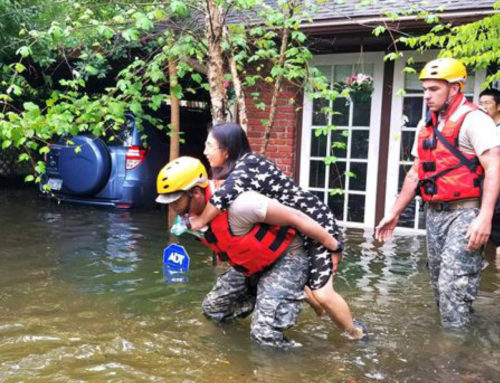
- Marvin Nauman, Public domain, via Wikimedia Commons