
The Trump Administration recently announced plans to bypass Congress and spend an additional $12 billion subsidizing the incomes of a select group of farmers. The administration’s new Farmer Bridge Assistance Program (FBA) will use authority provided by the Depression-era Commodity Credit Corporation to send $11 billion in checks to farm operations with acreage planted to a list of commodity row crops (corn, cotton, soybeans, and 17 other specific crops) before the end of February, 2026. An additional $1 billion will be distributed to growers of non-eligible crops including so-called specialty crops and sugar at some point in the future. While pitched as a temporary payment to carry farm operations until One Big Beautiful Budget Act-expanded farm subsidy programs are implemented in 2026, it is just the latest instance of lawmakers tapping the Treasury to subsidize a set of politically powerful interest groups with an insatiable appetite for taxpayer cash. Based on history and the preliminary design of the program, it is also likely to further diminish Congressional efforts to design a cost-effective, transparent farm financial safety net that reduces dependence on federal subsidies. Programmatic details are sparse, but a few observations are clear.
Bypassing Congress to Plant new Subsidies
The FBA is being created and designed at the discretion of the Secretary of Agriculture, not in response to any legislative direction or appropriation of funds from Congress. The administration is using its Commodity Credit Corporation Charter Act Section 5 authority to make these extraordinary payments (15 U.S.C. 714) directly from the Treasury.
While full details have not yet been released, the FBA draws on the same borrowing authority and looks very similar to the trade bailouts from the first Trump Administration (called Market Facilitation Program in 2018 and 2019). Commodity specific payment rates, individual payment limits, income means-testing, and other programmatic details may differ, but the overall structure appears very similar.
Qualifying through Categorical Eligibility
To receive a payment a farmer simply needs to report to USDA that they planted one of the eligible crops. Payments will be made regardless of whether the farm operation proves they experienced an economic loss. Simply having planted one of the eligible crops puts the farmer in the category of operations eligible for a federal payment. Such broad-based categorical eligibility, used in most other social welfare programs such as SNAP, eases the administrative burden, allowing payments to be made quickly since beneficiaries do not have to first prove they need the payment nor document the amount of payment to which they are entitled. But it also opens the program to abuse and waste by subsidizing all farm operations equally without regard to actual economic performance.
In addition, USDA is using national averages to estimate losses and calculate compensation. A challenge with using averages is that they do not reflect the differences in production costs or market prices throughout the country. Under this program all farms will be compensated as if they have identical costs and access to identical prices. Assistance will thus not necessarily be proportional to claimed need (some will have a larger percentage of their calculated losses covered than others). This disparity in assistance will likely lead to calls for additional payments to make the program more equitable by region or crop.
Replacing Markets with Federal Income Mandates
According to USDA the program is intended to “help address market disruptions, elevated input costs, persistent inflation, and market losses from foreign competitors engaging in unfair trade practices that impede exports.” The MFP trade assistance programs in 2018 and 2019 were justified as “temporary” measures to assist producers suffering from retaliatory tariffs while the administration negotiated new trade deals with China. After the signing of new commitments to tackle trade barriers and increase commodity purchases retaliatory tariffs eased and the justification for MFP ended as well. There are no obvious end points for when USDA can claim “victory” in the current climate. The president’s penchant to use tariffs as a primary negotiating tool in foreign policy contributes to market disruptions for farmers, with no end in sight. Input costs, which include fertilizers, seeds, steel for machinery, and other products needed by farming operations, are elevated in part because of the president’s implementation of tariffs. Their costs may go even higher, since at the White House roundtable announcing the FBA, the president floated using tariffs to address fertilizer imports from Canada amongst other issues. And inflation continues to be above the Federal Reserve’s target rate of two percent. Without any clarity on the metrics for determining when success is achieved, the Farmer Bridge Assistance looks less like a temporary structure and more like a road to perpetual federal subsidization of farm income.
Conclusion
Taxpayers don’t need to have all the details on the latest gambit of farm subsidies to know they are a fiscally irresponsible exercise that fails to increase the economic resilience of the farm sector. Instead of further misusing the Charter Act to add $12 billion to the national debt, the administration should provide the stability and predictability farmers need by ending the arbitrary and unpredictable application of tariffs. The FBA is not a bridge to a new golden era for American farmers; it’s a step toward further dependence on federal support.
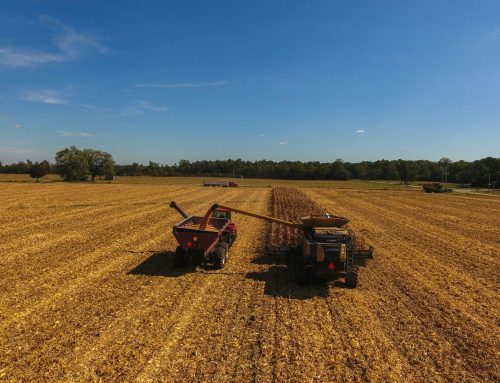
- Photo by Jake Cater on Unsplash