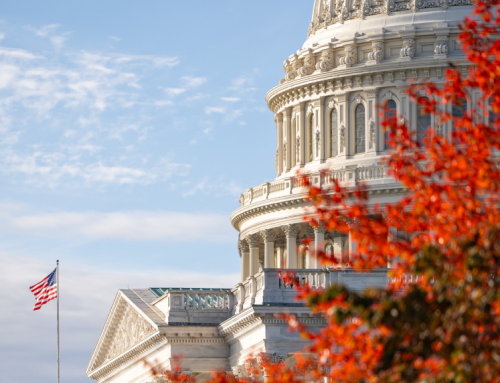

Fresh off their Memorial Day recess, lawmakers are set to return to Washington. With a lot of items on Congress’s to do list, none is more pressing than getting its own house in order. Congress is a coequal branch of government. It’s time they start acting like it by reasserting their authority over spending. Because Congress exercising its power of the purse isn’t an option, it’s an obligation imposed in the Constitution. And a legislative branch that acknowledges and defends its foundational role in governance is a prerequisite to making a government that works for taxpayers.
First, a recap of the events right before Memorial Day. Eight months into the fiscal year, lawmakers were finally putting the 2026 budget to bed with a second budget reconciliation package to fund Immigration and Customs Enforcement (ICE) and U.S. Customs and Border Protection (CBP). Senators seemed to have accepted the Senate parliamentarian’s ruling that $1 billion in “security” funding for the president’s east wing ballroom construction violated the rules of reconciliation. But before feathers could be unruffled and votes started, the administration announced creation of a $1.776 billion Anti-Weaponization Fund at the Department of Justice. The fund’s stated purpose is to compensate individuals who claim they were improperly targeted by federal law enforcement, but it requires no judicial finding, sets no limit on eligible claimants, and lacks congressional authorization for those payments. With Senate Democrats ready to force multiple votes on amendments to block this effort, and tensions already high from reconciliation, primary elections, and the endless churn of the news cycle, Senate leadership called a timeout. Lawmakers left these legislative hot potatoes to cool.
But now they are back, and they have to deal with this hot mess. Lawmakers should use this as an opportunity to get back to basics and do the hard work of their job. Both reverting to reconciliation instead of the normal budget process and potential acceptance of a weaponizing government slush fund are fruits of the same poisoned tree—Congressional lawmakers abandoning or ignoring their power of the purse.
The conversion of reconciliation from a technical tool for reducing deficits, into packages for partisan pursuits is fiscally harmful. Reconciliation was never intended to be a tool for major policy changes. But both Republicans and Democrats have resorted to reconciliation to enact spending and tax policies that otherwise could not garner the votes to be enacted in regular order; that is with engagement from the opposing party. And while you can debate the relative merits of the policies enacted through reconciliation, its conversion into a tool of partisan policymaking has effectively eliminated it as a tool for fiscal accountability and deficit reduction.
The most recent attempt to use reconciliation is especially harmful because of its impact on Congress itself. Providing nearly $70 billion to ICE and CBP and making those funds available through FY2028 insulates these agencies from future annual budget processes and the need to respond to Congressional efforts to influence their operations. And while Republicans may see this as a short-term win, preventing a potentially Democratic-lead Congress from imposing conditions, it is a long-term institutional self-harm. Cutting Congress out of the annual spending equation weakens one of its most effective oversight tools. An administration that doesn’t need to ask Congress for money is one that doesn’t need to show up for oversight hearings, react to changes on the ground, or respond to shifting public or Congressional sentiment. And locking in multi-year mandatory funding sets a precedent for future administrations that may pursue very different public policies.
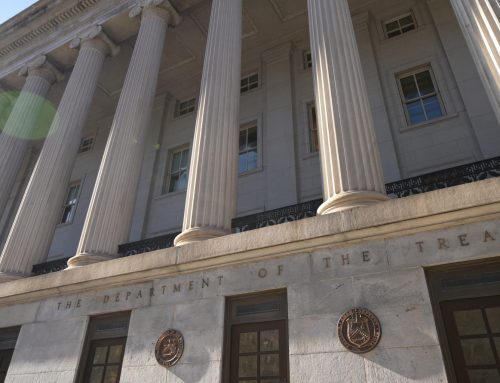
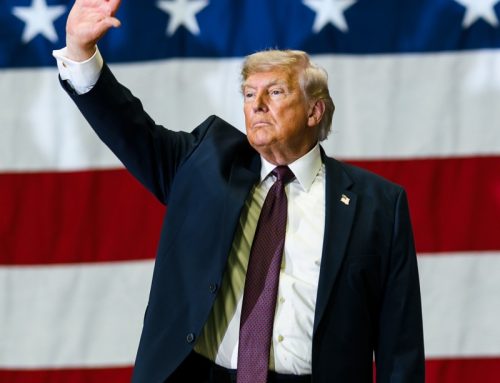
The Anti-Weaponization Fund is a more direct assault on constitutionally derived Congressional authority. Wherever you fall on the merits of the policies pursued by the President, the mechanics are blatantly unconstitutional. The administration is proposing to hijack the Treasury Department’s Judgment Fund to create a program administered by the president, with no obvious bounds and no accountability to Congress or the Judiciary. The Judgment Fund is an existing Congressionally authorized spending account appropriated for the specific purpose of paying court-ordered judgements against the government. Redirecting those tax dollars to discretionary presidential payouts is a direct end-run around the appropriations process. Unlike past payments from the fund, the proposed Weaponization Fund payouts would not be in response to an actual legal settlement, haven’t been approved by a judge, and would not be limited to claimants of the lawsuit being settled. It truly is an unprecedented attempt to create a presidentially managed slush fund with seemingly no bounds.
Congressional acceptance of the Weaponization Fund would be a major abrogation of authority, fiscal accountability, and the rule of law. An administration can’t spend funds provided for one purpose on another (Purpose Statute). Spending funds without an authorization from Congress would violate the Anti-Deficiency Act. Also there is no indication this “program” would follow any of the rules multiple Congresses and presidents have put in place for implementing a federal program (public comment, reporting on outlays, oversight by the Inspector General, or judicial review.) Frankly, it’s galling and appalling. It’s also already been halted by a court order.
But Congress doesn’t need to rely on court orders or the whims of the Executive Branch to reassert its authority over the nation’s purse strings. It can pass a resolution explicitly blocking the Weaponization Fund. It can invoke the Anti-Deficiency Act in oversight hearings and demand accountability from agency heads. It’s Congress’s job to decide what is good policy and worthy of federal investment. Not the president, not Congressional leadership, not just a handful of members in the party in control. It’s the Legislative Branch. It’s time for Congress to stand up for the American people by first standing up for itself.
- Photo by Harold Mendoza on Unsplash