
November 10, 2026
Dear Member of Congress,
As you return to Washington, we write to urge you to close the 119th Congress with fiscal responsibility as a top priority. With government funding set to expire December 11, there is necessary work to finish and little time to finish it. That calls for a focused agenda, not a final round of expensive deals.
Taxpayers for Common Sense has been advocating fiscal responsibility on behalf of taxpayers for over 30 years. Having experienced many lame duck sessions, we urge you to fund the government and meet urgent needs, while resisting costly year-end additions. Some decisions cannot wait. Others deserve more debate than a rushed agreement in the final days of the session.
Avoid a Costly Government Shutdown
Government shutdowns are costly, inefficient, and a bad deal for taxpayers. The Congressional Budget Office found that the 35-day 2018-2019 government shutdown led to an $8 billion decrease in U.S. real GDP, equivalent to roughly 0.2 percent of GDP. Shutdowns do not alter the nation’s spending trajectory. The disruptions caused by government shutdowns disrupt the lives of Americans without delivering benefits to taxpayers.
Congress should finish the spending bills if members can reach a responsible agreement. If time runs out, Congress should pass a clean, short-term continuing resolution. The pressure to get home for the holidays is no reason to accept costly extras or unrelated policy changes.
Say NO to Another Budget Reconciliation Package
This Congress has already enacted two deficit-financed budget reconciliation packages. There should not be a third. Budget reconciliation does not make deficit-increasing spending or tax breaks more affordable. Legislation addressing the debt limit should not become another vehicle for unrelated spending increases or tax breaks.
Rein in the Pentagon Budget
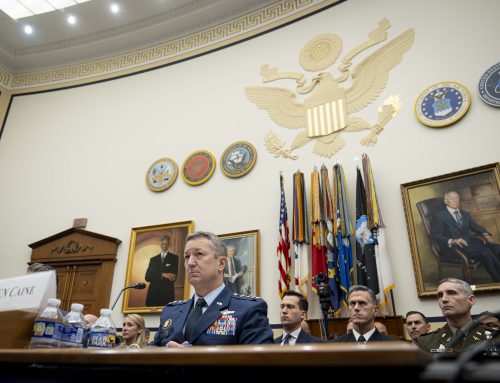
Following an 18 percent increase in overall Pentagon spending in FY2026, fiscal responsibility demands a more restrained approach for FY2027, not another spending spree. The administration is seeking approximately $1.15 trillion in discretionary Pentagon funding, $250 billion more than the previous year, plus $350 billion through reconciliation. That is a $1.5 trillion request before additional funding sought for the Iran War. Far from strengthening national security, meeting this request would deepen the threat posed by the nation’s growing fiscal crisis. It would also fuel wasteful spending on programs like Golden Dome that would fail to deliver for taxpayers and carry their own strategic risks.
TCS has already urged members to oppose the National Defense Authorization Act unless its topline falls significantly below the proposed $1.15 trillion level. That remains our position. The same goes for the Pentagon’s spending bill, the current version of which includes a similarly excessive increase. Maintaining the streak of annual passage of the NDAA does not justify an unaffordable topline. Members should not accept that price simply to get the bill across the finish line.
TCS has identified $518 billion in specific cuts to wasteful weapons spending. Congress should use those recommendations to reduce the request, not treat the request as the starting point for further increases. Members should also demand evidence that expensive new programs will work and credible estimates of their lifetime costs.
Beyond rejecting wasteful spending, lawmakers should support commonsense measures to reduce costs and strengthen national security, such as ensuring the military has the right to repair its own equipment and limiting stock buybacks by Pentagon contractors that aren’t delivering for taxpayers.
Do Not Turn Another Deadline Into Another Farm Bailout
In December 2024, after failing to finish a farm bill, lawmakers attached $10 billion in farm income subsidies to a three-month continuing resolution. That was separate from $20.8 billion provided for agricultural disaster losses in 2023 and 2024.
Before approving more, Congress should ask how those funds have been used, which losses remain uncovered, and what recipients already receive through crop insurance and other programs. Broad income subsidies should not be approved on the same grounds as aid for documented disaster losses.
If remaining farm bill authorities need an extension, extend them without expanding subsidies. Congress should account for support already enacted through reconciliation and emergency legislation before approving more. Failure to finish a comprehensive farm bill does not justify adding another layer of payments to whichever bill is moving.
Long-term changes should receive a full debate about who benefits, what taxpayers pay, and whether payments duplicate existing assistance.
Reject Unnecessary Supplemental Appropriations
Some emergencies require the federal government to spend quickly to address urgent needs. This is not one of those times. Taxpayers should not be asked to pay for an emergency supplemental in the lame duck.
Lawmakers should not blindly approve more agricultural aid or Iran War funding through an emergency supplemental.
The Iran War was never authorized by Congress, and as long as it remains both active and unauthorized, Congress should not fund it. While the war has raised valid concerns about the military’s munitions stockpiles, replenishing inventories will take years no matter how much money Congress rushes out the door. The continuing resolution under which the government is currently operating allows the Pentagon to continue spending money on munitions, and a future spending agreement would likely include additional funding for that purpose. But the most important step Congress can take to address the crisis in the short term is to stop the ongoing depletion of munitions by reining in the war. Passing a war supplemental in the lame duck would be a step in the wrong direction.
Prevent Lapses in Flood Insurance and Surface Transportation Authorities
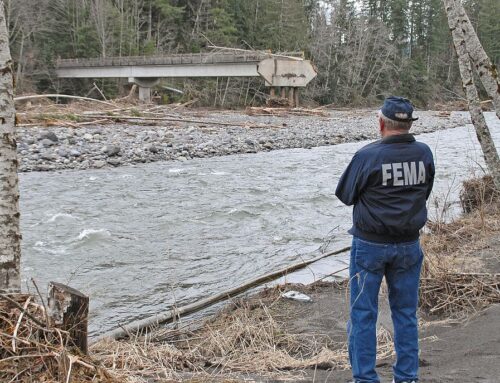
Congress should extend the National Flood Insurance Program and surface transportation authorities before December 11 because letting them expire would be costly for taxpayers. A flood insurance lapse would interrupt new policies and renewals and could delay home sales. A transportation lapse could delay new federal commitments for highway and transit projects. Short extensions would prevent disruption without settling long-term funding questions in a year-end rush.
Demand That Leadership Provide Adequate Time for Debate
Legislative text, credible cost estimates, and funding allocations must be made public well before a vote. Members need time to understand what they are considering, and taxpayers should not have to wait until passage to learn what an agreement contains.
December 11 is a known deadline, not an excuse to present Congress with a sprawling bill and a choice between immediate passage and a shutdown.
The nation is more than $40 trillion in debt, and interest costs on that debt exceeded $1 trillion last year. Finish the necessary work without locking taxpayers into costly commitments that have not received adequate scrutiny.
Sincerely,

Steve Ellis
President
Taxpayers for Common Sense