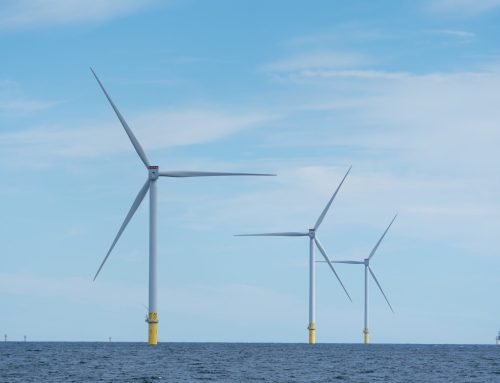

On Monday, the Department of the Interior (DOI) announced yet another settlement agreement to buy out a federal offshore wind lease. This decision marks the fourth time this year that the DOI has entered deals with private energy companies to terminate their offshore wind leases.
DOI would terminate Duke Energy’s offshore wind lease located in the Carolina Long Bay area and pay the company $129 million—the amount they paid to acquire the lease in 2022. And in exchange, Duke Energy would then reinvest the funds in new nuclear and natural gas projects.
The pattern is now familiar. After a federal judge ruled against the Administration’s attempt to halt offshore wind permitting and approval, the White House is now pursuing a new strategy of paying companies to walk away from projects. But derailing these projects puts taxpayer funds and energy reliability at risk, as these projects would deliver multiple gigawatts of domestically produced electricity to the grid.
In March, the administration struck its first major deal, a taxpayer-funded buyback of nearly $1 billion for the French energy company TotalEnergies’s offshore wind leases off the coast of New York and North Carolina. In exchange, TotalEnergies agreed to invest $928 million in oil and gas projects.
In April, agreements between DOI and Bluepoint Wind and Golden State Wind resulted in another nearly $900 million buyout of leases off the coast of California, New Jersey, and New York. Both Bluepoint and Golden State promised to invest the refund into fossil fuel initiatives.
In June, less than two weeks before the Duke Energy decision, DOI offered Invenergy a $765 million buyout of its four leases off the coast of California, Maine, and New York. This decision was also made with the agreement that Invenergy would use the funds to invest in natural gas power plants in Wisconsin, Iowa, Kansas, and Missouri and geothermal projects in the Western United States.
All of these buyouts highlight a part of a nearly $2.8 billion effort to subsidize more traditional energy sources at the expense of offshore wind energy. In each of the buybacks, DOI has structured the payments as settlements, allowing compensation to be drawn from the Treasury Department’s Judgment Fund. The Judgment Fund is a permanent appropriation used by federal agencies to pay court judgments and settlements against the United States without requiring a new appropriation from Congress for each case. The legality of such use of the Judgment Fund remains a question. And legal questions aside, the Administration writing blank checks to private companies to favor a certain type of energy project over another is concerning, especially when taxpayers are now financing these settlements.
It’s important to underline that all of the above-mentioned leases were acquired in competitive auctions that generated revenue for taxpayers. These private companies and other players in the energy sector are interested in developing offshore wind energy and saw a need to diversify their energy portfolio, yet these agreements are going the exact opposite direction of market forces. In a time of surging energy demands and skyrocketing oil commodity prices, investing in conventional energy while shelving other viable sources will do nothing to provide much-needed relief to taxpayers’ wallets. Taxpayers deserve energy policy that is fiscally responsible, technology-neutral, and grounded in transparent decision-making.
- Photo by Stephen Boutwell/BOEM CC BY-SA 2.0