
Executive Summary
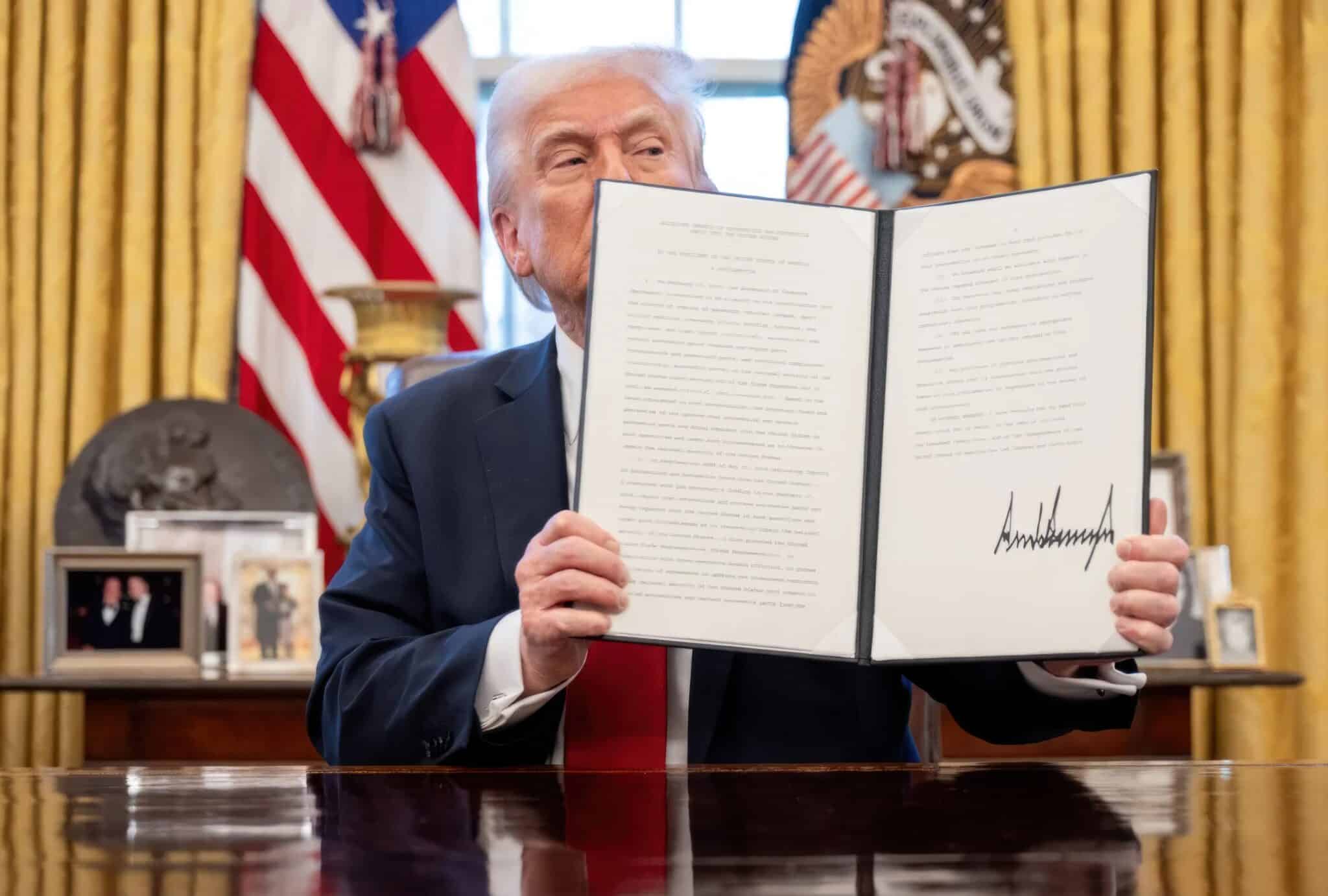
Golden Dome rests on a promise it cannot deliver—reliably defending the United States from the threat of nuclear weapons. Since the 1960s, the United States has spent more than $450 billion trying to develop missile defense systems capable of reliably defending the U.S. from intercontinental ballistic missile threats.[i] No system to date has demonstrated that capability. Despite this history of costly failure, President Donald Trump has proposed building a “Golden Dome” missile defense system with that same goal in mind.[ii]
Originally labelled “Iron Dome for America,” the program draws its inspiration from Israel’s Iron Dome missile defense system. However, the comparison masks critical differences in the challenges facing these systems—Israel’s missile defenses are designed to defend against short- and medium-range missiles and rockets armed with conventional bombs, while Golden Dome aims to protect the entire United States, a far larger area, against nuclear-armed, intercontinental-range weapons. The viability challenges associated with Golden Dome are thus vastly greater than those facing Israel’s missile defense systems, as are the likely costs.
Estimates of the potential cost of deploying Golden Dome indicate that an expansive approach could cost taxpayers $3.6 trillion over the next 20 years, or $4.4 trillion adjusted for inflation.[iii] Even this astronomical estimate does not represent the upper limit of Golden Dome’s cost. One analysis suggests that a robust architecture (or system design) for just one component of the system—boost-phase space-based interceptors (SBIs)—could alone exceed $6 trillion over the same period.[iv]
Even under generous technical assumptions, the viability challenges facing Golden Dome are severe. When it comes to reliably defending the United States against peer and near-peer intercontinental nuclear threats, those challenges are effectively insurmountable. They include the number of interceptors required to reliably defend the United States, with some estimates suggesting ratios as high as 1,600 interceptors for every incoming missile; the ability of adversaries to deploy countermeasures designed to defeat missile defenses; and the risk that a nuclear detonation in the atmosphere or in space could significantly degrade or disable the system’s ability to track and intercept additional threats.[v] As a budget watchdog, one of our guiding principles at Taxpayers for Common Sense is, “if it doesn’t work, don’t fund it.” The evidence presented in this report strongly suggests that Golden Dome will not work.
Pursuing Golden Dome also poses serious strategic risks, including the potential to accelerate nuclear arms and space arms races and to undermine opportunities to secure verifiable arms control agreements that reduce the nuclear threat. The program has also raised troubling conflict-of-interest concerns involving individuals within the Trump Administration and companies vying for Golden Dome contracts.
——
[i] Cirincione, Joe. “Trump’s “Golden Dome” Won’t Work—but It’ll Make Elon Musk Richer.” The New Republic. May 25, 2025. https://newrepublic.com/article/195608/trump-golden-dome-elon-musk-richer
[ii] “Presidential Actions: The Iron Dome for America.” The White House. Jan. 27, 2025. https://www.whitehouse.gov/presidential-actions/2025/01/the-iron-dome-for-america/
[iii] Harrison, Todd. “Build Your Own Golden Dome: A Framework for Understanding Costs, Choices, and Tradeoffs.” American Enterprise Institute. Sep. 20, 2025. https://www.aei.org/wp-content/uploads/2025/09/WP-Estimating-the-Cost-of-Golden-Dome.pdf
[iv] Ibid.
[v] “Strategic Ballistic Missile Defense: Challenges to Defending the United States.” American Physical Society Panel on Public Affairs. February 2025. https://res.cloudinary.com/apsphysics/image/upload/v1741185158/APS_BMD_Report_2025_qzgzaz.pdf
- NASA