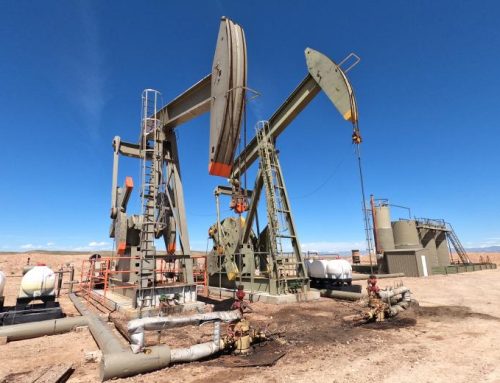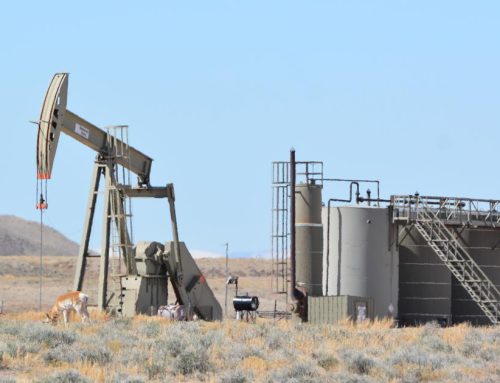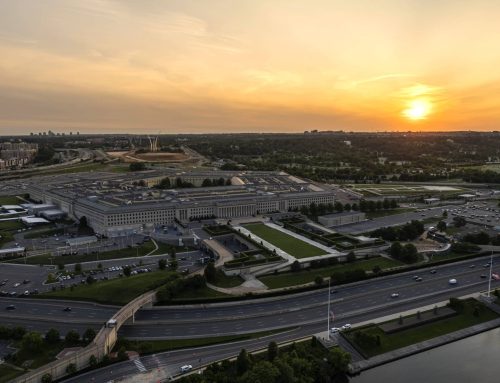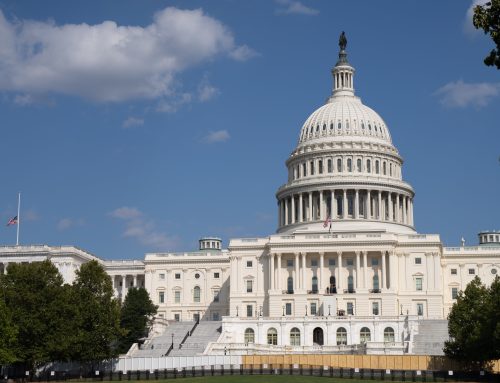

The Defense Production Act of 1950 (DPA) is an encompassing piece of legislation that provides the president with authorities to shape national defense preparedness. Designed as a tool to support the nation’s defense industrial base in times of emergency, the Act allows the president to facilitate the supply of critical goods and services needed to prepare for and respond to military conflicts, natural or man-made disasters, acts of terrorism, and other national emergencies.
As a response to the growing supply demands caused by the Korean War, Congress enacted the DPA in September 1950, enabling the Truman Administration to expedite and expand the nation’s industrial capacity to meet increasing defense production requirements.
The DPA currently has three authorities:
- Title I: Priorities and Allocations. This authority allows the President to require private businesses to prioritize and accept contracts for materials and services that are deemed necessary to promote national defense.[1]
- Title III: Expansion of Productive Capacity and Supply. This authority allows the President to provide loans, loan guarantees, purchase commitments, subsidies, grants, and other financial assistance to encourage private industry to expand domestic production of materials and supplies necessary for national defense.[2]
- Title VII: General Provisions: This title includes key definitions, reporting requirements, industrial base information authorities, and various administrative provisions necessary to carry out the Act.[3]
The original Defense Production Act had seven authorities. During the first reauthorization of the DPA in 1953, Congress only reauthorized Titles I, III, and VII while allowing Title II (the power to requisition property), Title IV (the power to set prices and wage ceilings), Title V (the power to settle labor disputes), and Title VI (the power to control consumer and real estate loans) to expire.[4] Since 1950, the DPA has been reauthorized at least 53 times, with the most recent reauthorization occurring in 2018. Within the last 40 years there have been at least two lapses in authorization, from October 1990 through August 1991 and from October 2025 through November 2025. In December 2025, the National Defense Authorization Act for Fiscal Year 2026 extended the DPA’s expiration date from January 30, 2026, to September 2026.[5]
The end of the Cold War prompted a fundamental rethinking of the definition of national security and, consequently, an expansion of the purposes for which DPA authorities may be used. The DPA originally defined national defense as “the operations and activities of the armed forces, the Atomic Energy Commission, or any other Government department or agency directly or indirectly concerned with national defense.”[6]
Over time, Congress began to see new threats such as supply chain vulnerabilities, critical infrastructure protection, and domestic industrial erosion and codified a broader interpretation of the DPA. Significant amendments include:
- In 1994, Congress amended the DPA to expand the definition of “national defense” to include emergency preparedness activities, as defined in the Robert T. Stafford Disaster Relief and Emergency Assistance Act.[7]
- In 2003, Congress amended the definition to include “infrastructure protection and restoration.”[8]
- In 2009, Congress expanded the definition again to include “critical infrastructure assistance to any foreign nation” and “homeland security.”[9]
With the expansion of the definition of national defense, the use of DPA authorities increased significantly. Beginning in 2020, both the use of DPA authorities and congressional funding grew substantially. In response to the COVID-19 pandemic, the Trump and Biden Administrations used Title I and Title III authorities to prioritize vaccine-related contracts, provide financial assistance, and incentivize domestic production of medical supplies.[10] Following Russia’s invasion of Ukraine in 2022, the Biden Administration used Title III authorities to expand production of munitions and strategic materials.[11] In addition, both the Trump and Biden Administrations have used the DPA to encourage domestic energy production and the expansion of critical materials supply chains.[12]
As the use of DPA authorities expanded, so did federal funding. From FY2010 through FY2019, Congress appropriated $952 million to the DPA Fund for Title III purposes, with funding provided through annual defense appropriations acts.[13] From FY2020 through FY2025, Congress appropriated at least $4.4 billion for Title III activities. In addition to annual defense appropriations, funding was also provided through supplemental measures, such as the CARES Act of 2020 ($1 billion), the Additional Ukraine Supplemental Appropriations Act of 2022 ($600 million), and the Inflation Reduction Act of 2022 ($500 million). Separately, the American Rescue Plan Act of 2021 provided $10 billion that could be used for DPA authorities in response to the COVID-19 pandemic.[14]
The Defense Production Act began as an emergency wartime measure but has since evolved into a continually reauthorized framework that the federal government uses to subsidize domestic industrial capacity and respond to an increasingly broad range of perceived national defense needs. As its authorities have expanded, so too have the questions surrounding when and how they should be used.
[1] Defense Production Act of 1950, Pub. L. No. 81-744, 64 Stat. 798.
[2] Defense Production Act of 1950, Pub. L. No. 81-744, 64 Stat. 798.
[3] Defense Production Act of 1950, Pub. L. No. 81-744, 64 Stat. 798.
[4] P.L. 83-95, 67 Stat. 129.
[5] FY2026 NDAA; P.L. 119-60
[6] Section 702(d) of P.L. 81-774.
[7] 50 U.S.C. §4552(14); Section 702(14) of the DPA.
[8] Pub. L. 108-195, 117 Stat. 2893
[9] Pub. L. 111-67, 123 Stat. 2006 (2009)
[10] U.S. Government Accountability Office, COVID-19: Agencies Are Taking Steps to Improve Future Use of Defense Production Act Authorities, GAO-22-105380, December 16, 2021, https://www.gao.gov/products/gao-22-105380.
[11] See DOD, Ukraine Security Assistance, August 8, 2024, https://media.defense.gov/2024/Sep/06/2003538814/-1/ 1/1/UKRAINE-INFOGRAPHIC-08AUG2024.PDF
[12] U.S. Department of Energy, “President Biden Invokes Defense Production Act to Accelerate Domestic Manufacturing of Clean Energy,” press release, June 6, 2022, https://www.energy.gov/articles/president-biden-invokes-defense-production-act-accelerate-domestic-manufacturing-clean, and E.O. 14241, “Immediate Measures to Increase American Mineral Production,” 90 Federal Register 13673, March 25, 2025.
[13] Adam G. Levin, Evaluating the Defense Production Act, CRS Testimony TE10112 (June12, 2025).
[14] Adam G. Levin, Evaluating the Defense Production Act, CRS Testimony TE10112 (June12, 2025).