
View/Download this article in PDF format.
Section 136 of the Energy Independence and Security Act of 2007 (EISA) authorized the Department of Energy Advanced Technology Vehicles Manufacturing (ATVM) Program to provide direct loans to advanced automobile and component manufacturers. Created alongside new corporate average fuel economy (CAFE) standards, the ATVM program aims to encourage the production of passenger vehicles with greater fuel economies, advance vehicle technology, and protect taxpayers’ interests.
In November 2008, the Department of Energy (DOE) issued the interim final rule, or regulations, detailing how the ATVM program would be administered. To qualify for the program, an applicant must “reequip, expand, or establish manufacturing facilities in the United States to produce qualified advanced technology vehicles, or qualifying components and also for engineering integration costs associated with such projects.” All loans must be made through Federal Financing Bank and may fund up to 80 percent of total project costs.
 After issuing the final rule, DOE was authorized to start accepting applications. The deadline for the first round of applications was December 31, 2008. Thereafter, applications have been accepted on the last day of each calendar year quarter. By February 2011, DOE had received more than 130 applications from the automobile industry for direct loans. Over the life of the program, DOE has awarded five companies a total of approximately $8.4 billion in direct loans (See Table 2 below for more details on individual applicants). As of January 2013, DOE was not actively reviewing any additional ATVM direct loan applications. To date, two of the five ATVM loan recipients have defaulted on their taxpayer-backed loans totaling nearly $600 million.
With $16.6 billion in authority still available to be awarded, taxpayers have a considerable stake in the successes or defaults of DOE’s ATVM program. The program as currently structured has several serious weaknesses that should concern taxpayers, including a lack of adequate performance measures, lack of technical oversight, and underestimated program costs, among others.
Program Funding History
First funded in the Fiscal Year 2009 Continuing Resolutions Act, the ATVM program received authority to provide $25 billion in loans to advanced automobile and component manufacturers along with a $7.5 billion appropriation to pay the credit subsidy costs of the direct loans (See Tables 1). Neither the loan authority nor the credit subsidy cost funds expire.
| Table 1: ATVM Loan Volume and Appropriations | ||
|---|---|---|
| Legislation | Authorized Loan Volume Cap Level | Direct Appropriations for Credit Subsidy Costs |
| Consolidated Security, Disaster Assistance, and Continuing Appropriations Act, 2009 | $25,000,0000,000 | $7,500,000,000 |
| Source: Pub. L. 110–329 | ||
Loans Awarded
In November 2008, DOE received its first loan applications and has since awarded approximately $8.4 billion (a third of the total loan authority of $25 billion) to five companies and 20 projects. To date, two companies—Fisker Automotive and The Vehicle Production Group LLC—have defaulted on their loans (See Table 2 for more details). The ATVM program continues to accept applications on a rolling basis today, though DOE is not reviewing any new applications. After the ATVM program made its most recent award in March 2011, DOE considered seven additional loan applications totaling $1.48 billion. However, according to a January 2013 Government Accountability Office (GAO) report, DOE is no longer reviewing those applications and considers them inactive due to “insufficient equity or technology that is not ready.”
| Table 3: Advanced Technology Vehicle Manufacturing Loans | ||||
|---|---|---|---|---|
| Loan Recipient | Amount | Date of Agreement | Number of Projects | Status |
| Fisker Automotive [DEFAULTED] | $528,700,000 | April 2010 | 2 | Default |
| Ford Motor Company | $5,907,000,000 | September 2009 | 13 | Closed |
| Nissan North America, Inc. | $1,448,000,000 | January 2010 | 2 | Closed |
| Tesla Motors | $465,000,000 | January 2010 | 2 | Closed |
| The Vehicle Production Group LLC [DEFAULTED] | $49,962,446 | March 2011 | 1 | Default |
| Source: Department of Energy, Loan Programs Office | ||||
Taxpayer Risk
Putting the full faith and credit of the U.S. government behind up to $25 billion in risky, high cost projects the private sector won’t finance is fiscally reckless. As recently as February 2011, the GAO released a report detailing significant taxpayer concerns with the ATVM program.
Underestimated Costs: In 2008, the Congressional Budget Office (CBO) calculated that $7.5 billion would be required by DOE to pay the credit subsidy costs for $25 billion worth of direct loans under the ATVM program. After awarding the first $8.4 billion in direct loans, DOE has spent approximately $3.3 billion on credit subsidy costs, or nearly half of the amount available. This was due to awarding loans with higher than expected default risks and subsequently higher credit subsidy costs. GAO projects that the ATVM program will not have enough funds to pay the credit subsidy costs of future applicants in order to provide the remaining $16.6 billion in loans.
Technical Oversight: The Department of Energy must provide additional technical oversight to ensure the technical progress required within the loan agreement is being made before distributing additional funds. Currently, AVTM program staff—not independent auditors—are responsible for monitoring the technical progress of individual applicants. At the time of GAO’s review, four of the five loan recipients had reached or were in the process of reaching the development phase that typically requires the greatest amount of technical oversight. Without adequate technical oversight, GAO states the ATVM program “may be at risk of not identifying critical deficiencies” and could put taxpayer funds at risk.
Performance Measurement: The Department of Energy has not developed adequate performance measures to gauge whether the program is making progress towards its goals. DOE currently lacks metrics to determine whether improvements in fuel economy are a result of the AVTM program or merely due to compliance with CAFE standards. Consequently, DOE cannot be certain that taxpayer funds have been spent efficiently or effectively.
Defaulted Companies
Since the first ATVM direct loan was finalized in September 2009, two companies have defaulted:
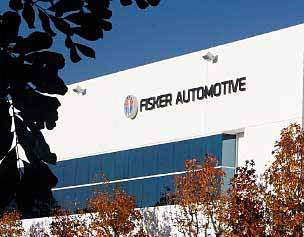
- Fisker Automotive was awarded a $528.7 million loan in September 2009. In June 2010, DOE suspended further payments to Fisker because progress on releasing its debut model, the Karma, had missed contractual production benchmarks. By then, the automaker had already drawn down $192 million of its loan. The Karma, built at a Finnish production facility, didn’t become commercially available until September 2011. When the company continued to fail to meet DOE production benchmarks, Fisker ceased all U.S. production activities for the Karma in July 2012. Fisker missed the first repayment on its loan in April 2013, prompting DOE to seize $21 million from the company’s cash reserves. According to a recent blog post by the Director of DOE’s Loan Programs Office, the amount DOE was able to recoup is now $28 million. Today, $168 million of the initial $528.7 million loan remains outstanding and DOE is scheduled to auction off the loan on October 11, 2013.
- The Vehicle Production Group was awarded a $50 million loan in March 2011 to support the production of an optional compressed natural gas fuel system in its wheelchair accessible vans. Only 2,500 vans were ever built before production was halted in late 2012. Of those, only 25% had the compressed natural gas drivetrain. In May 2013, when company finances dipped below the terms of its loan, DOE shut down VPG’s operations and seized $5 million from its cash reserves. The automaker drew down the full $50 million of its DOE loan in 2012 but has yet to make a repayment. DOE sold the $50 million secured loan to AM General for $3 million in September 2013 after putting it up for auction a month earlier. In total, DOE and taxpayers recovered a mere $8 million, or 16 percent, of the initial $50 million loan.
For more information, please contact Autumn Hanna at (202) 546-8500 x112
or autumn [at] taxpayer.net