
The House Committee on Agriculture recently released the Farm, Food, and National Security Act of 2026 (H.R. 7567). This “mini” farm bill contains farm bill titles and other provisions that were not included in last summer’s Agriculture Committee section of the reconciliation bill, The One Big Beautiful Bill Act (P.L. 119-21). Below is a selected analysis of provisions of concern for taxpayers interested in a more cost-effective, transparent, and responsive financial safety net for agricultural producers.
Title I – Commodities
Sec. 1001. Suspension of Permanent Price Support Authority.
This provision provides Farm Bill commodity title programs authority by preventing a reversion to permanent law through calendar year 2031. For decades most farm subsidy programs have been authorized to provide payments for a set number of years, typically five or six. Rather than repeal outdated permanently authorized farm programs, some of which date back to the 1930s, lawmakers merely suspend those programs from going into effect. Leaving outdated laws in place provides farm bill proponents with leverage by setting up Congress with the choice of letting the farm bill “expire” and revert to outdated agricultural programs or adopting a new, more generous farm bill crafted by the Agriculture Committee.
Sec. 1002. Tree Assistance Program.
Expands the TAP to have taxpayers cover more losses and accelerate payments.
- Expanded to cover trees that produce on a biennial basis.
- “pest” infestation added as a covered loss under natural disaster. Current law refers only to losses caused by insect infestation.
- Trees that no longer produce a viable crop are now covered rather than only trees that are killed.
- Requires replanting within two years.
- Allows subsidy recipients to replant a different variety, in a different density, or in a different location than where the losses occurred.
USDA is supposed to notify applicants of a payment decision within 120 days.
Allows producers to receive an initial payment before replanting costs with a mechanism to top up the payment or require return of overpayments at a later date. This authority is authorized through Fiscal Year 2034.
Sec. 1003. Specialty Crop Emergency Assistance Framework.
This creates a new disaster program funded through future “emergency” funds made available in discretionary appropriations.
Availability limited to producers of specialty crops.
Covers an “adverse event (including an economic crisis or market disruption)” as determined by the Secretary. Notably the definition of what constitutes a crisis or disruption is left up to the Secretary’s determination.
Payments
a. Based on the producer’s sales from the previous year. Presumably a producer with a loss in the current year but no previous year’s sale of that crop would not be eligible for assistance.
- Must take into account higher values, greater input costs, and diverse types of legal structures involved in growing specialty crops. Essentially more complex and costly operations will likely receive larger subsidies.
- Creates two-tiered payment limit for individuals:
- If less than 75% of one’s income is from farming, ranching, and silviculture = $155,000
- If more than 75% of income is from farming = any payment limit is TBD by the Secretary, but can be no less than $900,000. So, a Secretary could choose to make a program with a payment limit that is more than $900,000!
Sec. 1004. Assistance in the Form of Block Grants.
Creates a standing block grant authority to States for future supplemental disaster payments authorized by Congress. This is an authority that is typically granted to USDA in the legislative text of supplemental appropriations.
Sec. 1008. Processing of Certain Loans.
The processing of marketing assistance loans and sugar processing loans are deemed “emergencies involving the safety of human life or the protection of property” during any lapse appropriations. This provision means that USDA personnel can continue processing these loans, and only these loans, during any future government shutdown. Marketing assistance loans are limited to covered commodities and primarily benefit growers of cotton and peanuts.
Title II – Conservation
Sec. 2101. Conservation Reserve.
Authorizes the Conservation Reserve Program through 2031 while maintaining a limit on participation of 27 million acres.
Sec. 2202. Environmental Quality Incentives Program (EQIP) – Establishment and Administration
- Precision agriculture is added as a type of practice allowed to receive conservation funding, with up to 90 percent of project cost covered by taxpayers.
- Maintains the $450,000 payment limit per contract.
- Increases the Organics incentives payment limit to $200,000 from $140,000.
- Creates a new “Southern Border Initiative” to direct payments specifically to producers residing in counties at or near the border. The bill allows the Secretary of Agriculture to determine what constitutes “at or near the Southern border”
- EQIP is already severely oversubscribed. Expanding the program to cover precision agriculture, which includes the purchase of expensive equipment, coupled with a more than $1 billion funding cut (Sec. 2501) will likely lead to fewer operations being able to participate in the program.
Sec. 2301. Duties of the Secretary. (Conservation Stewardship Program)
- Adds precision agriculture, including the purchase of expensive equipment, as an eligible cost that is considered in determining payments.
- Establishes a minimum payment of $4,000 with payments capped at $200,000.
Sec. 2302. Conservation Stewardship Program (CSP) – State Assistance for Soil Health
- $100 million within CSP is marked for state and tribal soil health initiatives, each year from FY27-31; states or tribes may receive up to $5 million annually, which may be renewed. This funding is removed from the broader CSP.
- May include payments for “technical assistance, financial assistance, on-farm research and demonstration, education, outreach, and training, monitoring and evaluation, such other components as the Secretary determines appropriate.”
Sec 2402. Feral Swine Eradication and Control Program.
- Authorizes the Feral Swine Eradication and Control Program through FY2031. This was first created as a pilot program in the 2018 farm bill.
- Funding of $150,000,000 is provided with 40% directed to NRCS and 60% directed to APHIS.
- Federal share of program costs is set at no more than 75% of costs.
Sec. 2403. Watershed Protection and Flood Prevention Act
- Increases taxpayers’ share of project costs from 65 percent to 90 percent, a significant increase for rehabilitation projects.
Sec. 2501 Commodity Credit Corporation.
- Sets Funding levels for the Conservation programs including a spending cut to EQIP
- EQIP
- 2027 | $2,530,000,000 = Current law $2,855,000,000 for fiscal year 2027
- 2028 | $2,730,000,000 = $3,255,000,000 for fiscal year 2028;
- 2029 | $3,130,000,000 = $3,255,000,000 for fiscal year 2029;
- 2030 | $3,175,000,000 = $3,255,000,000 for fiscal year 2030;
- 2031 | $3,255,000,000 = $3,255,000,000 for fiscal year 2031;
- Forest Conservation Easement Program
- 2027 | $25,000,000;
- 2028 | $50,000,000;
- 2029 | $50,000,000;
- 2030 | $50,000,000;
- 2031 | $65,000,000
- Regional Conservation Partnership Program –
- $450 million a year to RCPP is flat level funding = no change
- EQIP
Sec. 2602. Agricultural Land Easements
- Taxpayer-paid portion of project costs would increase from 50 percent to 65 percent
Title III – Trade
Sec. 3101. Food for Peace – Transfer of Authorities to the Secretary of Agriculture
- International food aid programs to be administered through USDA instead of the U.S. Agency for International Development (USAID). This would codify a change initially made by the president’s DOGE that eliminated the USAID.
Sec. 3102. Food aid quality assurance.
- Includes a mandate that no less than 50 percent of funding for the program be used to purchase U.S. grown commodities to be shipped overseas, restricting the purchase of commodities closer to the areas of need, even if those commodities could be delivered more quickly or cheaply.
Sec. 3201. Agricultural Trade Promotion and Facilitation
- Increases agricultural trade program funding overall from $255 million in FY26 to $500 million in FY27 and $533 million in each year from FY28-31.
- Market Access Program (MAP), for instance, would increase from $200 million annually in FY26 to $400 million in FY27 and $410 million in FY28-31
- Other trade program funding levels would increase as well, for the Foreign Market Development Cooperator Program, for instance.
- This section repeals the Supplemental agricultural trade promotion program. This program, created as part of the OBBBA, provided $285,000,000 annually for the Secretary of Agriculture to carry out trade promotion programs in addition to MAP, FDCP, and other farm bill authorized programs. Elimination of this program reduces program duplication. It does not, however, produce savings because the funds authorized by OBBBA are consumed by funding increase in MAP, FDCP, and their like.
Sec. 3306. International Agriculture Cultural Immersion and Exchange Program
- Creates a new student exchange program for agriculture, with up to $10 million in appropriated funding from FY27-31
Title IV – Nutrition
Sec. 4103. Supplemental Nutrition Assistance Program (SNAP) Staffing Flexibility
- Would allow a contractor to be hired by a state to complete SNAP certifications and other requirements as long as the contractor did not have a financial stake in a retail store or engage in incentives to delay SNAP enrollment.
Title VI – Rural Development
Sec. 6305. Expanding Childcare in Rural America Initiative
- Projects addressing the availability, quality, or cost of childcare in rural areas would receive priority funding consideration within other rural development programs, including the Community Facilities Programs, Business and Industry Guaranteed Loan Program, Rural Microentrepreneur Assistance Program, and the Intermediary Lending Program (childcare is already subsidized under a federal grant program – the Child Care and Development Block Grant (CCDBG))
Sec. 6422. Rural Microentrepreneur Assistance Program
- Increases federal taxpayers’ share of project costs to up to 100 percent.
Sec. 6426. Limitation on Rural Business Investment Companies Controlled by Farm Credit System Institutions
- If Farm Credit owns more than 75 percent of shares in a rural business investment company, then the company may not provide equity investments or other financial assistance to entities not eligible to receive Farm Credit financing.
- Provision changes the share from 50 percent to 75 percent.
Title IX – Energy
Sec. 9001. Bioenergy Program for Advanced Biofuels – Definition of Advanced Biofuel
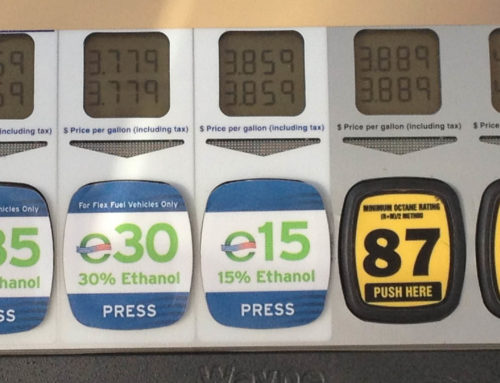
- Sustainable aviation biofuels would become eligible for Bioenergy Program for Advanced Biofuel subsidies, by changing the definition of an advanced biofuel to include sustainable aviation fuel (aviation biofuels already receive a federal tax credit under the Clean Fuel Production Credit/45Z)
Sec. 9007. Rural Energy for America Program (REAP)
- Maximum loan to increase from $25 million to $50 million.
- Discretionary funding – $20 million annually – to be extended through FY31.
Sec. 9013. Sustainable Aviation Fuels Strategy
- New strategy developed at USDA to “advance the production of sustainable aviation fuels” (aviation biofuels already receive a federal tax credit under the Clean Fuel Production Credit/45Z)
Title XI – Crop Insurance
Sec. 11014. Research and Development Priorities
- New crop insurance policy development (likely taxpayer subsidies) for wine grapes tainted by wildfire smoke, “mushroom growing media and the production of mushrooms,” pennycress, alfalfa, sugar beets, sugarcane, blueberries, and several others, despite alfalfa (hay) not generally at risk of yield failure even during years of drought.
Title XII – Miscellaneous
Sec. 12410. Qualified Renewable Biomass
- Tucked at the end of the bill is a recurrent provision that has historically popped up in appropriations bills. Known as a “biomass rider,” if enacted, the language would effectively deem cutting down trees to be carbon neutral for federal programs and incentives. Burning trees is not carbon neutral, but the provision would bypass science and allow wood to be treated as zero carbon, whether it is in practice or not.
- Facilities burning wood to create electricity would also be deemed carbon neutral, potentially allowing facilities to qualify for federal incentives. Some European countries have gone down this path, only to find themselves having forked over significant taxpayer subsidies with little return on investment. Enacting this provision could open a floodgate of similar facilities in the US, with significant taxpayer costs because some US tax credits are currently tied to GHG reductions, such as the 45Z Clean Fuel Production Credit.