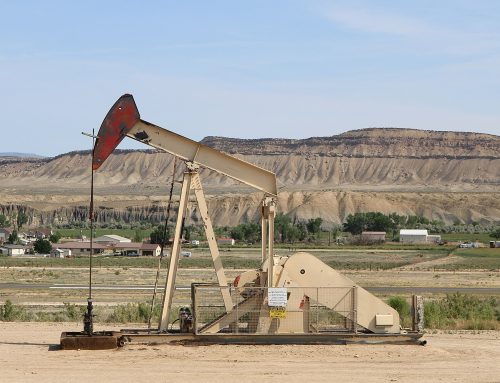

On March 31, the federal government offered and leased 68,632 acres of public land in Utah for oil and gas development at the recently reduced federal royalty rate of 12.5%. The result is an estimated $295 million in lost royalty revenue over the life of these leases.
This sale adds to mounting losses. TCS estimates that taxpayers have already lost more than $637 million in projected royalty revenue from leases sold since July 4, 2025, when the One Big Beautiful Bill Act (OBBBA) reduced the onshore royalty rate to 12.5%—below what states and private landowners typically charge.
Today’s highly competitive lease sale is part of a multi-year trend demonstrating increased interest in leasing federal lands in Utah for oil and gas development. This trend spans changes in leasing terms and is instead likely driven by factors such as production potential and global oil prices, undercutting the argument for industry giveaways like below-market royalty rates, which reduce taxpayer returns without generating more interest from industry.
Results from today’s lease sale:

Leasing decisions are driven by development potential and market conditions. 93% of the acres offered in today’s auction were located in Uintah County, the state’s top producer of federal oil and gas. Bids ranged from a high of $3,234 per acre for one parcel in Uintah County to a low of $10 per acre for three parcels in San Juan County.
The most recent federal lease sale in Utah, held last December, set a record high average bid for the state of $941 per acre. The previous record high was set in the previous sale ($477 per acre) in September 2025, also under the 12.5% royalty rate. Before that, the high was $370 per acre in June 2025 and before that $118 per acre in December 2023, both of which were under a 16.67% royalty rate. Over this period, federal oil production in the state has also skyrocketed, up 17% from 2022-2023 and up another 19% from 2023-2024.

Recent lease sales suggest that industry is willing to pay competitive rates to secure parcels they want, regardless of the royalty rate and other leasing terms. Lowering royalty rates only shortchanges taxpayers by reducing future royalty revenue. In Utah alone, taxpayers lost an estimated $721 million in revenue from FY2013 to FY2022 under the 12.5% rate. With record-high production across the U.S., losses will continue or even grow worse. Because revenue is shared between the federal treasury and states, Utah taxpayers will also lose funds for schools, infrastructure, and other local priorities.
The Bureau of Land Management estimates that the parcels leased today could yield 90 million barrels of oil and 260 billion cubic feet of natural gas over a 30-year lifespan. Based on the White House budget office’s 2026 price projections—used to estimate federal royalty revenue from onshore leases—that production could be worth roughly $7.1 billion. At the 12.5% rate, taxpayers would receive about $885 million in royalty revenue, roughly $295 million less than we would under a 16.67% rate.
Oil and gasoline prices are set on global markets, so the war with Iran and related supply risks have pushed crude prices higher, causing consumers to pay more at the pump and on their utility bills. Updating onshore leasing policies would not change how gasoline prices are set, but it would ensure a better return for taxpayers on the production of publicly owned oil and gas.
Federal oil and gas belongs to the American people, and leasing terms should ensure taxpayers receive a fair return from the development of our valuable resources.
- photo by Tony on Adobe Stock