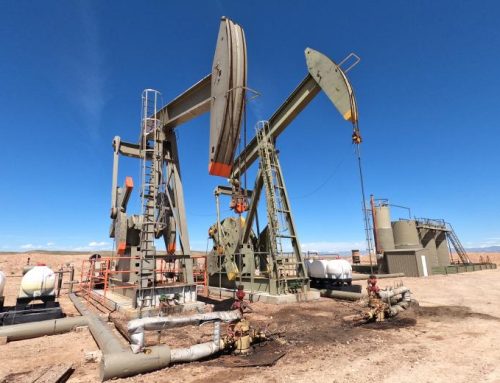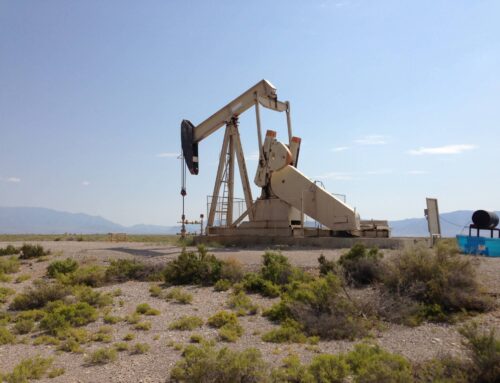


Utah is the nation’s fifth-largest producer of oil and fourth-largest producer of natural gas from federal lands. Over the last decade, companies produced $10.7 billion worth of oil and gas from federal lands in Utah. Yet because federal leasing terms were set at below-market rates, taxpayers did not receive the full value of those publicly owned resources and may be left to shoulder substantial future cleanup costs.
If federal leases in Utah had carried an 18.75 percent royalty rate instead of the 12.5 and 16.67 percent rates that applied during most of the last decade, royalty collections would have been $643 million higher. Because roughly half of federal royalties are returned to producing states, more than $321 million of that additional revenue would have gone directly to Utah. That money could have supported schools, roads, and other public infrastructure.
This is not a projection based on possible future production. The oil was produced. The gas was sold. The only question is how much of that value was returned to federal and Utah taxpayers instead of remaining with operators.
Utah Is a Significant Producer of Federal Oil and Gas
At the end of Fiscal Year (FY) 2025, 2 million acres of federal land in Utah were leased for oil and gas development. Just over half of this land, 1.1 million acres, or 52 percent of leased acreage, was actively producing oil or gas. From 2016 through 2025, companies produced about 78 million barrels of federal oil and 1.6 trillion cubic feet of federal natural gas in Utah, representing 2 percent and 4 percent, respectively, of all production on federal land.
If this production had been assessed at the recently updated and now abandoned market-based royalty rate of 16.67 percent, federal and Utah taxpayers would have received substantially more revenue. Below-market and outdated leasing terms not only reduced taxpayers’ returns, but inadequate reclamation requirements also allowed operators to avoid covering the full cost of reclaiming well sites after production ends.
The Federal Oil and Gas Leasing Program Fails American Taxpayers
Federal taxpayers own mineral resources across the United States, including a 700-million-acre onshore subsurface mineral estate. The Bureau of Land Management (BLM), within the Department of the Interior (DOI), oversees this mineral estate and is charged with managing the development of those resources. Yet despite the substantial value of taxpayer-owned resources extracted from federal lands every year, outdated and below-market leasing terms continue to shortchange taxpayers.
DOI generally awards leases to the highest bidder at a competitive auction, which must meet or be above a per-acre legal minimum, generating what is known as “bonus bid” revenue. Leases may also be obtained for no bid at all if operators passed up the parcel at auction but obtain it after the sale noncompetitively. If a lease is awarded, the federal government then charges the leaseholder rent until production begins. Once a lease begins producing oil or gas, the leaseholder pays a fixed percentage of the production’s value, known as a royalty.
Recently, Congress updated the federal oil and gas leasing program, addressing fiscal rates that had lagged since the 1980s and in some cases the 1920s.¹ Under those updates, rental rates were raised to $3 per acre for the first two years of the lease, $5 per acre for years three through eight, and no less than $15 per acre thereafter. The minimum bid was raised to $10 per acre for the first time in nearly three decades, and the onshore royalty rate, which was established in 1920, was raised from a minimum of 12.5 percent to 16.67 percent. Additional reforms included the elimination of noncompetitive leasing and creation of a new expression-of-interest (EOI) fee for entities nominating federal land for competitive lease sales. Updates to the royalty rate, the repeal of noncompetitive leasing, and the creation of a EOI fee were rescinded in 2025.
After production ends, operators on federal land must plug their wells and reclaim the surrounding sites. Before drilling begins, operators must post bonds intended to guarantee that this work will be completed. If a company abandons its wells or goes bankrupt, the bond is forfeited and used to help cover reclamation costs.
BLM accepts two types of bonds: individual lease bonds with a minimum value of $150,000 and statewide bonds, covering all of an operator’s wells in a state, with a minimum value of $500,000. Higher bond values may be required if an operator has a history of violations, if BLM anticipates unusually high reclamation costs, or if other risk factors are present.
Throughout the leasing system, DOI is responsible for overseeing mineral resource development and ensuring taxpayers receive a fair return on our nation’s valuable natural resources. But recently reduced royalty rates, the return of noncompetitive leasing, and threats to revert to outdated bonding standards risk failing to compensate taxpayers for the sale of publicly owned oil and gas resources and protect taxpayers from liabilities associated with development.
The federal onshore oil and gas leasing system must be brought into the 21st century. Taxpayers have already lost billions of dollars on outdated rates and policies. Without permanent market-rate leasing terms and stronger oversight, taxpayers could lose billions more while facing growing long-term cleanup costs.
Taxpayers Lost $643 Million in Revenue from Oil and Gas Production in Utah
For nearly a century, the federal onshore royalty rate was fixed at 12.5 percent.² Nearly all leases were issued at that statutory minimum rate. In 2022, Congress temporarily raised the rate to 16.67 percent for new leases, but lowered it back to 12.5 percent in 2025, locking in a century-old rate for decades to come.
Royalty revenue makes up the overwhelming share of federal oil and gas receipts. The Office of Natural Resources Revenue (ONRR) collected $1.2 billion in royalties from oil and gas produced from federal lands in Utah and sold over the last decade, 2016-2025.³ Because that revenue is split with producing states, every percentage point in the royalty rate affects how much funding reaches Salt Lake City and local communities.
The federal government charges a 12.5 percent royalty rate for production on nonfederal land, significantly lower than what is charged on state lands in Utah and other, major oil and gas producing states.5F If an 18.75 percent royalty rate had been applied to the $10.7 billion worth of oil and gas produced from federal lands in Utah over the last decade, federal and Utah taxpayers would have received an additional $643 million in revenue.⁴
An 18.75 percent royalty rate is not unusual. Texas and New Mexico, two top oil and gas-producing states, charge royalties of up to 25 percent on state lands. Development under those terms has not merely continued. It has boomed. The record shows that competitive royalty rates do not halt or slow production. They determine how much of the value extracted from public resources is returned to the public.
Federal leasing over the last decade has made this plain. Production on federal lands continued, regardless of the royalty rate. Companies invested, drilled, and bid in competitive lease sales under both the higher 16.67 percent royalty rate and the lower 12.5 percent rate. In fact, average bids across the country were higher in 2023 and 2024 under the updated rate ($978.18 and $2,148.62 per acre, respectively) than they had been during the preceding decade ($41.45 per acre from 2013-2022). The pace of development did not change. The public’s share of the profits did.
Increased productivity and overall production make the impact of royalty rates even clearer. Offering more land at discounted rates will not drive an increase in leasing or production. But lowering royalty rates will directly reduce how much taxpayers receive from that production.
Proposed Bond Minimums Risk Leaving Taxpayers Exposed to a $559 Million Shortfall
Utah also faces substantial cleanup liabilities from orphaned and inactive wells. When oil and gas operators drill on federal land, they are required to post bonds intended to ensure wells are plugged and sites restored once production ends. In practice, historic federal bonding requirements have often been insufficient to cover the full costs of reclamation, leaving taxpayers exposed to cleanup costs.
In 2024, federal bonding requirements were updated. But earlier this year, DOI proposed a return to outdated standards which would leave taxpayers exposed to billions in future reclamation liabilities from currently producing wells.
Prior to recent reforms, federal bonding rules for onshore wells lagged far behind real-world reclamation costs. Reclaiming wells is expensive. BLM reported an average cost of $71,000⁵ per well nationwide, although estimates can range from $20,000⁶to $200,000⁷. The minimum bond was $10,000 for individual leases, $25,000 for statewide coverage, and $150,000 for nationwide coverage. Although DOI has the discretion to charge higher bond amounts, it has rarely exercised such discretion and minimum bond amounts are often accepted. The Government Accountability Office reported that BLM held an average bond value of just $2,122 per well in 2018, covering only 3 percent of the estimated cost of plugging orphaned wells.⁸
In 2023, BLM reported there were 1,500 bonds covering approximately 110,000 existing wells nationwide.⁹ Average coverage varied depending on bond type, with a high of $5,864 per well on statewide bonds and a low of just $671 per well on nationwide bonds.¹⁰ Across all bond types, existing wells had average bond coverage of $3,873 per well, covering only 5 percent of estimated reclamation costs.
Weak bonding requirements do not eliminate cleanup costs. They simply increase the likelihood that taxpayers will eventually pay them.
According to BLM, 8,327 oil and gas wells were producing on federal land in Utah at the end of FY2025.¹¹ If outdated bonding requirements returned and BLM once again held average bond coverage of just $3,873 per well, the federal government would hold only about $32 million in financial assurances for wells that may cost roughly $591 million to reclaim, leaving taxpayers exposed to approximately $559 million in potential future liabilities.¹²
Insufficient bonding increases the likelihood that cleanup costs will fall on state and federal taxpayers. Communities that host drilling activity may ultimately face the long-term environmental and fiscal consequences when wells are left behind and the bills come due.
Federal Bonding Repeal Would Fall Short of Utah’s State-Level Requirements
DOI has proposed to lower bond requirements to their decades-old minimums: $10,000 for an individual lease and $25,000 for all wells in a state. These proposed requirements stand in sharp contrast to recent updates implemented by the Utah Division of Oil, Gas and Mining for oil and gas operators on state land.
A 2019 legislative audit found that Utah’s oil and gas bond amounts had not been updated in 16 years and that the outdated framework “poses a financial risk to the state.”¹³ The audit identified serious lapses in enforcement, including more than 100 unresolved noncompliant wells, and warned that failing to modernize bond structures could lead to substantial financial liabilities if operators defaulted.
Prior to recent reforms, Utah allowed individual bonds as low as $1,500 and blanket bonds covering all wells in the state as low as $15,000. When bond requirements fall short, Utah drew from its dwindling Orphan Well Fund, the dedicated account that finances the state’s Orphan Well Plugging Program. The program, funded by a 0.002 levy (2/10th of a cent per dollar collected) on the value of oil and gas production and supplemented by forfeited bonds, covers the costs of plugging and reclaiming wells when operators default. Of the $5.7 million the Division spent plugging wells since its founding, just 22 percent came from forfeited bonds. The remaining $4.43 million was drawn from the Orphan Well Fund itself.¹⁴
In June 2026, the Division adopted a new, three-tier system for calculating blanket bond amounts. The changes raised minimum statewide blanket bond requirements to between $200,000 and $5 million, depending on an operator’s production level and percentage of wells that are inactive, shut-in, or otherwise considered at-risk. The new policy also requires supplemental bonds for certain high-risk wells.
Local leaders in Utah acknowledged the high costs of reclaiming wells by modernizing their financial assurance and well-management framework—protecting both state and federal taxpayers from the escalating costs of orphaned and unreclaimed wells. Utah’s new blanket bond minimums of $200,000 to $5 million would provide 8 to 200 times more coverage than DOI’s proposed $25,000 minimum amount for statewide bonds.
Wells on federal land, which may sit less than a mile from wells on nonfederal land, are not less expensive to reclaim. Yet DOI has proposed to dramatically lower financial assurance requirements, putting taxpayers at greater risk.
Federal Leasing Decisions in Utah Directly Affect State and Federal Taxpayers
Taxpayers entrust the federal government with the management of federal lands and the valuable resources contained within them. Yet current policies fail to provide a fair return to taxpayers from oil and gas development on federal lands in Utah. Adding insult to injury, inadequate bonding may leave taxpayers responsible for long-term cleanup liabilities.
For Utah, the stakes are immediate and measurable. BLM manages 22.8 million acres of public land, representing about 42 percent of the state. Revenue from federal oil and gas production helps fund schools, infrastructure, and other public priorities. When that revenue falls short, state and local budgets feel the loss. When operators do not fully cover cleanup costs, the burden can shift directly to taxpayers and nearby communities.
Utah’s record shows why federal leasing policy must account for both production and taxpayer return. Congress and DOI should maintain market-rate royalties, preserve bonding requirements tied to likely reclamation costs, use competitive auctions to test the value of federal leases, and provide the public with clearer information about whether leased acreage ultimately produces. These safeguards would not prevent responsible development. They would ensure that taxpayers receive a fair return when publicly owned resources are developed and are not left paying to clean up afterward.
[1] Changes to rental rates and the minimum bid apply to leases issued between August 2022 and August 2032. The higher royalty rate similarly would have applied to leases issued between August 2022 and August 2032, but was later lowered in July 2025.
[2] Nearly all leases were issued at the statutory minimum royalty rate of 12.5%.
[3] Office of Natural Resources Revenue, “Calendar year federal sales data, 2013-2025”, accessed August 2026, https://revenuedata.onrr.gov/downloads/federal-sales/.
[4] Taxpayers for Common Sense (TCS) calculation applies an 18.75% royalty rate to the reported sales value, less allowances, as reported by ONRR.
[5] Bureau of Land Management (BLM), “Fluid Mineral Leases and Leasing Process,” Federal Register, July 25, 2023, https://www.federalregister.gov/documents/2023/07/24/2023-14287/fluid-mineral-leases-and-leasing-process#p-82.
[6] Government Accountability Office (GAO), “Oil and Gas: Bureau of Land Management Should Address Risks from Insufficient Bonds to Reclaim Wells,” September 2019, https://www.gao.gov/products/gao-19-615.
[7] BLM, “Fluid Mineral Leases and Leasing Process,” Federal Register, July 25, 2023, https://www.federalregister.gov/documents/2023/07/24/2023-14287/fluid-mineral-leases-and-leasing-process#p-82.
[8] GAO, “Oil and Gas: Bureau of Land Management Should Address Risks from Insufficient Bonds to Reclaim Wells,” September 18, 2019, https://www.gao.gov/products/gao-19-615.
[9] BLM, “Fluid Mineral Leases and Leasing Process,” July 24, 2023, https://www.federalregister.gov/documents/2023/07/24/2023-14287/fluid-mineral-leases-and-leasing-process.
[10] TCS calculation divides the average bond amount per bond type by the average number of wells per bond type, as reported in the BLM proposed “Fluid Mineral Leases and Leasing Process” rule.
[11] BLM, Oil and Gas Statistics, Fiscal Year 2025 Statistics, https://www.blm.gov/programs-energy-and-minerals-oil-and-gas-oil-and-gas-statistics.
[12] TCS calculation multiplies the number of producing wells in the state (26,020) by the estimated cost of reclamation ($71,000) less the average bond value per well held by DOI in 2023 ($3,873.39).
[13] Office of the Legislative Auditor General State of Utah, “A Performance Audit of Utah’s Oil and Gas Program,” Number 2019-11, November 2019, https://le.utah.gov/audit/19_11rpt.pdf.
[14] Utah Division of Oil, Gas and Mining, “Orphan Well Program,” accessed November 5, 2025, https://ogm.utah.gov/orphan-well/.