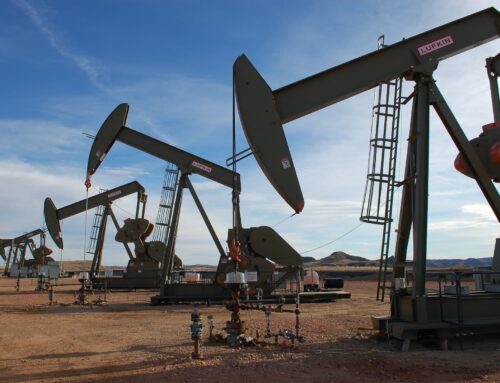

WASHINGTON – North Dakota is the third largest producer of oil and the fifth largest producer of natural gas from federal lands, but below-market royalty rates have cost taxpayers $1.8 billion in lost royalty revenue over the last decade. At the same time, if outdated federal financial assurance requirements return – like the Bureau of Land Management has recently proposed to do in a new rule – taxpayers could face approximately $230 million in unrecovered cleanup costs from currently producing wells in North Dakota.
A new report from Taxpayers for Common Sense, North Dakota’s Federal Oil and Gas Leasing, and What It Has Cost Taxpayers, finds that applying an 18.75 percent royalty rate to oil and gas produced from federal lands in North Dakota would have generated an additional $1.8 billion in public revenue. Because roughly half of federal royalty revenue is returned to producing states, almost a billion dollars of that additional revenue would have flowed directly to North Dakota communities.
“When a company sells oil and gas extracted from public lands, taxpayers are entitled to a fair return,” said Autumn Hanna, Vice President of Taxpayers for Common Sense. “But taxpayers are being squeezed from both ends. When oil and gas is produced, they collect less revenue. And when wells stop producing, taxpayers risk being left holding the bill for cleanup.”
The report’s key findings include:
- Federal taxpayers could have received an additional $1.8 billion in royalty revenue if an 18.75 percent royalty had been applied to federal oil and gas production in North Dakota over the last decade.
- Nearly $1 billion of that additional revenue could have returned to North Dakota, where federal mineral revenue supports schools, infrastructure, and other public priorities.
- Outdated federal bonding standards could leave taxpayers exposed to approximately $230 million in potential reclamation liabilities from currently producing wells.
- Proposed federal bonding standards are up to 10 times lower than current requirements for state land in North Dakota.
Federal oil and gas operators are required to post bonds intended to cover the cost of plugging wells and reclaiming drilling sites. Under previous requirements, average bond coverage amounted to only a small fraction of likely cleanup costs – $3,873 in bond coverage per well, compared to an estimated reclamation cost of $71,000. When bond coverage falls short, taxpayers can be left to pay the difference.
In 2024, the Bureau of Land Management (BLM) updated policies to better reflect the actual cleanup costs – better ensuring operators, not taxpayers, pay for reclamation. Now the Administration is proposing to lower minimum financial assurance requirements back to old, inadequate levels. Current wells on federal lands in North Dakota are expected to cost roughly $242 million in clean up expenses. If average federal bond coverage returned to approximately $3,873 per well, the government would hold only $13.2 million in financial assurances, leaving taxpayers potentially responsible for the multi-million-dollar difference.
“Oil and gas wells have to be cleaned up, regardless of whether companies or taxpayers pay,” said Hanna. “Weak bonding requirements only raise the odds that taxpayers will inherit the bill if an operator walks away or goes bankrupt.”
Congress updated federal oil and gas leasing terms in 2022, including raising the minimum royalty rate for new onshore leases to 16.67 percent and eliminating noncompetitive leasing. However, the reforms were short lived; in 2025, Congress reduced the royalty rate back to 12.5 percent and restored noncompetitive leasing.
The report concludes that responsible oil and gas development and strong taxpayer protections, including higher royalty rates, are not in conflict. States including Texas and New Mexico charge royalty rates as high as 25 percent on state lands while maintaining substantial oil and gas production.
“As the third largest producer of oil and the fifth largest producer of natural gas from federal lands, North Dakota’s production shows that oil and gas companies will develop valuable resources when the opportunity is there,” said Hanna. “Lower royalty rates and weak bonding requirements do not drive production. Lower royalty rates simply undercut taxpayers by not providing a fair return from production on public lands.”
Taxpayers for Common Sense is a nonpartisan budget watchdog serving as an independent voice for American taxpayers. TCS works to ensure that taxpayer dollars are spent responsibly and that government decisions are transparent, accountable, and grounded in the public interest.
###