
The Trump Administration this week announced it will tap the Treasury to direct $12 billion in aid to farmers. The administration tried to emphasize this is not a trade war bailout, but a temporary program to carry farmers to next fall when new farm bill programs go into effect. Yet it doesn’t look temporary and it is certainly at least a partial bailout. This action appears to be just the latest step on a path to perpetual federal subsidization of farm income. For the fiscal health of taxpayers and American agriculture, lawmakers should reassert their primacy in federal spending decisions and chart a new course for the farm financial safety net.
The mechanics of these payments are simple. The Secretary of Agriculture is using authority, granted by the Depression-era Commodity Credit Corporation (CCC) Charter Act, to pull $12 billion from the Treasury and shotgun it to farm fields. Farmers that planted the most popular crops (soybeans, cotton, corn, rice, and other commodities) will see $11 billion sprout in their bank accounts by February 28. The remaining $1 billion is set-aside for businesses growing everything else; fruits, vegetables, flowers, sugar, etc. These farmers of actual food, err that is, um “specialty crops,” have to wait while USDA cooks-up a payment formula. There is no estimate when this will be served.
The merits of using the Charter Act authority are a bit more muddled. The CCC itself is a corporation in name only. There are no buildings or employees. It’s a paper corporation, with a $30 billion line of credit from the Treasury, that the government established to finance and cut checks for most programs authorized in the farm bill. Nothing about that is controversial. Federal corporations are just the technical way Congress delegates to the Executive Branch the responsibility of payment processing for a lot of federal programs, rather than directly approving batches of payments each month.
But section 5 of the charter act gives any Agriculture Secretary discretion to take additional actions to aid agriculture. If farm bill programs fall short, the secretary has authority to aid U.S. farmers by creating programs or making direct purchases of crops in order to support prices, increase consumption, promote exports, develop new markets, or remove excess crops. Essentially it’s a “break glass in case of emergency” provision for the federal farm safety net.
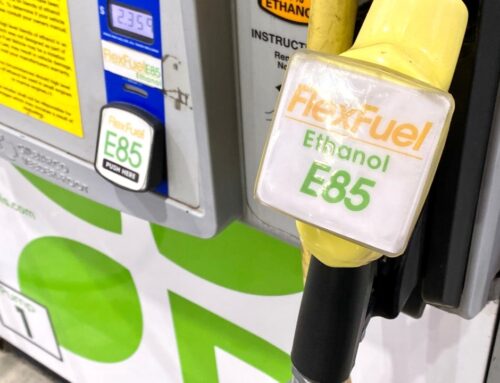
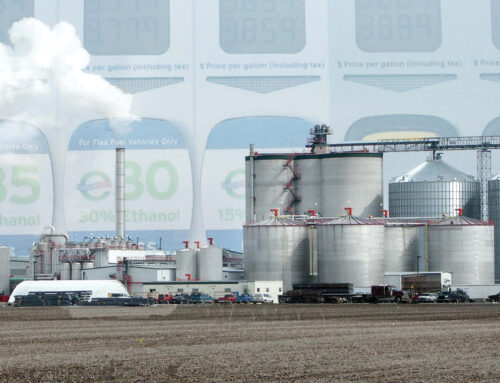
Over the last decade the countryside has become littered with broken glass. In 2015 Secretary Vilsack used his authority to finance ethanol blending pumps at privately owned gas stations. He followed this with aid to companies that process cotton. Use really ramped up when the first Trump Administration unleashed more than $23 billion to farmers affected by the administration’s trade war. The charter act authority was also leaned on heavily by both the Trump and Biden administrations in their COVID-19 response, for natural disaster response, and a host of other issues.
This transformation of the CCC from a seldom used “emergency” provision to a primary pillar of the safety net is problematic. Charter act programs require no additional authorization, or appropriation of funds, from Congress. While this increases the speed of spending, it undermines oversight. It also adds to the debt. The CCC’s line of credit is like a credit card limit; it only counts once there is a charge. Every dollar spent on a Charter Act program leads to a dollar (plus interest) increase in the national debt.
Most concerningly it puts the administration, past and present, in the farm safety net driver’s seat, not Congress. This allows administrations to bypass and even undermine Congressional intent. That blender pump program Secretary Vilsack started? It was created immediately after Congress banned the funding of blender pumps in the 2014 farm bill. The first Trump Administration trade bailout cost more than all the farm bill commodity and disaster programs combined. While Congress debated the Inflation Reduction Act (IRA), the Biden Administration unilaterally created the $3.5 billion Partnership for Climate Smart Commodities (PCSC) program. Republicans universally opposed the IRA, but had ceded all authority to prevent the PCSC because authority came not from legislation, but the charter act.
The harms from this second iteration of the Trump trade war bailout will be especially acute. The administration’s justification for these payments is persistently high input prices and loss of sales due to foreign tariffs. The greatest driver of high input costs and drag on foreign sales of U.S. agricultural products are the president’s tariffs.
Using the charter act to paper over the financial pain of the administration’s decisions is fiscally irresponsible and economically reckless. These most recent Charter Act payments won’t bring economic stability and market predictability to farmers. They will undermine Congress’s power of the purse while putting farmers on a path to perpetual financial dependency. We’ve seen this movie before and it doesn’t end well.
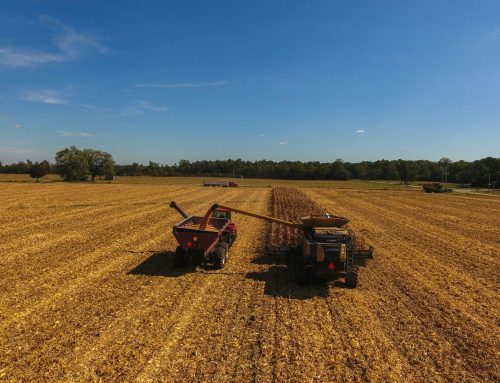
- Photo by Roger Starnes Sr on Unsplash