
Earlier this month the Government Accountability Office (GAO), Congress’ nonpartisan investigative arm, released a new report regarding recent workforce reductions at the Federal Emergency Management Agency (FEMA). The GAO found that these were done without using strategic workforce planning and risk leaving the agency incapable of effectively responding to disasters now and in the future.
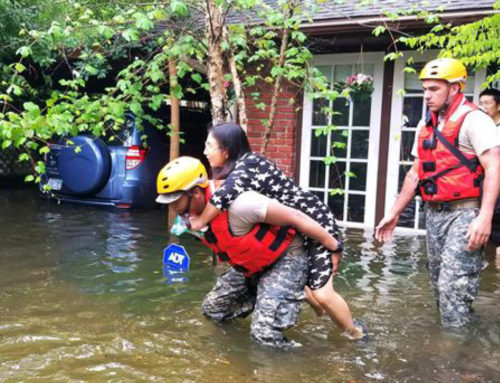
FEMA leads the federal government’s response to disasters that overwhelm the resources and capabilities of state and local governments, including distributing federal funds, providing on-the-ground expertise and equipment, and coordinating activities between communities, states, and the federal government.
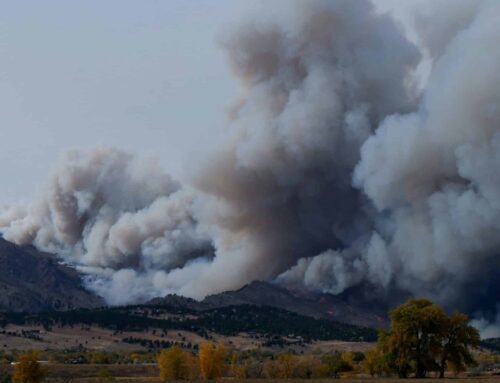
Recent disasters exemplify the need to ensure FEMA’s workforce can effectively and efficiently respond to disasters. In 2024, Hurricanes Helene and Milton hit the Southeast less than 2 weeks apart. FEMA responded by deploying 13,500 employees—the highest number of employees deployed in the agency’s history. Wildfires in Los Angeles several months later strained FEMA’s staff capacity even further. GAO auditors found that at one point FEMA had just nine trained employees nationwide to help Los Angeles wildfire survivors file for aid.
FEMA’s workforce management issues are longstanding. In February 2025, the GAO added “Improving the Delivery of Federal Disaster Assistance” to its High-Risk List — a biennial publication identifying programs and operations vulnerable to waste, fraud, abuse, and mismanagement. As of March 2025, GAO had approximately 60 open recommendations related to federal disaster assistance.
Recent changes at FEMA have exacerbated existing workforce challenges. In response to Presidential memorandums and executive orders, FEMA has reduced the size of its workforce and restricted hiring. In fiscal year 2025, FEMA reported employing 25,134 personnel. As of April 18, 2026, this number was reduced to 20,968 personnel – a 17 percent reduction achieved through voluntary workforce reduction programs, termination of probationary employees, and non-renewal of CORE contracts (temporary full-time employees hired to directly support response and recovery efforts)
At the same time, FEMA rescinded its Strategic Plan—despite it being legally required under the Government Performance and Results Modernization Act of 2010 and Office of Management and Budget Circular A-11. According to GAO, the lack of a strategic plan means FEMA no longer has the “necessary direction for workforce planning,” leaving the agency “at risk of being unprepared and under-resourced to effectively respond to future disasters and meet its statutory requirements.” Government officials told GAO that the delay in implementing a new strategic plan is in part due to forthcoming guidance related to potential agency changes from the Department of Homeland Security and the FEMA Review Council.
The GAO’s report underscores that FEMA “did not base its workforce reduction decisions or proposed future workforce actions on an analysis of the current state of its workforce or a forecast of future requirements.” The agency failed to assess whether the voluntary workforce reduction programs would “improve or limit FEMA’s ability to meet its mission needs moving forward” and the effort was “not targeted or limited based on the agency’s workforce needs and gaps.” As a result, GAO found that workforce reductions have “led to a loss of leadership and institutional knowledge” and left the agency’s ability to respond to future disasters vulnerable.
There must be a federal role in disaster response, and the status quo is not sustainable for taxpayers or the communities — on that much, there is agreement. But fundamental questions remain about what that role should look like.
Last September, the House Transportation and Infrastructure Committee passed the Fixing Emergency Management for Americans (FEMA) Act of 2025 (H.R. 4669). The bill would address longstanding concerns about FEMA’s efficiency and effectiveness in disaster management, including restoring FEMA’s original status as an independent agency, changing FEMA’s Public Assistance Program from a reimbursement model to an upfront grant system, enhancing mitigation incentives, creating a universal disaster assistance application, and improving transparency.
The administration’s FEMA Review Council released its final report in May. Its framework proposes raising disaster declaration thresholds, tightening eligibility, and reducing the number of events that qualify for federal aid—shifting a greater share of disaster costs and responsibilities to state and local governments.
No matter the path federal policymakers choose any reforms to FEMA must be need-driven, implemented methodically and transparently, and ensure the federal government is ready to provide communities timely, fair, and accountable assistance in their moments of need.
- By Fry1989 (SVG) - This vector image includes elements that have been taken or adapted from this file:, Public Domain, https://commons.wikimedia.org/w/index.php?curid=27474025