
The House Committee on Agriculture recently released H.R. 7567, Farm, Food, and National Security Act of 2026. This “mini” farm bill contains legislative titles and other provisions that were not included in last summer’s Agriculture Committee section of the FY2025 budget reconciliation bill, the One Big Beautiful Bill Act (P.L. 119-21), which re-authorized some of the largest farm bill programs.
The Forestry Title is generally one of the smallest titles in a traditional farm bill; in the 2018 farm bill, it was estimated to cost $10 million at the time of enactment. Yet it supports a range of critical forestry management programs run by the U.S. Forest Service (USFS) within the Department of Agriculture (USDA), including research, federal forest management policies, and financial assistance to States, Tribes, and other nonfederal landowners.
The House Committee on Agriculture’s draft “mini” farm bill would re-authorize and extend many of these provisions. The bill would also create new/expanded programs for wood products, a new Public-Private Wildfire Technology Deployment and Testbed Partnership, new Categorical Exclusions (CEs) for certain projects on National Forest System land, and new guidelines for suppressing wildfires on high-risk public lands. Together, the draft bill poses both risks and potential benefits for taxpayers.
Below is an analysis of select provisions relating to federal wildfire management included in the draft Forestry Title:
Sec. 8103. State and Private Forest Landscape-Scale Restoration Program
Expands the Landscape-Scale Restoration Program, which provides 50% cost-share competitive grants for projects on state or private land that will, among other objectives, “reduce the risk of uncharacteristic wildfires.” The President’s FY2026 budget request proposed to eliminate this program, as well as the entire office of State and Private Forestry, which oversees the program.
Sec. 8402. Collaborative Restoration Projects
Expands the maximum size of collaborative restoration projects eligible for a categorical exclusion from 3,000 acre to 10,000 acres.
Sec. 8403. Wildfire Resilience Project Size
Expands the maximum size of hazardous fuels reduction projects eligible for a categorical exclusion from 3,000 acre to 10,000 acres.
Sec. 8404. Fuel Breaks in Forests and Other Wildland Vegetation
Expands the maximum size of projects to create linear fuel breaks eligible for a categorical exclusion from 3,000 acre to 10,000 acres.
Sec. 8406. Categorical Exclusion for Electric Utility Lines Rights-Of-Way
Establishes a new categorical exclusion for activities related to electric transmission or distribution facilities’ vegetation management, facility inspection, and operation and maintenance plans on public lands and National Forest System land, with a maximum project size of 10,000 acres.
Sec. 8407. Forest Management Activities on National Forest System Lands
Establishes a new categorical exclusion for activities reducing forest fuels on National Forest System land, with a maximum project size of 10,000 acres, including not more than 3,000 acres of mechanical thinning. This is a new provision that was not included in the 2024 House Farm Bill draft.
Sec. 8408. Suppression of Wildfires
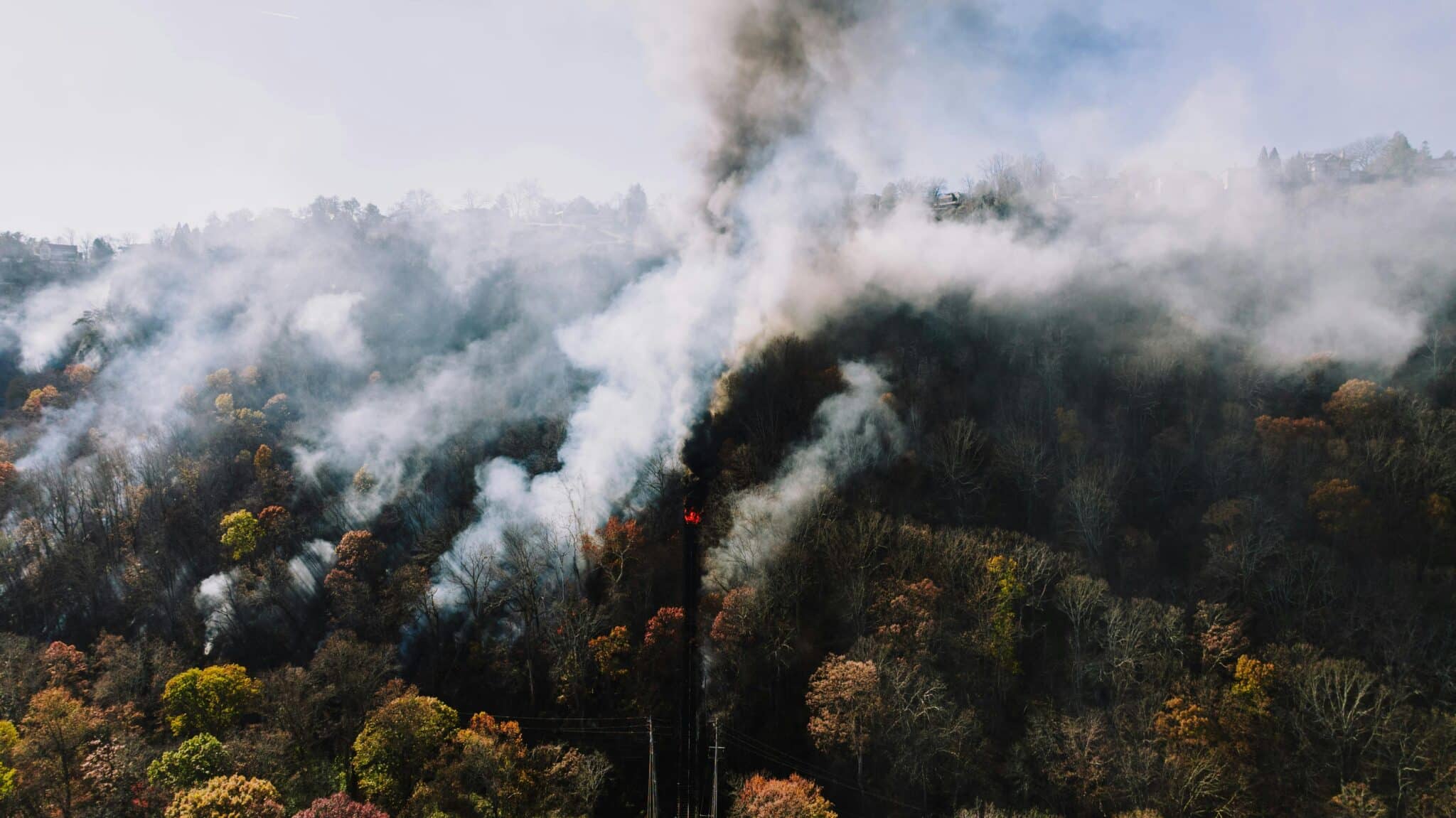
Requires the Forest Service to suppress wildfires within 24 hours of detection on National Forest System lands that are high risk—Level 5 National Wildland Fire Preparedness, experiencing a D2, D3, or D4 drought (for context, 23% of the U.S. is currently in a D2-D4 drought), or are located in a fireshed ranked in the top 10% of wildfire exposure. This provision also restricts the USFS’s ability to use beneficial fire, including managing naturally ignited wildfires and conducting prescribed fires. This is also a new provision that was not included in the 2024 House Farm Bill draft, although similar legislation was proposed last year.
Sec. 8413. Collaborative Forest Landscape Restoration Program
Extends the Collaborative Forest Landscape Restoration Program through FY2031 and amends it to add wildfire prevention as a qualifying activity, among other changes. The President’s FY2026 budget request proposed to eliminate this program.
Sec. 8414 Public-Private Wildfire Technology Deployment and Testbed Partnership
Establishes a deployment and testbed pilot program for wildfire prevention, detection, communication, and mitigation technologies. It also requires USFS to publish annual reports with recommendations.
Sec. 8417 Permits and Agreements with Electrical Utilities
Allows electric utility companies with a special use permit or easement on National Forest System lands to cut trees or reduce hazardous fuels near distribution lines without a separate timber sale, with proceeds going to the USFS.
Sec. 8418 Utilizing Grazing for Wildfire Risk Reduction.
Directs the Secretary to establish a strategy to utilize livestock grazing as a wildfire risk reduction tool.
Sec. 8419 Joint Chiefs Landscape Restoration Partnership Program.
Extends the Joint Chiefs Landscape Restoration Partnership to 2031. This program enables the Natural Resources Conservation Service and the Forest Service to collaborate with agricultural producers, forest landowners, and others with the goal of reducing wildfire threats to communities, protecting water quality and supply, and improving wildlife habitat for at-risk species on federal and nonfederal lands.
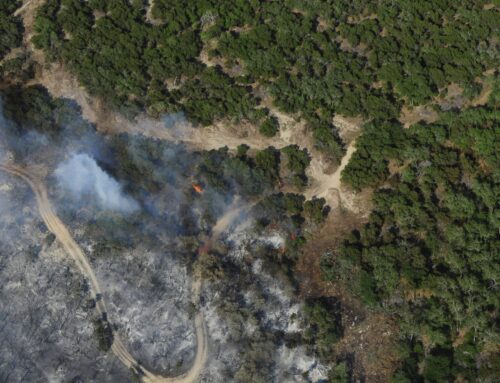
- Photo by Kelly : https://www.pexels.com/photo/aerial-view-of-smoky-forest-in-chattanooga-29693626/