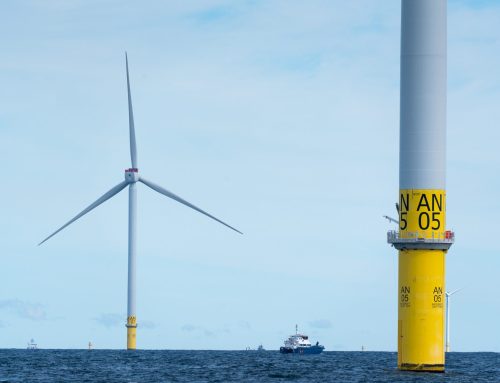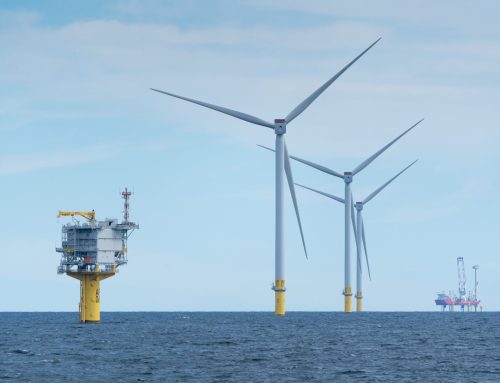

The Trump administration’s buyouts of offshore wind leaseholders to stifle the nascent clean energy projects have drawn plenty of criticism from Democrats and environmental groups.
Now comes a new argument from a nonpartisan watchdog group: Taxpayers are taking it on the chin from the controversial lease deals — which cost the Treasury nearly $4 billion without yet demonstrating a return on the intended alternative investments in more traditional energy projects.
“The taxpayer concerns extend well beyond the cost of the buyouts themselves,” says the report from Taxpayers for Common Sense. “The buyouts return revenue already collected through competitive auctions, eliminate future lease and operating revenues, use the judgment fund to finance a major policy reversal, and steer private investment to projects in some cases handpicked by the administration.”
Since March, the Trump administration reached a dozen agreements with the leaseholders who won competitive auctions for offshore wind leases under President Joe Biden, when the Interior Department took actions to support offshore wind development.
Interior Secretary Doug Burgum has referred to these buyouts as “commonsense” actions, in part because the 2025 Republican reconciliation law curtailed tax credits for wind power that were expanded by the 2022 Democratic reconciliation law.
The administration has also been strongly critical of wind and solar energy projects since these are intermittent forms of power that do not produce the same amount of power consistently. The administration has argued wind and solar would do little to meet demand spurred largely by constantly running data centers, while their opponents have said we need all forms of energy as consumer prices continue to rise.
In total, the Interior Department has reimbursed $3.9 billion to six offshore wind developers. The funds are provided through the Treasury Department’s judgment fund, which is a permanently appropriated fund created to cover costs associated with court judgments and settlements.
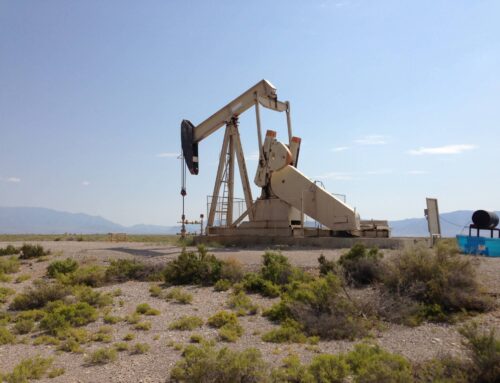
These offshore wind projects had an estimated nameplate capacity of 19.2 gigawatts, the Taxpayers for Common Sense report found. The agreements came with requirements that the developers use the money to invest in other energy projects, including oil and gas production, natural gas-fired power plants, nuclear, geothermal and grid infrastructure.
The agreements do not detail how much capacity would be replaced.
‘No path forward’
For their part, the companies saw the political writing on the wall and acquiesced in part to avoid costly legal battles.
Take RWE U.S. Offshore, a unit of the German energy company that received $1.22 billion back from the government with the intent of reinvesting the funds in natural gas infrastructure, including a Louisiana liquefied natural gas facility being developed by Australia-based Woodside Energy.
“After careful consideration, it was determined there is no path forward to permit these [offshore wind] projects in the U.S. for the foreseeable future,” RWE said in a Aug. 6 statement when the deal was announced. “The company determined that this resolution best serves the interests of its stakeholders and allows it to direct resources toward energy projects that can be advanced with certainty.”
Mia Huang, a policy analyst with Taxpayers for Common Sense, said there were some concerns that these agreements do not ensure the companies use the money for new energy infrastructure. The report highlighted an agreement with the American subsidiary of TotalEnergies, which received $928 million to walk away from leases off the coast of New York and North Carolina.
When the Interior Department and TotalEnergies announced the agreement, it highlighted investment in four production units, or trains, of the Rio Grande liquefied natural gas plant in Texas. However, the company had already announced its finalized agreement for the fourth train six months prior to the wind lease buyout.
Neither TotalEnergies nor the Interior Department returned a request for comment.
“Some of this investment has already been made, so it doesn’t really add to the pool to increase the total future supply, and instead it only pulls from future supply and away from electricity that all American households can tap into in the future,” said Huang.
These buyout agreements have triggered strong opposition from Democrats across the country. Nine Democratic state attorneys general have filed multiple lawsuits challenging these agreements, arguing that the administration improperly used the judgment fund and violated laws including the Administrative Procedure Act and Outer Continental Shelf Lands Act.
At a Sept. 17 press conference, Rep. Chellie Pingree, D-Maine, criticized the agreements and said the Trump administration reversed course while “on a pathway to bringing down energy costs.”
“They took taxpayer dollars that were being invested in important projects that would have brought down the cost of energy for all of us and our communities, and they paid bribes and they paid out to utility companies to get them to turn in the opposite direction,” said Pingree.
Pingree, who’s currently ranking member of the House Interior-Environment Appropriations Subcommittee, added that if she were to get the gavel in the next Congress, the panel would investigate these deals.
Pingree spokesperson Gabrielle Mannino said that this oversight would include questions for Burgum from House Democrats about the agreements that have gone unanswered. This includes concerns about the use of the judgment fund and how the Trump administration has used funds provided for an offshore wind energy program.
In the Senate, 14 Democratic caucus members, including Minority Leader Charles E. Schumer, D-N.Y., and Energy and Natural Resources ranking member Martin Heinrich, D-N.M., have also pressed the energy companies involved in the agreements for additional answers.