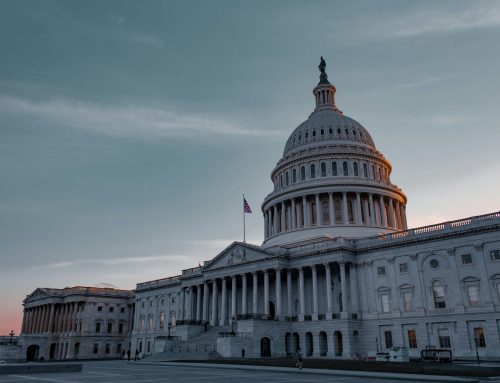

This week the House Agriculture Committee approved an updated farm bill, the Farm, Food, and National Security Act of 2026. Referred to as a “skinny” farm bill because the most expensive food assistance, conservation, and farm subsidy programs were funded in last year’s Republican reconciliation package, the bill is still fat with special interest carveouts. And while debate and support of H.R.1 and H.R. 7567 broke mostly on partisan lines, the disagreements belie a costly truth. Lawmakers on both sides of the aisle need to rethink the farm bill to create safety nets that increase resilience rather than dependence on federal subsidies.
As a skinny farm bill H.R. 7567 consists mostly of provisions that couldn’t make it in H.R.1 because they failed the rules of reconciliation by not having a budgetary nexus (pure policy) or were not offset. Provisions like an effort to preempt state labeling of pesticides and another, the EATS Act, to undo California’s Proposition 12 farm animal welfare law make up the former. The latter consist of programs covering rural development, biofuels, agricultural research, forestry, and more. While historically these remaining programs totaled only about 5 percent of a farm bill’s price tag, with the farm bill baseline clocking in at $1.5 trillion, that’s still a hefty sum. Exactly how hefty is unknown; an official Congressional Budget Office score wasn’t made available before, during, or since the committee’s deliberation.
But the biggest cost of enacting this bill is one of missing an opportunity to develop farm and food policies that increase the resilience of farmers and reduce dependency on federal subsidies. Instead the bill as unveiled by the committee Republicans was chock full of provisions tilting the economic playing field toward parochial interests.
Those who’ve always gotten special treatment get even sweeter deals. Sugar producers already benefit from federal laws that put quotas on sugar imports, cap the amount of sugar each US refinery can produce, and give USDA authority to buy “excess” sugar to keep prices artificially high. Now marketing assistance and sugar processing loans are deemed “emergencies involving the safety of human life or property” meaning in any future government shutdown processing of these loans can continue. But only these loans.
Section 11009 dictates that administrative and operating subsidies paid to crop insurance companies for processing crop insurance claims are to be set at the current levels in perpetuity. Utilize something like AI to drastically cut down your actual processing costs or develop tools to skip the agent middleman and sell directly, and more cheaply, to farmers? No need to pass those savings to taxpayers covering two-thirds of the program’s costs, just keep it with the companies that make a profit even in years the federal government takes a loss.
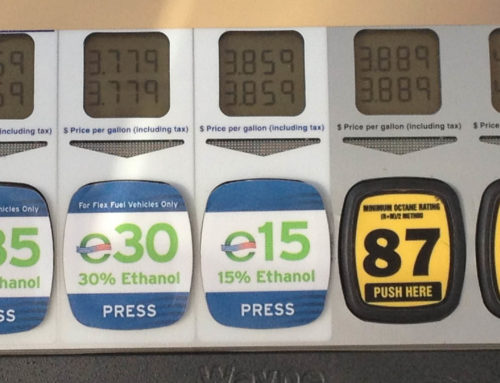
And other special interests who stake their economic future on federal mandates and market manipulations also gain. Sec. 3102 dictates that 50 percent of foreign food assistance under Food for Peace be done in the form of direct purchase of US crops. Buying emergency food aid closer to areas of conflict gets the aid to the scene faster and can often be more effective and even cheaper. But it doesn’t pad the pockets of US producers, or the shipping companies and port companies associated with those slow shipments of bulk goods. Legislative provisions declaring Sustainable Aviation Fuel an “advanced biofuel” and that woody biomass used in electricity production are carbon neutral give the renewable energy seal of approval to corn ethanol and logged trees, regardless of actual science.
Beyond the special interest giveaways, the bill further undermines efforts to focus federal support on those truly in need. Sec. 1003 creates a “framework” for future assistance to specialty crop producers, mainly fruits and vegetables, with a payment limit of NO LESS than $900,000 for farmers making at least 75 percent of their income from farming. Smaller farmers, that’s up to the Secretary. The purchase of equipment is now a qualified expense in conservation programs. Not a problem in itself, but equipment is very expensive, and conservation programs, such as EQIP, already fund less than half of qualified applicants. No money is added for EQIP, in fact $1 billion is shifted out of it. So, adding equipment purchase means likely even larger payments to a smaller set of people.
The farm bill is notable for what it does not include. There is no “actively engaged in farming” rule fix to ensure subsidy payments go to farmers not those simply invested in a farm. There is no meaningful payment limit reform. No serious accountability or transparency provisions within crop insurance. And it doesn’t address the uncertainty and predictability of the trade war which is perhaps the biggest threat to farming and markets right now.
Lawmakers should go back to the drawing board and fix the farm bill. With $38.8 trillion in debt and volatility in the market, taxpayers can’t afford another bad farm bill. H.R. 7567 is just the latest step in the steady march of tying farmers financial destiny to mandates and manna from Washington rather than markets and merit.