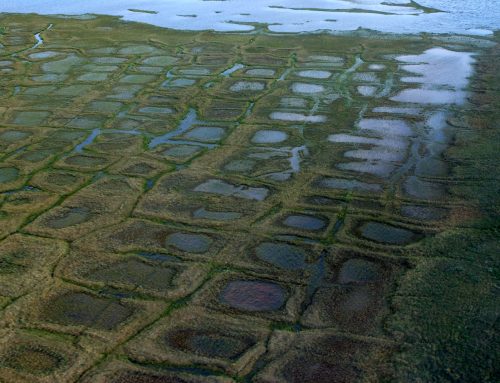

The National Petroleum Reserve in Alaska (NPR-A) is the single largest contiguous block of public land managed by the federal government in the United States, covering approximately 23 million acres of vast, roadless tundra across the remote North Slope of Alaska. The NPR-A encompasses unique and sensitive landscapes and critical habitats, providing important resources, including fish and wildlife, that sustain Alaska Native subsistence communities, hunters, anglers, and others.
The Bureau of Land Management (BLM), the agency responsible for managing the federal oil and gas leasing program in the NPR-A, recently released a proposed rule that would upend how the agency reviews and approves future oil and gas projects in the NPR-A. Given the extreme variability and sensitive nature of NPR-A landscapes, BLM has evaluated oil and gas projects in the reserve on a case-by-case basis for nearly 30 years. The proposed rule would replace the current review process with a standardized 60-day administrative rubber stamp for new oil and gas projects.
Efforts to improve efficiency could help agencies better manage publicly owned assets and lead to better fiscal outcomes for taxpayers. But rather than improving efficiency, this proposal could expose federal taxpayers and local communities to the long-term risks and liabilities of oil and gas infrastructure and operations while limiting opportunities for public input.
Here is why BLM’s proposal is a bad deal for taxpayers.
Exposing Taxpayers to Billions in Cleanup Liabilities
If the proposed rule goes into effect, BLM estimates it will double the pace of development in the NPR-A over the next 20 years. That means 18 new satellite pads (each typically containing 5-10 wells, if not more), 160 miles of pipelines and all-season gravel roads, and more than 15 million cubic yards of gravel fill.
Yet the rule does nothing to update NPR-A bonding requirements, the financial assurances oil and gas operators must provide to ensure they clean up after themselves when production ends. Current bond minimums are severely outdated and inadequate, at just $100,000 for an individual lease bond and $300,000 for a blanket bond covering all of an operator’s leases in the NPR-A.
Plugging deep horizontal wells, dismantling massive central processing facilities, removing miles of pipelines, and remediating thawed permafrost in one of the most remote and expensive operating environments in the world can easily cost tens to hundreds of millions of dollars per project. A $300,000 blanket bond covers only a fraction of actual cleanup costs. If a company goes bankrupt or walks away from its cleanup responsibilities, federal taxpayers could be left footing the massive bill.
This financial risk is further amplified by glaring loopholes in the proposed rule’s spill standards. The rule directs operators to clean up spills and recover materials only “when possible.” It also gives a single BLM officer the authority to waive spill prevention and cleanup rules entirely, along with other required operating procedures.
Cutting the Public Out of the Process
Public transparency and community input are foundational to the responsible management of public lands and can lead to better fiscal outcomes. The proposed rule would eliminate project-level public comment. Once an operator submits an application, BLM must issue an approval within 60 days, leaving little opportunity for local communities, experts, and other stakeholders to review or provide input.
When agencies make decisions behind closed doors on compressed timelines, costly engineering mistakes or faulty assumptions can go uncorrected, local knowledge and expertise can be overlooked, and taxpayers can be left bearing the fiscal and environmental costs when projects fail or are abandoned.
BLM has compounded this lack of transparency by withholding the economic and environmental impact analysis from the proposed rule. Deferring this information until the final decision forces the public to comment without knowing the full potential costs of the rule.
Harming Local Economies
The NPR-A is not an empty wasteland. It supports an irreplaceable subsistence economy for Alaska Native communities, as well as outdoor recreation, hunting, and angling. Fast-tracking oil and gas development threatens these longstanding economic activities and the benefits hey provide to local communities and businesses.
To learn more about why the proposed rule would negatively affect taxpayers and local communities, read our comments. If the rule moves forward, local communities could lose of sustainable revenue, while taxpayers could be left paying the bill for the inevitable cleanup liabilities.
- Courtesy of Protect The Arctic/Florian Schulz