
Last week the House approved H.R. 7567, the Farm, Food, and National Security Act of 2026. Known as the “skinny” farm bill since the most expensive parts of a typical farm bill were reauthorized in last year’s budget reconciliation package, aka “One Big Beautiful Bill Act,” it’s still fat with special interest carveouts. And, as one of the last bills expected to make it into law this year, lawmakers should insist on a more cost-effective farm bill that works for taxpayers instead of one that simply plants more parochial payouts.
Historically, farm bills are omnibus pieces of legislation passed every five to six years. They are the primary means Washington uses to set, and fund, the nation’s agricultural and nutrition assistance—what used to be known as food stamps—programs. Over time the bills have grown in size and scope to include 12 titles touching on everything from farm subsidies to forestry programs that impact every corner of the economy and country.
H.R. 7567, however, is not a traditional farm bill. While it contains the traditional 12 titles of past bills, it carries roughly 5 percent of the cost. Not because lawmakers found some new fiscal religion, but because the most expensive programs were already funded in last year’s reconciliation package. In that bill, Republicans expanded farm subsidies by $66 billion, redirected Biden-era climate money to non-climate focused conservation activities, and made numerous eligibility and funding changes expected to cut more than $180 billion from nutrition assistance programs. On these biggest issues, in both cost to taxpayers and ideological disagreement, H.R. 7567 makes few changes and mostly just locks in place the reconciliation bill’s changes for the next five years.
Where the 2026 skinny farm bill is similar to a traditional farm bill is in its catering to special interests at the expense of taxpayers. The House left in place dozens of costly carveouts we chronicled after the Agriculture Committee released its bill. So, now marketing assistance and sugar processing loans are deemed “emergencies involving the safety of human life or property,” meaning in any future government shutdown processing of these loans can continue. Administrative and operating subsidies paid to crop insurance companies for processing crop insurance claims are to be set at the current levels in perpetuity. Half of foreign food assistance under Food for Peace must be done in the form of direct purchase of U.S. crops, even if it’s more costly. And Sustainable Aviation Fuel is declared an “advanced biofuel,” regardless of what the science says.
Lawmakers submitted 371 amendments to the Rules Committee, including many to relitigate changes from the reconciliation bill or make positive reforms to programs. But just as in farm bills past, few of these were allowed an opportunity for debate on the floor.
Instead, the committee made in order 57 amendments that cover a broad array of mostly narrow issues. The bulk of these were noncontroversial or technical in nature. Amendments like requiring an assessment of wildfire mitigation methods in shrubland ecosystems. One to establish testing standards for honey products. Or a sense of Congress amendment that two-year research institutions are critical to agriculture. These are so non-controversial that 25 were added in the manager’s amendment, which makes “technical” changes, and another 20 were approved by a cursory voice vote. Of the eight amendments that actually received a vote—four others ended up not being offered on the floor—only three failed. Efforts to ban electronic monitoring of cattle, to add soda as a prohibited item in the SNAP program, and to add “low-value forest materials” to the definition of renewable biomass were apparently a bridge too far.
Left unresolved after the House farm bill debate are some of the most controversial and costly issues. Amendments guiding $10 billion in emergency assistance or establishing a new permanent program to compensate farm business for financial losses due to trade disruptions were submitted, but not accepted. An effort to provide billions of dollars for the Secretary of Agriculture to dole out through the Commodity Credit Corporation, by increasing its borrowing authority by 50 percent to $45 billion, was similarly side-stepped.
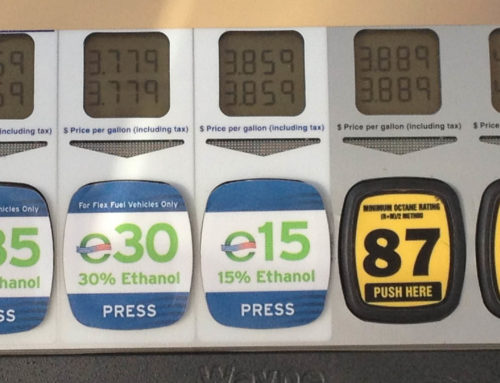
Most controversially, the fate of efforts to expand year-round sales of gasoline blended with 15 percent ethanol, while doing nothing to make taxpayer-friendly reforms to biofuels policies, is still in play. The rule establishing debate for the farm bill, the same rule that eliminated the opportunity to debate most amendments, actually requires the House to “await the disposition of H.R. 1346” (the E15 expansion bill) and add it to the farm bill once it is passed.
With the farm bill ball now in the Senate’s court, lawmakers have a choice to make. They can endorse a skinny farm bill heavy on parochial payoffs or endorse a broader debate. Lawmakers should go back to the drawing board and fix the farm bill.
- Photo by K. Mitch Hodge on Unsplash